Home Blog Page 136

Chesapeake man pleads guilty to trafficking missing minor in Hampton Roads – Daily Press

0

A Chesapeake man pleaded guilty Monday to federal charges of sex trafficking a minor in Hampton Roads.

Denzel Akeem Loftin, 32, initially was charged with five felonies relating to activities from October to November 2022, including obstruction of a sex trafficking investigation and production of child pornography. He was arrested Nov. 3 in Norfolk’s Young Terrace neighborhood following a sting operation in which an undercover FBI agent, in conjunction with local law enforcement, posed as a 17-year-old girl to set up a meeting, according to an affidavit.

The mandatory minimum penalty for sex trafficking a minor is 10 years in prison and the maximum is life in prison, according to the plea agreement. He is scheduled to be sentenced in November in U.S. District Court in Norfolk.

Investigators determined Loftin was the user behind a social networking account that was enticing young girls into commercial sex, including multiple girls reported missing from across the country, with him serving as their pimp. The sex trafficking charge he pleaded guilty to stemmed from him soliciting sex with a missing 14-year-old Colorado girl being sought by the Denver Child Exploitation Human Trafficking Task Force.

The task force informed FBI Norfolk in October that the teen had been trafficked to Virginia. One of the provocative ads promoting her as a sex worker included Loftin in the background, according to the affidavit.

An undercover police officer set up a “date” with the 14-year-old at a hotel in Chesapeake, and police confirmed through surveillance that she was with Loftin at a Virginia Beach hotel prior to meeting with the undercover officer. The 14-year-old arrived at the hotel with two other females, and they were taken into custody after assaulting multiple officers, according to court records.

One of the other females was a 17-year-old who had been reported missing in St. Louis and had been flown out only a few weeks before the 14-year-old. The prosecutors said digital evidence recovered during the investigation included a video of Loftin engaging in sex acts with her in addition to sex trafficking her, according to the statement of facts.

The other female who showed up to the hotel as part of the sting was in her early 20s and had previously described to police Loftin’s sex trafficking methods — which were consistent with that described by other women — after she reported him assaulting her in July. At the time, she described Loftin as a “shark pimp,” meaning he fishes for women online.

His methods included communicating with women and girls over the social networks Tagged and Instagram, using a variety of cellphone numbers, promising to take care of their finances, and posting lewd advertisements of them to popular escort websites. He was also using a Virginia Beach hotel for “in call” commercial sex, meaning the clients would travel to the women, while also setting up meetings at other locations throughout Hampton Roads, according to the affidavit.

Gavin Stone, 757-712-4806, [email protected]

Trump and DeSantis trade barbs while staging dueling New Hampshire campaign events – Daily Press

0

By MICHELLE L. PRICE, HOLLY RAMER and WILL WEISSERT (Associated Press)

HOLLIS, N.H. (AP) — Florida Gov. Ron DeSantis and former President Donald Trump traded barbs on Tuesday as the two leading Republican White House candidates staged dueling events in the critical early voting state of New Hampshire.

Addressing a town hall in Hollis, DeSantis vowed to “actually” build the U.S.-Mexico border wall that Trump tried but failed to complete as president while pledging to tear down Washington’s traditional power centers in ways that Trump fell short.

Speaking later at a Republican women’s luncheon in Concord, Trump countered that DeSantis was being forced to settle for second place in the primary and accused the governor of supporting cuts to Social Security, Medicare and other entitlement programs as a way to tame federal spending.

Beyond the rhetoric, the conflicting events demonstrated each candidate’s evolving strategy. DeSantis took extensive audience questions — a trademark in New Hampshire politics that he eschewed during his previous visit to the state, drawing criticisms that he was stilted and overly scripted.

Trump, meanwhile, offered his traditional, free-wheeling speech for more than hour but didn’t take questions. Reporters covering the event were confined to a pen, chaperoned to the bathroom and told they could not speak to attendees in the conference center ballroom or even in the hallways.

DeSantis, asked about people who had twice voted for Trump because of his promises to “drain the swamp” in Washignton used his answer to draw some of his sharpest contrasts yet with the former president.

“He didn’t drain it. It’s worse today than it’s ever been,” DeSantis said. He added that such promises don’t go far enough because a subsequent president “can just refill it.”

“I want to break the swamp,” DeSantis said, pledging to take power out of Washington by instructing Cabinet agencies to halve the number of employees there.

DeSantis has tried to gain ground on Trump by questioning the former president’s continued hold on the national Republican party. At his town hall, the governor slammed the GOP’s “culture of losing” under Trump and mentioned the “massive red wave” that many in the GOP predicted but that never materialized nationally in last year’s midterm elections.

“We had a red wave in Florida,” DeSantis said, noting he easily won reelection last fall. “But that’s because we delivered results in Florida.”

Many leading Republicans remain fiercely loyal to Trump, but there is some evidence that the attacks against the former president are resonating. Speaking about Trump on Tuesday, House Speaker Kevin McCarthy, a California Republican, said, “Can he win that election? Yeah, he can win that election.”

“The question is, is he the strongest to win the election?” McCarthy continued on CNBC’s “Squawk Box.” “I don’t know that answer.” He clarified later in the day to the conservative news outlet Breitbart that Trump “is stronger today than he was in 2016.”

At his own event, Trump noted that DeSantis is “holding an event right now to compete with us.” He also vowed to “drain the swamp once and for all” but used the slogan more to criticize President Joe Biden than the Florida governor.

“You can’t drain the swamp if you’re part of the swamp, and Joe Biden and other opponents, many of them, are all owned, controlled, bought and paid for, 100%,” Trump said.

The former president also largely echoed DeSantis’ sentiments in promising that “this election will be the end of the world for the corrupt political class in our nation’s capital.”

DeSantis was also asked about the pro-Trump mob that overran the U.S. Capitol in January 2021, and responded, “If it’s about relitigating things that happened two or three years ago, we’re going to lose.”

“I had nothing to do with what happened that day. Obviously, I didn’t enjoy seeing it,” DeSantis said. “But we’ve got to go forward on this stuff. We cannot be looking backwards.”

That, too, clashed with Trump, who repeated baseless claims Tuesday that he was denied a second term by election fraud. Numerous federal and local officials, a long list of courts, top former campaign staffers and even Trump’s own attorney general have all said there is no evidence of the fraud he alleges.

The candidates’ simultaneous visits highlighted the role that New Hampshire, the first-in-the-nation GOP primary state, will play in deciding the next Republican presidential nominee. Much of the focus of the early primary has been on Iowa and South Carolina, where evangelical Christians are dominant.

Spending time in New Hampshire, by contrast, gives the candidates were testing their messages in front of a more libertarian-leaning electorate.

Trump’s first-place finish in New Hampshire’s 2016 Republican primary, after losing Iowa to Texas Sen. Ted Cruz, helped propel him to party dominance. But his Democratic rivals won the state in the 2016 and 2020 general elections.

Before his speech Tuesday, Trump announced that his New Hampshire team features 150-plus dedicated activists and organizers throughout the state’s 10 counties.

Sabrina Antle, from the town of Henniker, said she couldn’t afford to attend the lunch in Concord where Trump spoke. She and her 9-year-old daughter tried to see the former president later in the day, when he was in Manchester to open his campaign office, but the event reached capacity before the pair could get in.

“I’m a Trumper but I wouldn’t be upset with Ron Desantis because I think he’d do a stand up job,” Antle said. “I just don’t know if he has the attitude Trump has, just the assertiveness.”

DeSantis’ campaign angered some members of the New Hampshire Federation of Republican Women by scheduling his town hall around the same time Trump was addressing the group’s luncheon. It called DeSantis’ event “an attempt to steal focus from” its lunch, noting that other presidential candidates scheduled around it.

That didn’t stop DeSantis, who at the town hall talked up the new immigration policy proposal he released Monday in South Texas — betting that the issue can energize GOP voters, even those who are 2,000 miles north of the U.S.-Mexico border.

“We’re actually going to build the wall,” DeSantis said of Trump’s failed pledges to do so. “A lot of politicians chirp. They make grandiose promises and then fail to deliver the actual results. The time for excuses is over. Now is the time to deliver results and finally get the job done.”

But the Florida governor also tailored his Tuesday message to New Hampshire, noting how tougher border security could eventually help limit the ravages of opioid addiction, which have hit the state particularly hard, even as deaths from overdoses have climbed all over the country.

He promised the “most assertive” policy against drug cartels “any administration has ever had.”

”We have to do it,” DeSantis said “because it will save lives.”

__

Ramer reported from Manchester, New Hampshire. Weissert reported from Washington.

Chicago air quality is worst in the world due to Canadian wildfire smoke

0

By Vivian La, Jenna Smith and Deanese Williams-Harris, Chicago Tribune

Thick smoke from Canadian wildfires coated Chicago and the surrounding areas with haze as weather officials issued an air quality alert for parts of the Great Lakes, Lower Mississippi and Ohio valleys Tuesday morning.

According to the monitoring site IQAir, Chicago had the worst air quality out of 95 cities worldwide Tuesday.

As of 11 a.m., the air quality index had risen to a level considered “very unhealthy,” according to AirNow, a website that combines data from county, state and federal air quality agencies nationwide. This means everyone is at risk of experiencing health effects.

Joggers run along the shoreline of Lake Michigan with heavy smoke from the Canadian wildfires in the background, on June 27, 2023, in Chicago, Illinois. (Photo by KAMIL KRZACZYNSKI/AFP via Getty Images)

Lake breezes would bring more smoke Tuesday afternoon, creating hazy conditions, said Zachary Yack, meteorologist with the National Weather Service. The smoke was expected to linger until Wednesday morning, but visibility could improve by late Tuesday, he said.

Faye Crouteau of Uptown said the air smelled like burning tires when she was walking by the lake Tuesday morning. Afterward, she was sitting outside wearing a mask because she couldn’t be inside her condo while it was being inspected.

She said her wife struggles with asthma and long COVID-19. When her wife woke up this morning, the first thing she said was, “I’m having a really hard time today.”

Crouteau said she was aware of how bad air quality was in New York City in early June but wasn’t particularly concerned about Chicago.

“We’re usually saved by the lake,” Crouteau said. “But that’s obviously not the case today.”

US-CANADA-FIRE
People walk along the shoreline of Lake Michigan with heavy smoke from the Canadian wildfires in the background, on June 27, 2023, in Chicago, Illinois. (Photo by KAMIL KRZACZYNSKI/AFP via Getty Images)

Mayor Brandon Johnson’s office issued a statement saying the city of Chicago is carefully monitoring the situation.

“This summer, cities across North America have seen unhealthy levels of air quality as a result of wildfire smoke, impacting over 20 million people from New York City, Washington D.C., Montreal, and today here in Chicago,” the statement said. “As we work to respond to the immediate health concerns in our communities, this concerning episode demonstrates and underscores the harmful impact that the climate crisis is having on our residents, as well as people all over the world.”

Chicago Public Schools issued a statement saying it would use inclement weather plans for its summer programs and hold activities indoors Tuesday to reduce the risk to students and staff.

While other regions are dealing with excessive heat, Chicago temperatures are expected to hit the low 70s. While the current air conditions are unhealthy for everyone, the risks are increased for children and adults with respiratory and pulmonary conditions, officials said.

US-CANADA-FIRE
A man takes pictures along the shoreline of Lake Michigan with heavy smoke from the Canadian wildfires in the background, on June 27, 2023, in Chicago, Illinois. (Photo by KAMIL KRZACZYNSKI/AFP via Getty Images)

The Chicago Cubs had a scheduled home game at 7:05 p.m. Tuesday against the Philadelphia Phillies. Only the commissioners office and players union can decide to postpone a game because of air quality issues, as they did last month in New York and Philadelphia.

Precautions

Health officials said Chicagoans should take these precautions:

  • Avoid strenuous outdoor activities.
  • Keep outdoor activities short.
  • Consider moving physical activities indoors or rescheduling them.
  • Consider wearing masks
  • Run air purifiers and close windows

Anyone who needs immediate medical attention should dial 911.

Jeffrey Epstein suicide result of misconduct, but not foul play, Justice Department watchdog says – Daily Press

0

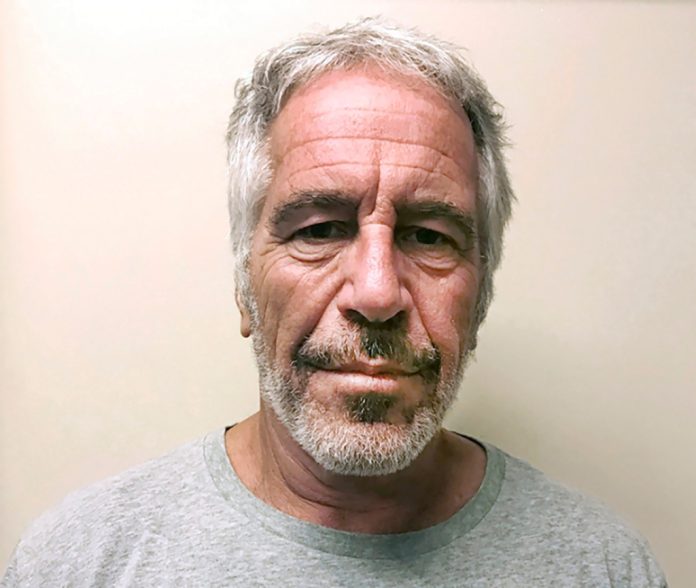
WASHINGTON (AP) — Jeffrey Epstein was left alone in his jail cell with a surplus of bed linens the night he killed himself. Nearly all the surveillance cameras on his unit didn’t record. One worker was on duty for 24 hours straight. And, despite his high profile and a suicide attempt two weeks earlier, he wasn’t checked on regularly as required.

The Justice Department’s watchdog said Tuesday that a “combination of negligence, misconduct and outright job performance failures” by the federal Bureau of Prisons and workers at the New York City jail enabled the wealthy financier to take his own life in August 2019, finding no evidence of foul play.

Inspector General Michael Horowitz blamed numerous factors for Epstein’s death, including the jail’s failure to assign him a cellmate and overworked guards who lied on logs after failing to make regular checks. Had the guards done so, Horowitz said, they would’ve found Epstein had excess linens, which he used in his suicide.

The failures are deeply troubling not only because they allowed Epstein’s suicide but also because they “led to questions about the circumstances surrounding Epstein’s death and effectively deprived Epstein’s numerous victims of the opportunity to seek justice,” Horowitz said in a video statement.

Horowitz’s investigation, the last of several official inquiries into Epstein’s death, echoed previous findings that some members of the jail staff involved in guarding Epstein were overworked. He identified 13 employees with performance failures and recommended possible criminal charges against four workers. Only the two workers assigned to guard Epstein the night he died were charged, avoiding jail time in a plea deal after admitting to falsifying logs.

Horowitz’s report also revealed new details about Epstein’s behavior in the days before his death, including that he signed a new last will and testament while meeting with his lawyers two days before he was found unresponsive in his cell the morning of Aug. 10, 2019. Jail officials did not know about the new will until after Epstein’s death, Horowitz said.

Few of the cameras in the area where Epstein was housed were making recordings of the images they captured due to a mechanical failure July 29. The prison had contracted for a camera system upgrade three years before his death, but it had not been completed, in part due to serious staffing shortages.

Meanwhile, Epstein was alone the night of his death, even though the prison’s psychology department had informed 70 employees that he needed to be with a cellmate after his previous suicide attempt in July. His cellmate was nevertheless transferred Aug. 9, with no action taken to replace him. He was also allowed an unmonitored personal phone call the night before he was found dead, a violation of BOP policy.

Horowitz’s report highlighted some of the many problems plaguing the Bureau of Prisons, many of which have been exposed by The Associated Press. The agency, the Justice Department’s largest with more than 30,000 employees, 158,000 inmates and an annual budget of about $8 billion, is plagued by severe staffing shortages, staff sexual abuse and criminal conduct, among other issues.

The Bureau of Prisons said it has accepted all eight of Horowitz’s recommendations, has updated its suicide watch process and will apply other lessons learned “to the broader BOP correctional landscape.”

The agency said it will review video to ensure correctional officers are making the proper rounds in restrictive housing and will require more paperwork when prisoners are kept alone in cells. A warden must now be notified when someone is placed on suicide watch, the agency said. It is also requiring specialized training on suicide prevention.

“We make every effort to create a controlled environment within our facilities that is both secure and humane, prioritizing the physical and emotional well-being of those in our care and custody,” the Bureau of Prisons said in a statement.

Horowitz’s report comes nearly four years after Epstein took his own life at the Metropolitan Correctional Center in Manhattan while awaiting trial on sex trafficking and conspiracy charges. It also comes weeks after the AP obtained thousands of pages of records detailing the wealthy financier’s detention and death and its chaotic aftermath.

Horowitz’s investigators found no evidence to suggest anything other than suicide, echoing the findings of New York City’s medical examiner’s office, which determined Epstein killed himself, and a separate FBI investigation that found no crimes directly associated with the death.

No physical evidence supported any of the many conspiracy theories surrounding Epstein’s death, Horowitz concluded, and none of the video captured from the cameras that were recording showed any indication of anyone else in the cell. Investigators probed for possible money changing hands involving guards but found no evidence of that, either.

The workers assigned to guard Epstein were sleeping and shopping online instead of checking on him every 30 minutes as required, prosecutors said.

Nova Noel and Michael Thomas admitted lying on prison records to make it seem as though they had made the checks but avoided prison time under a deal with prosecutors. They left the Bureau of Prisons in April 2022, agency spokesperson Benjamin O’Cone said.

It’s the second time in six months that Horowitz has blamed a high-profile inmate’s death on the Bureau of Prisons’ failings. In December, the inspector general found that management failures, flawed policies and widespread incompetence were factors in notorious gangster James “Whitey” Bulger’s 2018 beating death at a troubled West Virginia prison.

The AP obtained more than 4,000 pages of documents related to Epstein’s death from the federal Bureau of Prisons under the Freedom of Information Act. The documents, including a reconstruction of events leading to Epstein’s suicide, internal reports, emails, memos and other records, underscored how short staffing and corner-cutting contributed to Epstein’s death.

Epstein spent 36 days at the now-shuttered Metropolitan Correctional Center. Two weeks before his death, he was placed on suicide watch for 31 hours after what jail officials said was a suicide attempt that left his neck bruised and scraped.

The workers tasked with guarding Epstein the night he died were working overtime. One of them, not normally assigned to guard prisoners, was working a fifth straight day of overtime. The other was working mandatory overtime, which meant a second eight-hour shift in one day.

___

Sisak reported from Fort Lauderdale, Florida.

Supreme Court rejects GOP argument in North Carolina case that could have transformed US elections – Daily Press

0

By MARK SHERMAN (Associated Press)

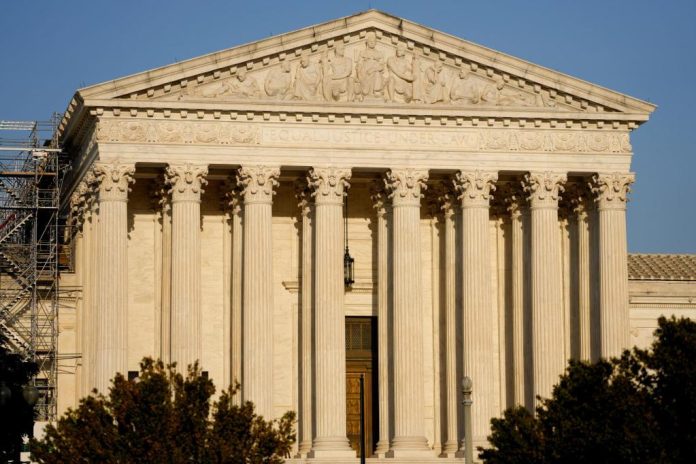
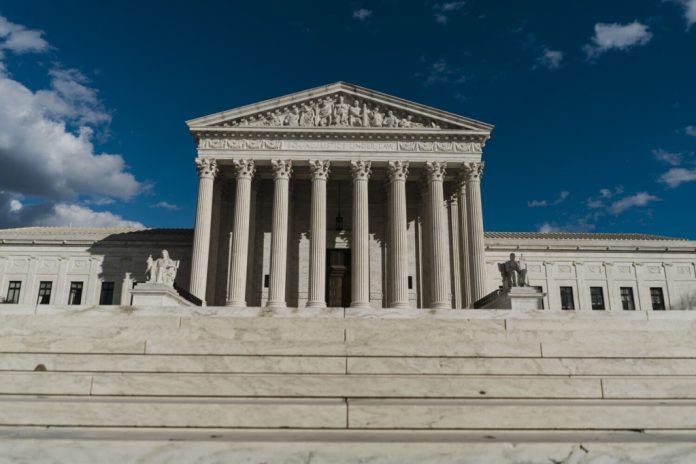
WASHINGTON (AP) — The Supreme Court ruled Tuesday that state courts can act as a check on their legislatures in redistricting and other issues affecting federal elections, rejecting arguments by North Carolina Republicans that could have transformed contests for Congress and president.

The justices by a 6-3 vote upheld a decision by North Carolina’s top court that struck down a congressional districting plan as excessively partisan under state law.

Chief Justice John Roberts wrote for the court that “state courts retain the authority to apply state constitutional restraints when legislatures act under the power conferred upon them by the Elections Clause. But federal courts must not abandon their own duty to exercise judicial review.”

The high court did, though, suggest there could be limits on state court efforts to police elections for Congress and president.

The practical effect of the decision is minimal in that the North Carolina Supreme Court, under a new Republican majority, already has undone its redistricting ruling.

Justices Samuel Alito, Clarence Thomas and Neil Gorsuch would have dismissed the case because of the intervening North Carolina court action.

Another redistricting case from Ohio is pending, if the justices want to say more about the issue before next year’s elections.

Derek Muller, a University of Iowa law professor and elections expert, said Tuesday’s decision leaves some room to challenge state court rulings on federal election issues. “In other words, the door is not closed on these challenges, and open questions remain in the 2024 election and beyond. But these are likely to be rare cases. The vast majority of state court decisions that could affect federal elections will likely continue without any change,” Muller said.

The North Carolina case attracted outsized attention because four conservative justices had suggested that the Supreme Court should rein in state courts in their oversight of elections for president and Congress.

Opponents of the idea, known as the independent legislature theory, had argued that the effects of a robust ruling for North Carolina Republicans could be much broader than just redistricting and exacerbate political polarization.

Potentially at stake were more than 170 state constitutional provisions, over 650 state laws delegating authority to make election policies to state and local officials, and thousands of regulations down to the location of polling places, according to the Brennan Center for Justice at the New York University School of Law.

The justices heard arguments in December in an appeal by the state’s Republican leaders in the legislature. Their efforts to draw congressional districts heavily in their favor were blocked by a Democratic majority on the state Supreme Court because the GOP map violated the state constitution.

A court-drawn map produced seven seats for each party in last year’s midterm elections in highly competitive North Carolina.

The question for the justices was whether the U.S. Constitution’s provision giving state legislatures the power to make the rules about the “times, places and manner” of congressional elections cuts state courts out of the process.

Former federal judge Michael Luttig, a prominent conservative who has joined the legal team defending the North Carolina court decision, said in the fall that the outcome could have transformative effects on American elections. “This is the single most important case on American democracy — and for American democracy — in the nation’s history,” Luttig said.

Leading Republican lawmakers in North Carolina told the Supreme Court that the Constitution’s “carefully drawn lines place the regulation of federal elections in the hands of state legislatures, Congress and no one else.”

During nearly three hours of arguments, the justices seemed skeptical of making a broad ruling in the case. Liberal and conservative justices seemed to take issue with the main thrust of a challenge asking them to essentially eliminate the power of state courts to strike down legislature-drawn, gerrymandered congressional district maps on grounds that they violate state constitutions.

In North Carolina, a new round of redistricting is expected to go forward and produce a map with more Republican districts.

Supreme Court upholds North Carolina ruling that congressional districts violated state law – Daily Press

0

By MARK SHERMAN (Associated Press)

WASHINGTON (AP) — The Supreme Court on Tuesday ruled that North Carolina’s top court did not overstep its bounds in striking down a congressional districting plan as excessively partisan under state law.

The justices by a 6-3 vote rejected the broadest view of a case that could have transformed elections for Congress and president.

North Carolina Republicans had asked the court to leave state legislatures virtually unchecked by their state courts when dealing with federal elections.

But Chief Justice John Roberts wrote for the court that “state courts retain the authority to apply state constitutional restraints when legislatures act under the power conferred upon them by the Elections Clause. But federal courts must not abandon their own duty to exercise judicial review.”

The high court did, though, suggest there could be limits on state court efforts to police elections for Congress and president.

The practical effect of the decision is minimal in that the North Carolina Supreme Court, under a new Republican majority, already has undone its redistricting ruling.

Justices Samuel Alito, Clarence Thomas and Neil Gorsuch would have dismissed the case because of the intervening North Carolina court action.

Another redistricting case from Ohio is pending, if the justices want to say more about the issue before next year’s elections.

The North Carolina case attracted outsized attention because four conservative justices had suggested that the Supreme Court should rein in state courts in their oversight of elections for president and Congress.

Opponents of the idea, known as the independent legislature theory, had argued that the effects of a robust ruling for North Carolina Republicans could be much broader than just redistricting and exacerbate political polarization.

Potentially at stake were more than 170 state constitutional provisions, over 650 state laws delegating authority to make election policies to state and local officials, and thousands of regulations down to the location of polling places, according to the Brennan Center for Justice at the New York University School of Law.

The justices heard arguments in December in an appeal by the state’s Republican leaders in the legislature. Their efforts to draw congressional districts heavily in their favor were blocked by a Democratic majority on the state Supreme Court because the GOP map violated the state constitution.

A court-drawn map produced seven seats for each party in last year’s midterm elections in highly competitive North Carolina.

The question for the justices was whether the U.S. Constitution’s provision giving state legislatures the power to make the rules about the “times, places and manner” of congressional elections cuts state courts out of the process.

Former federal judge Michael Luttig, a prominent conservative who has joined the legal team defending the North Carolina court decision, said in the fall that the outcome could have transformative effects on American elections. “This is the single most important case on American democracy — and for American democracy — in the nation’s history,” Luttig said.

Leading Republican lawmakers in North Carolina told the Supreme Court that the Constitution’s “carefully drawn lines place the regulation of federal elections in the hands of state legislatures, Congress and no one else.”

During nearly three hours of arguments, the justices seemed skeptical of making a broad ruling in the case. Liberal and conservative justices seemed to take issue with the main thrust of a challenge asking them to essentially eliminate the power of state courts to strike down legislature-drawn, gerrymandered congressional district maps on grounds that they violate state constitutions.

In North Carolina, a new round of redistricting is expected to go forward and produce a map with more Republican districts.

Supreme Court upholds N.C. ruling that congressional districts violated state law – Daily Press

0

WASHINGTON (AP) — The Supreme Court on Tuesday ruled that North Carolina’s top court did not overstep its bounds in striking down a congressional districting plan as excessively partisan under state law.

The justices rejected the broadest view of a legal theory that could have transformed elections for Congress and president.

The court declined to invoke for the first time the “independent state legislature” theory, which would leave state legislatures virtually unchecked by their state courts when dealing with federal elections.

The high court did, though, suggest there could be limits on state court efforts to police elections for Congress and president.

The practical effect of the decision is minimal in that the North Carolina Supreme Court, under a new Republican majority, already has undone its redistricting ruling.

Another redistricting case from Ohio is pending, if the justices want to say more about the issue before next year’s elections.

Advocating for mental health care – Daily Press

0

Anna Maria Marston of Williamsburg is working on her master’s degree in the field of clinical mental health counseling. As part of her studies, she wrote two essays that reflect on her experiences as a mental health technician.

In an interview for the Gazette, I asked Marston, what made her choose her career path?

“Well, it’s simple,” replied Marston. “One of my patients told me to do so. “

“I always knew I wanted to work in the field of psychology in some capacity,” she said. “When I worked as a mental health tech, I had the opportunity to have a one-on-one interaction with a mental health patient. She began to open up to me, and after spending considerable time together, she improved to such a degree that she was discharged from our care.

“Before leaving, she said to me, ‘Anna, you have such a big heart. You saved my life! You are going to make it far in life as a mental health counselor.’ Those words stuck, inspired me. How could I choose any other profession?”

Having worked as a mental health technician during her undergraduate studies, Marston had, what she calls “very raw and eye-opening” experiences.

“It’s always controversial discussing what works and doesn’t work in behavioral facilities, because the system doesn’t always cater to every individual, but rather as a whole. As a mental health professional, it is essential to work ethically, critically and most importantly, compassionately. Every patient wants to be heard. To feel, like ‘I have your support to lean on.’”

She continued, “What worked for me, personally, was helping them process that vulnerability and transform it into self-acceptance and personal growth. I think, in this profession it’s difficult because you must set boundaries with your patients, and it is often discouraged to show too much emotion or attachment. In my experience, that didn’t work. We all need love, warmth, empathy. It is still possible to create an ethical and structured system while also catering to humanity.”

Marston is seeing a need for advocacy in the mental health system.

“Unfortunately, there is still a lot of stigma surrounding mental health care,” she said. “We have come a long way, but advocacy is so important because it allows us to continue to spread awareness and stand up for those who may feel like they don’t have a voice. The beauty of counseling is that it caters to everyone. To people in different stages of their life. Fighting for those who are struggling in silence.”

To be more effective, there is a new trend in counseling — creating multidisciplinary teams.

“Multidisciplinary team treatment of patients is priceless,” Marston said. “Collaboration in counselling has always been beneficial, evidence-based practices, research, etc., proves it.  People in your care look up to you. They trust you with something very personal and fragile — their mind. So, having the opportunity to bring diverse specializations together maximizes the probability of the best possible outcome.”

Marston then added, “As professionals, we learn by interconnecting with one another, with our patients, social workers, doctors, academicians. It’s no coincidence that multidisciplinary teamwork is a trend for the future.”

Frank Shatz is a Williamsburg resident. He is the author of “Reports from a Distant Place,” the compilation of his selected columns. The book is available at the Bruton Parish Shop and Amazon.com.

King William audit finds some issues, but no significant deficiencies – Daily Press

0

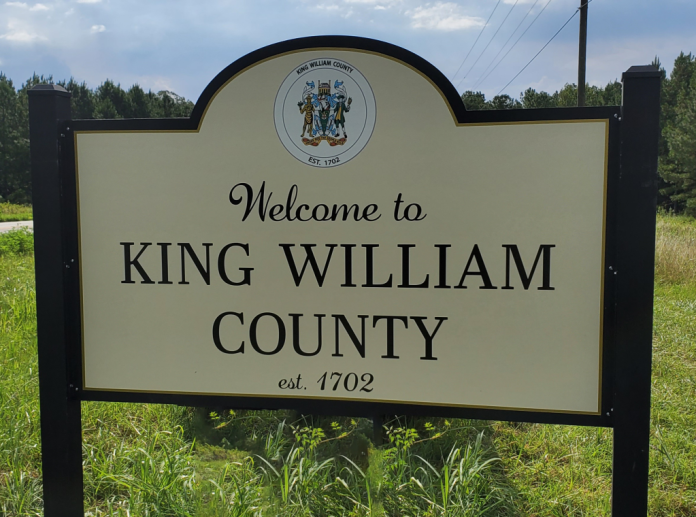
KING WILLIAM — Ongoing weaknesses in financial reporting at King William County have been highlighted in an auditor’s report for fiscal year 2022.

A report by CPAs Robinson, Farmer, Cox Associates indicates material weaknesses in financial statements for the year ending June 30, 2022, but no significant deficiencies. Historically, King William has experienced a high turnover in the treasurer’s office and decades of delinquent taxes before a delayed property reassessment in 2022.

The county’s annual financial report highlights a concern by the auditors over the lack of internal controls over financial reporting in a year that saw a stand-off between the county’s finance department and treasurer’s office.

Financial reporting errors that required adjustments to financial statements “indicated a material weakness in financial reporting,” the auditors said.

These included reports in accounts receivable in the finance department, accounts payable and accrued expenses with the finance department and the school board, taxes receivable in the treasurer’s office, unavailable revenue related to property taxes in the treasurer’s office, and capital assets with the finance department and the school board.

“There is a reasonable possibility that a material misstatement of the entity’s financial statements will not be prevented by the entity’s internal controls over financial reporting,” the report stated.

The auditor highlighted a lack of internal controls in financial reporting and said some year-end adjusting entries were not identified before the audit.

The auditor recommended that the county and school board “implement steps and procedures to improve its internal controls over financial reporting and to ensure that all year-end adjusting entries are identified and recorded on a timely basis.”

Both county administration and the school division have agreed with the recommendations and are considering corrective action for FY23.

The auditor raised a concern about the separation of duties after the county finance department took over bank reconciliations from the treasurer’s office in 2022. “No one employee should have access to both physical assets and the related accounting records, or to all phases of a transaction,” the report stated.

The auditors found proper segregation of duties had not been established in relation to bank reconciliation and cash receipts. “Misappropriation of assets could result from inadequate segregation of accounting duties and functions,” the report stated.

However, the report noted bank reconciliations were performed by the finance department “out of necessity due to turnover in the treasurer’s office.”

The auditor recommended a transition to a system in which monthly bank reconciliations are reviewed by personnel in both the finance department and the treasurer’s office.

The report noted a failure to complete bank reconciliations in a timely manner due to turnover in the treasurer’s office and a change in accounting systems.

“Many months were not reconciled at all. The June 2022 bank reconciliations were completed many months after the end of the fiscal year,” the report stated.

Concerns over the segregation of duties and weaknesses in financial reporting were also highlighted in FY2021. The county has pledged corrective action in FY2023.

Last year, tensions between the Board of Supervisors and the treasurer’s office resulted in a letter from the supervisors and the school board that expressed “no confidence” in the treasurer’s office including the former treasurer Mary Sue Bancroft, who had already tendered her resignation, and her deputy Abbi Carlton.

The letter, obtained under the Freedom of Information Act, said the treasurer’s office was unable to support the ending amount remaining in prepaid taxes as of June 30, 2022. It said the treasurer’s office failed to assist with bank reconciliations from the FY21 audit. It listed 11 issues and urged the judge to allow Julie Mills, the county’s Deputy Director of Finance, to take over as treasurer. However, Judge Benjamin Elliott Bondurant appointed Carlton to the position of interim treasurer until a special election was held on March 7. Carlton won the special election against Mills. The county finance department took over the task of bank reconciliations last year.

Aaron Hawkins of Robinson, Farmer, Cox Associates spoke of improvements over the prior year when he addressed the Board of Supervisors on May 22.

“The bank reconciliation was the theme ongoing from 2021,” he said.

Hawkins acknowledged the finance office’s takeover of bank reconciliations was a “necessity.”

“The issue is that the finance department is also the department that is recording transactions and can post journal entries. That can really create segregation of duties issues,” he said.

He said the fact the bank reconciliations were so far behind automatically presented a “weakness in internal control.”

“I do believe … the bank reconciliations are becoming more up to date in FY23,” Hawkins said.

Hawkins expressed confidence that progress is being made to address the weaknesses.

David Macaulay, [email protected]


Ohio mom charged in death of toddler left alone for 10 days, prosecutors say – Daily Press

0

CLEVELAND (AP) — Prosecutors in Ohio have announced murder charges against a woman in the death of her 16-month-old daughter, who authorities say was left alone for 10 days while the woman went on vacation.

The Cuyahoga County prosecutor’s office said Monday that Kristel A. Candelario, 31, was indicted last week on one count of aggravated murder, two counts of murder and one count each of felonious assault and endangering children.

Prosecutors alleged that Candelario left the child “alone and unattended” at her Cleveland home June 6 to vacation in Detroit and Puerto Rico and didn’t return until the morning of June 16. Authorities say she called police after finding the child unresponsive upon her return.

Cleveland police and fire personnel responded and the victim, who was described as “extremely dehydrated,” was pronounced deceased.

“It is unfathomable that a mother would leave her 16-month-old child alone without any supervision for 10 days to go on a vacation,” Prosecutor Michael O’Malley said in a statement.

“As parents, we are supposed to protect and care for our children,” O’Malley wrote. “Imagining this child’s suffering, during her last days of life alone, is truly horrifying and we will do everything in our power to seek justice on her behalf.”

It’s unclear whether Candelario has an attorney. Court records did not list an attorney for her and the county public defender’s office said Friday that it was not, as of that point, representing her.