Home Blog Page 131

Deputy acquitted of all charges for failing to act during deadly Parkland school shooting – Daily Press

0

By TERRY SPENCER (Associated Press)

FORT LAUDERDALE, Fla. (AP) — A Florida sheriff’s deputy was acquitted Thursday of felony child neglect and other charges for failing to act during the 2018 Parkland school massacre, concluding the first trial in U.S. history of a law enforcement officer for conduct during an on-campus shooting.

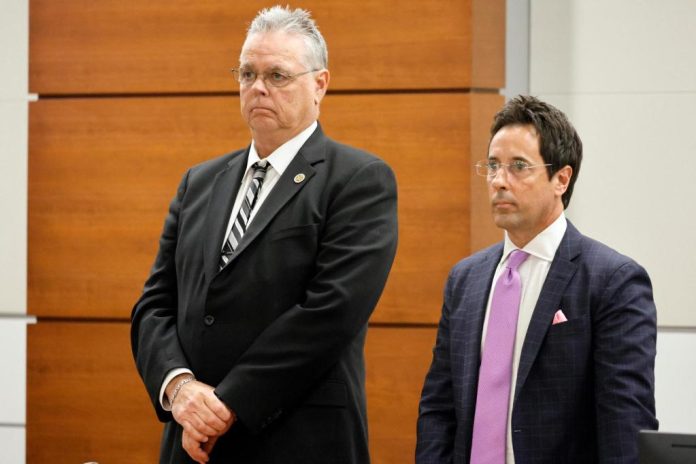
Former Broward County Deputy Scot Peterson wept as the verdicts were read, while the fathers of two students murdered at Marjory Stoneman Douglas High School on Feb, 14, 2018, stared straight ahead and quickly left the courtroom. The jury had deliberated for 19 hours over four days.

After court adjourned, Peterson, his family and friends rushed into a group hug as they whooped, hollered and cried. Kevin Bolling, Peterson’s private investigator, chased after lead prosecutor Chris Killoran and said something. Killoran turned and snapped at him, “Way to be a good winner” and slapped him on the shoulder. Members of the prosecution team then nudged Killoran out of the courtroom.

“I got my life back. We’ve got our life back,” Peterson said as he exited the courtroom, his arm around his wife, Lydia Rodriguez, and his lawyer, Mark Eiglarsh. He has insisted that he would have confronted the shooter Nikolas Cruz, but because of echoes, he didn’t know where the shots were coming from. “It’s been an emotional roller coaster for so long.”

He also said people should never forget the victims.

“Only one person was to blame and it was that monster (Cruz),” Peterson said. “It wasn’t any of the law enforcement who was on that scene. … Everybody did the best they could with the information we had.”

Peterson said he hopes to one day sit down with the Parkland parents and spouses — some of whom have publicly called him “the coward of Broward.” He wants to tell them “the truth,” that he did everything he could.

“I would love to talk to them. I have no problem,” he said. “I’m there.”

But two fathers who watched the verdict, Tony Montalto and Tom Hoyer, had no interest in meeting with Peterson. Montalto’s 14-year-old daughter Gina was killed on the first floor; Hoyer’s 15-year-old son Luke died next to her. Peterson was not charged in connection with their deaths because they happened before he reached the building. The men believe Peterson knew Cruz’s location, but put his safety ahead of the students’ and staff’s.

“No. No. Bring me my daughter back,” Montalto said about meeting with Peterson. “We’ll all trade anything to get our kids back. The spouses, they who lost someone, they want them back, too. And if that’s not going to happen, why do we need to talk to this failure? He didn’t do the right thing. He ran away.”

Hoyer said he didn’t think Peterson would tell them the truth.

The campus deputy at Stoneman Douglas, Peterson had been charged with failing to confront shooter Cruz during his six-minute attack inside the three-story 1200 classroom building that left 17 dead.

His charges were in connection to the six killed and four wounded on the third floor, who were shot more than a minute after he approached the building. Prosecutors did not charge Peterson in connection with the 11 killed and 13 wounded on the first floor before he arrived. No one was shot on the second floor.

Prosecutors were using a novel legal theory against Peterson, that as the school’s assigned deputy he was legally a “caregiver” to its students — a requirement for him to be guilty of child neglect. Florida law defines a caregiver as “a parent, adult household member or other person responsible for a child’s welfare.” If jurors found Peterson was a caregiver, they also would have had to agree he failed to make a “reasonable effort” to protect the children or failed to provide necessary care.

He could have received nearly 100 years in prison, although a sentence even approaching that length would have been highly unlikely given the circumstances and his clean record. He also could have lost his $104,000 annual pension.

Prosecutors, during their two-week presentation, called to the witness stand students, teachers and law enforcement officers who testified about the horror they experienced and how they knew Cruz was in the 1200 building. Prosecutors also called a training supervisor who testified Peterson did not follow protocols for confronting an active shooter.

During his two-day presentation, Peterson’s attorney, Eiglarsh, called several deputies who arrived during the shooting and students and teachers who testified they did not think the shots were coming from the 1200 building. Peterson did not testify.

Eiglarsh also emphasized the failure of the sheriff’s radio system during the attack, which limited what Peterson heard from arriving deputies.

He called the verdict “a victory for every law enforcement officer in this country” and said the prosecution was “political.”

“How dare prosecutors try to second-guess the actions of honorable, decent police officers,” Eiglarsh said.

But Broward State Attorney Harold F. Pryor, an elected Democrat, stood by his office’s decision to prosecute Peterson.

“As parents, we have an expectation that armed school resource officers – who are under contract to be caregivers to our children – will do their jobs when we entrust our children to them and the schools they guard,” Pryor said in a statement. “They have a special role and responsibilities that exceed the role and responsibilities of a police officer. To those who have tried to make this political, I say: It is not political to expect someone to do their job.”

Montalto said if the jurors believe Peterson acted appropriately, they should get him hired at their children’s schools.

Security videos show that 36 seconds after Cruz’s attack began, Peterson exited his office about 100 yards (92 meters) from the 1200 building and jumped into a cart with two unarmed civilian security guards. They arrived at the building a minute later.

Peterson got out of the cart near the east doorway to the first-floor hallway. Cruz was at the hallway’s opposite end, firing his AR-15-style semiautomatic rifle.

Peterson, who was not wearing a bullet-resistant vest, didn’t open the door. Instead, he took cover 75 feet (23 meters) away in the alcove of a neighboring building, his gun still drawn. He stayed there for 40 minutes, long after the shooting ended and other police officers had stormed the building.

Peterson spent nearly three decades working at schools, including nine years at Stoneman Douglas. He retired shortly after the shooting and was then fired retroactively.

Cruz’s jury could not unanimously agree he deserved the death penalty. The 24-year-old former Stoneman Douglas student was then sentenced to life in prison.
Marcellus Spencer “Boo” Williams Gymnasium Dedication

0

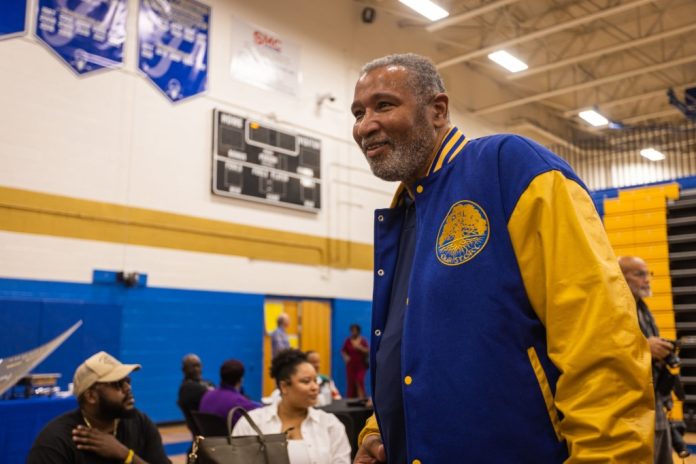
Phoebus High School holds a ribbon cutting ceremony honoring Marcellus Spencer “Boo” Williams, an iconic basketball player and coach, dedicating the high school’s gymnasium the Marcellus Spencer ‘Boo’ Williams Jr. Gymnasium in Hampton, Va. on Thursday, June 29, 2023. Williams was a member of the first graduating class of Phoebus High School in 1977.

Volunteers use oysters to build a 718-foot living shoreline

0

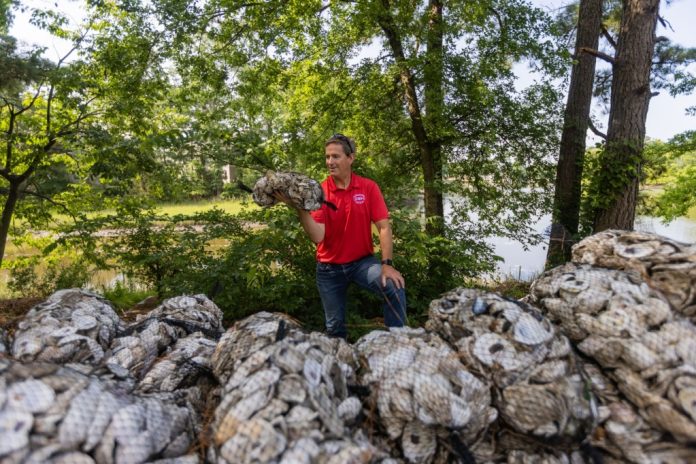
Volunteers build a base structure for oyster castles to be placed along Leif Berner’s 718-foot shoreline on Lilly Creek in Portsmouth, Va. on Wednesday, June 28, 2023. Volunteers joined the Chesapeake Bay Foundation and Elizabeth River Project to build Berner a living shoreline with these 30-pound castles. Native oysters found in Lilly Creek will be added to the oyster castles after the base is completed.

France mobilizes tens of thousands of police to head off unrest after police fatally shot a teenager – Daily Press

0

By SYLVIE CORBET, JOHN LEICESTER and ALEX TURNBULL (Associated Press)

NANTERRE, France (AP) — France mobilized tens of thousands of police officers Thursday in an effort to head off widespread urban rioting following the deadly police shooting of a 17-year-old that shocked the nation, with commuters rushing home before transport services closed early to avoid being targeted by rioters.

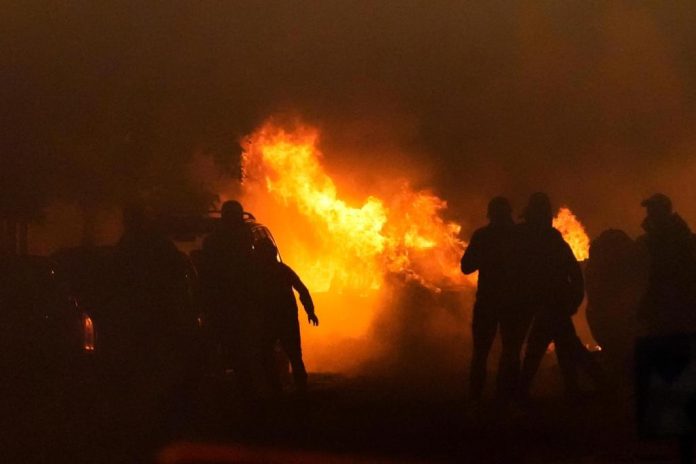
Protesters in some cities set fires in the streets as the night progressed.

The police officer accused of pulling the trigger Tuesday was handed a preliminary charge of voluntary homicide after prosecutor Pascal Prache said his initial investigation led him to conclude “the conditions for the legal use of the weapon were not met.”

The detained police officer’s lawyer, speaking on French TV channel BFM-TV, said the officer was sorry and “devastated.” The officer did what he thought was necessary in the moment, attorney Laurent-Franck Lienard told the news outlet.

“He doesn’t get up in the morning to kill people,” Lienard said of the officer, whose name ha not been released. “He really didn’t want to kill. But now he must defend himself, as he’s the one who’s detained and sleeping in prison.”

Despite government appeals for calm and vows that order would be restored, smoke billowed from cars and garbage set ablaze in the Paris suburb of Nanterre following a peaceful afternoon march in honor of the teen identified only by his first name, Nahel.

After a morning crisis meeting following violence that injured dozens of police and damaged nearly 100 public buildings, Interior Minister Gerald Darmanin said the number of officers in the streets would more than quadruple, from 9,000 to 40,000. In the Paris region alone, the number of officers deployed was more than doubled to 5,000.

“The professionals of disorder must go home,” Darmanin said. While there’s no need yet to declare a state of emergency — a measure taken to quell weeks of rioting in 2005 — he added: “The state’s response will be extremely firm.”

There were 100 arrests nationwide Thursday night, according to a national police spokesperson, as officials reported scattered clashes in cities across the country despite the stepped-up deployments.

In the usually tranquil Pyrenees town of Pau in southwestern France, a Molotov cocktail was thrown at a new police office, national police said. Vehicles were set on fire in Toulouse and a tramway train was torched in a suburb of Lyon, police said. Paris police said its officers made 40 arrests Thursday, some on the margins of the largely peaceful memorial march for the teen and others elsewhere.

The interior minister had reported 180 arrests nationwide before Thursday.

Bus and tram services in the Paris area shut down before sunset as a precaution to safeguard transportation workers and passengers.

The town of Clamart, home to 54,000 people in the French capital’s southwest suburbs, said it was taking the extraordinary step of imposing an overnight curfew from Thursday through Monday, citing “the risk of new public order disturbances.” The mayor of Neuilly-sur-Marne announced a similar curfew in that town in the eastern suburbs.

Marseille, the giant port city in the south of France, saw the beginnings of unrest Thursday evening, with several hundred young people roaming the city center and setting fire to trash containers, including in front of the region’s main administrative building, police said. Around 1 a.m. local time, regional officials tweeted that police were trying to disperse violent groups in the city center. Police said they had made 28 arrests, though they gave no time frame.

The unrest extended even to Brussels, where about a dozen people were detained during scuffles related to the shooting in France. Police spokeswoman Ilse Van de Keere said that several fires were brought under control and that at least one car was burned.

The shooting captured on video shocked the country and stirred up long-simmering tensions between police and young people in housing projects and other disadvantaged neighborhoods.

The teenager’s family and their lawyers haven’t said the police shooting was race-related and they didn’t release his surname or details about him.

Still, his death inflamed raw nerves in neighborhoods that have welcomed generations of immigrants from France’s former colonies and elsewhere. Their France-born children frequently complain they are subjected to police ID checks and harassment far more frequently than white people or those in more affluent neighborhoods.

Anti-racism activists renewed their complaints about police behavior.

“We have to go beyond saying that things need to calm down,” said Dominique Sopo, head of the campaign group SOS Racisme. “The issue here is how do we make it so that we have a police force that when they see Blacks and Arabs, don’t tend to shout at them, use racist terms against them and in some cases, shoot them in the head.”

Prache, the Nanterre prosecutor, said officers tried to stop Nahel because he looked so young and was driving a Mercedes with Polish license plates in a bus lane. He allegedly ran a red light to avoid being stopped then got stuck in traffic. Both officers involved said they drew their guns to prevent him from fleeing.

The officer who fired a single shot said he feared he and his colleague or someone else could be hit by the car, according to Prache. The officers said they felt “threatened” as the car drove off.

He said two magistrates are leading the investigation, as is common in France. Preliminary charges mean investigating judges strongly suspect wrongdoing but need to investigate more before sending the case to trial.

On Wednesday night, violence raged in the streets for a second night, with protesters shooting fireworks and hurling stones at police in Nanterre, who fired repeated volleys of tear gas.

As demonstrations spread to other towns, police and firefighters struggled to contain protesters and extinguish blazes. Schools, police stations, town halls and other public buildings were damaged from Toulouse in the south to Lille in the north, with most of the damage in the Paris suburbs, according to a national police spokesperson.

Fire damaged the town hall in the Paris suburb of L’Ile-Saint-Denis, not far from the country’s national stadium and the headquarters of the Paris 2024 Olympics.

Darmanin said 170 officers had been injured in the unrest but none of the injuries was life-threatening. The number of civilians injured was not immediately released.

The scenes in France’s suburbs echoed 2005, when the deaths of 15-year-old Bouna Traoré and 17-year-old Zyed Benna led to three weeks of nationwide riots, exposing anger and resentment in neglected, crime-ridden suburban housing projects. The two boys were electrocuted after hiding from police in a power substation in the Paris suburb of Clichy-sous-Bois.

The violence this time spread faster than in 2005, although it hasn’t matched the nationwide scale and sustained intensity of those riots. There were contradicting accounts about what happened to the two teens in 2005, while the video of Nahel’s shooting immediately galvanized anger. Social media that didn’t exist two decades ago has also amplified unrest this time.

French President Emmanuel Macron held an emergency security meeting Thursday about the violence.

“These acts are totally unjustifiable,” Macron said at the beginning of the meeting, which aimed at securing hot spots and planning for the coming days “so full peace can return.”

Macron also said it was time for “remembrance and respect” as Nahel’s mother called for a silent march Thursday that drew a large crowd to Nelson Mandela Square, where he was killed.

Some marchers had “Justice for Nahel” printed on the front of their T-shirts. “The police kill” read one marcher’s placard.

“I’m afraid of what might come next,” said marcher Amira Taoubas, a mother of four boys, the eldest aged 11. “I’d like it to stop and that it never happens again. It’s just not possible to die like this, for no reason. I wouldn’t want it to happen to my own children.”

Bouquets of orange and yellow roses marked the site of the shooting.

Videos of the shooting shared online show two police officers leaning into the driver-side window of a yellow car before the vehicle pulls away as one officer fires into the window. The videos show the car later crashed into a post nearby.

Deadly use of firearms is less common in France than in the United States, though several people have died or sustained injuries at the hands of French police in recent years, prompting demands for more accountability. France also saw protests against racial profiling and other injustice in the wake of George Floyd’s killing by police in Minnesota.

A police spokesperson said 13 people who didn’t comply with traffic stops were fatally shot by police last year. This year, three people, including Nahel, have died in similar circumstances.

___

Corbet and Leicester reported from Paris. Oleg Cetinic, Christophe Ena and Jeffrey Schaeffer in Nanterre; Angela Charlton in Paris; Brian Melley in London and Jocelyn Noveck in New York contributed to this report.

Pornhub blocks access to Virginia users in response to new age verification law – Daily Press

0

Virginians will likely be disappointed the next time they try to access Pornhub.

The popular pornography site has blocked users with Virginia-based IP addresses in response to the state’s legislature passing a law that requires users to submit government identification to verify their age before watching their adult content. The new law, passed in May, goes into effect Saturday.

Users will be met with a message opposing the legislation, accompanied by a video featuring porn actress Cherie Deville reading it.

“As you may know, your elected officials in Virginia are requiring us to verify your age before allowing you access to our website,” the statement reads. “While safety and compliance are at the forefront of our mission, giving your ID card every time you want to visit an adult platform is not the most effective solution for protecting our users, and in fact, will put children and your privacy at risk.”

The statement goes on to argue that the law doesn’t properly enforce the age verification requirement, meaning some platforms can choose whether to comply or not. Pornhub said the best solution to protect children is “to identify users by their device and allow access to age-restricted materials and websites based on that identification.”

“As we’ve seen in other states, [requiring ID] just drives traffic to sites with far fewer safety measures in place. Very few sites are able to compare to the robust Trust and Safety measures we currently have in place,” the statement continues. “To protect children and user privacy, any legislation must be enforced against all platforms offering adult content.”

When asked ahead of signing the bill in May whether he was concerned about Pornhub making such a move, Gov. Glenn Youngkin told The Pilot that he would take the bill’s ramifications into account when making his decision.

“I believe that children should be protected from pornography and I want to make sure that we do that,” Youngkin said at the time.

The bill states commercial entities that knowingly publish material “harmful to minors” on the Internet from a website that contains a substantial portion of such material must verify that users are 18 or older. Users would need to submit copies of government-issued identification or another reasonable method of age and identity verification.

Material deemed harmful to minors in the bill is any that includes descriptions or representations of nudity, sexual conduct or sexual excitement, or that appeals to the “prurient, shameful, or morbid” interest of minors and lacks serious literary, scientific or artistic value.

Those in violation would not face criminal penalties but would be subject to civil liabilities.

Virginia is the second state to get the cold shoulder from Pornhub. Utah passed a similar law in March, and the site blocked access to users in the state in the days before the law took effect in May.

Free speech advocates have come out against this legislation, arguing that personal data related to pornography usage could be vulnerable to hacks as a result.

Gavin Stone, 757-712-4806, [email protected]

Rapper Travis Scott will not face criminal charges in Astroworld crowd surge, his lawyer says – Daily Press

0

By JUAN LOZANO (Associated Press)

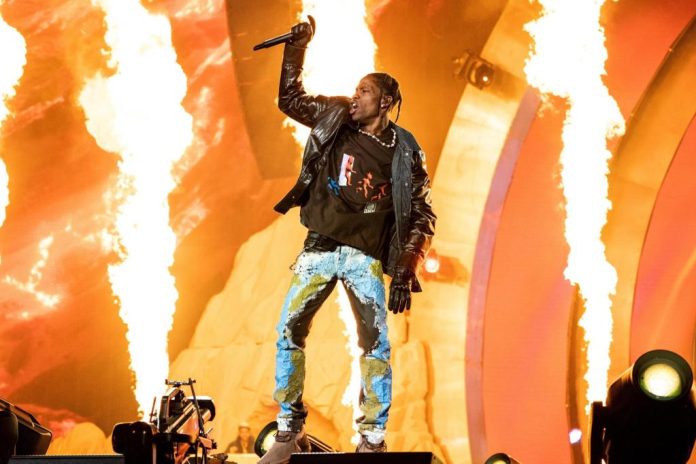
HOUSTON (AP) — A Texas grand jury has declined to indict rap superstar Travis Scott in a criminal investigation of a deadly crowd surge at the 2021 Astroworld festival, where some spectators were packed so tightly they could not move their arms or even breathe, his attorney said Thursday.

Lawyer Kent Schaffer confirmed that the Harris County grand jury had met and decided not to indict his client on any criminal charges stemming from the concert. Schaffer said he was not sure what charges the panel had considered.

“He never encouraged people to do anything that resulted in other people being hurt,” Schaffer said, adding that the decision is “a great relief.”

The Nov. 5, 2021, crowd surge in Houston killed 10 young festivalgoers who ranged in age from 9 to 27. The official cause of death was compression asphyxia, which an expert likened to being crushed by a car.

Roughly 300 people were injured and treated at the scene, and 25 were taken to hospitals.

Houston police and federal officials have been investigating whether Scott, concert promoter Live Nation and others had sufficient safety measures in place.

Schaffer said he feels sympathy for those who were killed at the festival and their families.

“But Travis is not responsible,” Schaffer said. “Bringing criminal charges against him will not ease their pain.”

More than 500 lawsuits were filed over the deaths and injuries at the concert, including many against Live Nation and Scott. Some have since been settled.

About 50,000 people attended the festival.

A 56-page event operations plan for the event had detailed protocols for various dangerous scenarios including a shooting, bomb or terrorist threats and severe weather. But it did not include information on what to do in the event of a crowd surge.

Similar crushes have happened all over the world, from a soccer stadium in England to the hajj pilgrimage in Saudi Arabia to Halloween festivities in the South Korean capital. Most people who who die in crowd surges suffocate.

___

Find the AP’s coverage of the Astroworld festival: https://apnews.com/hub/astroworld-festival-deaths

How to pack your carry-on bag to maximize your luggage space – Daily Press

0

Before you can enjoy your trip, you must endure the stress of packing your carry-on bag. It’s important to know what you’re allowed to pack in carry-on luggage and how to maximize space. This is especially true if you’re not checking a larger bag. 

With the right packing method, you can say goodbye to disorganized carry-on luggage that’s bursting at the seams. 

What to pack in your carry-on bag

First, consider what you can pack in your carry-on luggage and what you need to take with you on the flight, versus in a larger checked bag.

  • Clothes: Anyone bringing hold luggage won’t need to fit all their clothes in their carry-on. It’s worth packing at least a couple of days’ worth of clean clothes in case your checked bag goes missing. 
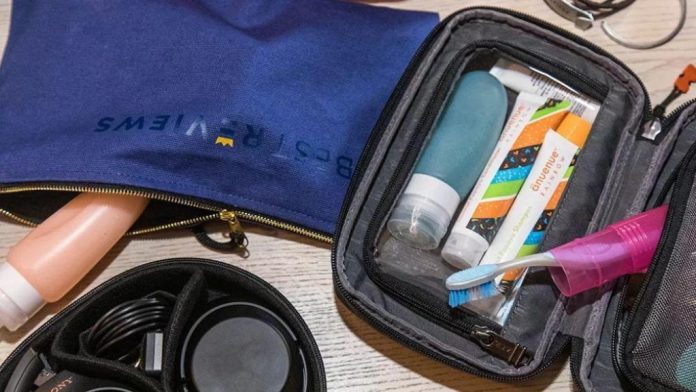
  • Small quantities of liquids: You can pack liquids in containers holding up to 3.4 ounces.  You can only take as many containers as can fit inside a quart Ziploc bag. Bear in mind that gels and pastes count as liquids in the eyes of the TSA. 
  • Empty water bottle: Staying hydrated on your flight is important, but you can’t bring a full water bottle with you through security. If you don’t want to buy a plastic bottle of water when you get through security, bring an empty water bottle that you can fill. 
  • Travel documents: You will need easy access to your passport or ID, any visas you need for international travel, and your plane tickets. Pack these into your carry-on bag in an accessible pocket.
  • Flight essentials: Pack anything that you will want to access on your flight, such as a book, handheld video game console, headphones, travel pillow, or snacks. 

What not to pack in your carry-on bag

  • Liquids over 3.4 ounces: If you want to bring liquids in containers larger than 3.4 ounces, they will need to go in checked luggage. 
  • Sharp objects: Exact rules about sharp objects vary depending on the country and airport, so avoid packing any sharp objects. You may get away with bringing nail scissors, but there’s no guarantee. 
  • Weapons: It should go without saying, but you can’t bring any kinds of weapons, including guns and ammunition, in your carry-on. 
  • Tools: Most tools aren’t allowed in cabin bags. If you need to travel with your tools, you will have to check them into the hold. 

How to pack your carry-on bag

Start with bulky items

Open up your case and start by putting any bulky items on the first layer. This includes items such as shoes and any books that you won’t need access to during your flight or electricals, such as hair dryers or curling irons. However, don’t pack laptops or tablets at the bottom of your bag. You will most likely need to remove these during the security check to go through the scanner on their own. 

Fill gaps with small items

Once you’ve got your bulky items sorted, fill in the gaps between them with small items, like socks, underwear, or tote bags. You can even stuff socks and underwear into shoes, though you might want to stash them in a zip-lock bag first so they don’t get stinky. 

Move onto clothes

The next layer consists of any clothes you’re packing in your carry-on. When packing a suitcase (including compact wheeled suitcases), you will save more space by carefully folding your clothes rather than rolling them. However, the rolling method saves space in backpacks and duffel bags

Pack items you need easy access to on top

On the top layer of your case, pack any items you will need access to during your flight or while going through security. You will usually need to remove your bag full of liquids, plus any gadgets, such as power banks, laptops and tablets, for TSA screening. Pack these near the top to avoid having to unpack your entire suitcase at security. 

Other items you may want to pack at the top of your case include eye masks, travel pillows, snacks, and entertainment. If you have a pocket in your bag, use this to store your travel documents for easy access. 

FAQ

Q. What size is a carry-on bag? 

A. For domestic U.S. travel, the standard carry-on size is 22 x 14 x 9 inches, including the wheels and the handle (not extended). Some international airlines allow a slightly larger cabin bag, but it’s best to buy one not exceeding these dimensions just in case.

Q. Should I bring a checked bag or just a carry-on?

A. It’s tempting to travel with nothing more than a cabin bag since most airlines allow you to travel with them for free, while there’s usually a fee to bring larger checked suitcases. Packing just a carry-on also means you don’t have to wait at the luggage carousel and there’s little chance your bag will get lost. 

However, whether you can make do without checked luggage depends on your circumstances. If you can’t pack light or your trip is long, a carry-on bag just won’t cut it. On the other hand, you can get away with just a carry-on if you’re going on a short trip or can travel light. The purpose of your trip can also inform how much you need to pack. A business trip with formal dinners will likely require more luggage than a casual weekend getaway.

Q. What counts as a personal item? 

A. A personal item is a smaller bag that many airlines allow you to bring in addition to your standard carry-on baggage. Most airlines don’t have exact size rules for a personal item, but it is expected to be smaller than your main carry-on. It should fit under the seat in front of you. 

Purses, backpacks, messenger bags, and diaper bags are all acceptable personal items. If you’re clever about it, you can significantly boost your luggage capacity without paying for checked baggage.


Sign up here to receive the BestReviews weekly newsletter for useful advice on new products and noteworthy deals. 

Lauren Corona writes for BestReviews. BestReviews has helped millions of consumers simplify their purchasing decisions, saving them time and money.

BestReviews spends thousands of hours researching, analyzing and testing products to recommend the best picks for most consumers.

BestReviews spends thousands of hours researching, analyzing and testing products to recommend the best picks for most consumers. BestReviews and its newspaper partners may earn a commission if you purchase a product through one of our links.

Distributed by Tribune Content Agency, LLC.

© 2023 BestReviews. Distributed by Tribune Content Agency, LLC

Deputy acquitted of all charges for failing to act during deadly Parkland school shooting – Daily Press

0

By TERRY SPENCER (Associated Press)

FORT LAUDERDALE, Fla. (AP) — A Florida sheriff’s deputy was acquitted Thursday of felony child neglect and other charges for failing to act during the 2018 Parkland school massacre, concluding the first trial in U.S. history of a law enforcement officer for conduct during an on-campus shooting.

Former Broward County Deputy Scot Peterson wept as the verdicts were read. The jury had deliberated for 19 hours over four days.

After court adjourned, Peterson, his family and friends rushed into a group hug as they whooped, hollered and cried. One of his supporters chased after lead prosecutor Chris Killoran and said something. Killoran turned and snapped at him, “Way to be a good winner” and slapped him on the shoulder. Members of the prosecution team then nudged Killoran out of the courtroom.

The campus deputy at Marjory Stoneman Douglas High School, Peterson had been charged with failing to confront shooter Nikolas Cruz during his six-minute attack inside a three-story 1200 classroom building on Feb. 14, 2018, that left 17 dead.

He could have received nearly 100 years in prison, although a sentence even approaching that length would have been highly unlikely given the circumstances and his clean record. He also could have lost his $104,000 annual pension.

Prosecutors, during their two-week presentation, called to the witness stand students, teachers and law enforcement officers who testified about the horror they experienced and how they knew where Cruz was. Some said they knew for certain that the shots were coming from the 1200 building. Prosecutors also called a training supervisor who testified Peterson did not follow protocols for confronting an active shooter.

Peterson’s attorney, Mark Eiglarsh, during his two-day presentation, called several deputies who arrived during the shooting and students and teachers who testified they did not think the shots were coming from the 1200 building. Peterson, who did not testify, has said that because of echoes, he could not pinpoint the shooter’s location.

Eiglarsh also emphasized the failure of the sheriff’s radio system during the attack, which limited what Peterson heard from arriving deputies.

“As parents, we have an expectation that armed school resource officers – who are under contract to be caregivers to our children – will do their jobs when we entrust our children to them and the schools they guard,” Broward State Attorney Harold F. Pryor and the prosecutor’s office said in a statement after the verdict. “They have a special role and responsibilities that exceed the role and responsibilities of a police officer. To those who have tried to make this political, I say: It is not political to expect someone to do their job.”

Security videos show that 36 seconds after Cruz’s attack began, Peterson exited his office about 100 yards (92 meters) from the 1200 building and jumped into a cart with two unarmed civilian security guards. They arrived at the building a minute later.

Peterson got out of the cart near the east doorway to the first-floor hallway. Cruz was at the hallway’s opposite end, firing his AR-15-style semiautomatic rifle.

Peterson, who was not wearing a bullet-resistant vest, didn’t open the door. Instead, he took cover 75 feet (23 meters) away in the alcove of a neighboring building, his gun still drawn. He stayed there for 40 minutes, long after the shooting ended and other police officers had stormed the building.

Peterson spent nearly three decades working at schools, including nine years at Stoneman Douglas. He retired shortly after the shooting and was then fired retroactively.

Cruz’s jury could not unanimously agree he deserved the death penalty. The 24-year-old former Stoneman Douglas student was then sentenced to life in prison.
Divided Supreme Court outlaws affirmative action in college admissions, says race can’t be used – Daily Press

0

By MARK SHERMAN (Associated Press)

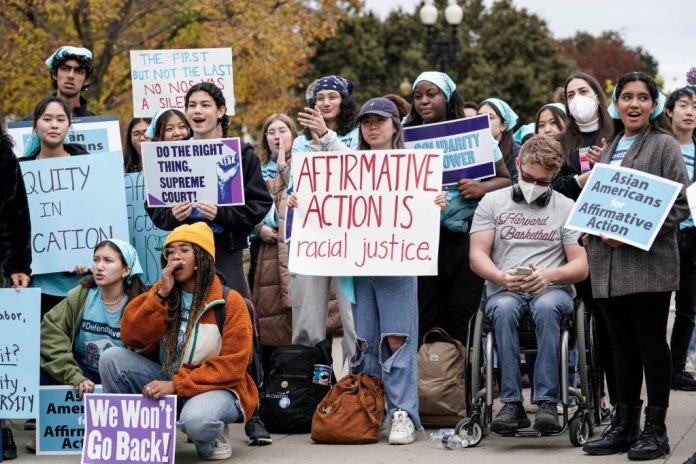
WASHINGTON (AP) — A divided Supreme Court on Thursday struck down affirmative action in college admissions, declaring race cannot be a factor and forcing institutions of higher education to look for new ways to achieve diverse student bodies.

The court’s conservative majority effectively overturned cases reaching back 45 years in invalidating admissions plans at Harvard and the University of North Carolina, the nation’s oldest private and public colleges, respectively.

The decision, like last year’s momentous abortion ruling that overturned Roe v. Wade, marked the realization of a long-sought conservative legal goal in finding that race-conscious admissions plans violate the Constitution and a law that applies to recipients of federal funding, as almost all colleges and universities are.

Those schools will be forced to reshape their admissions practices, especially top schools that are more likely to consider the race of applicants.

Chief Justice John Roberts said that for too long universities have “concluded, wrongly, that the touchstone of an individual’s identity is not challenges bested, skills built, or lessons learned but the color of their skin. Our constitutional history does not tolerate that choice.”

From the White House, President Joe Biden said he “strongly, strongly” disagreed with the court’s ruling and urged colleges to seek other routes to diversity rather than let the ruling “be the last word.”

Besides the conservative-liberal split, the fight over affirmative action showed the deep gulf between the three justices of color, each of whom wrote separately and vividly about race in America and where the decision might lead.

Justice Clarence Thomas — the nation’s second Black justice, who had long called for an end to affirmative action — wrote that the decision “sees the universities’ admissions policies for what they are: rudderless, race-based preferences designed to ensure a particular racial mix in their entering classes.”

Justice Sonia Sotomayor, the court’s first Latina, wrote in dissent that the decision “rolls back decades of precedent and momentous progress.”

Both Thomas and Sotomayor, the two justices who have acknowledged affirmative action played a role in their admissions to college and law school, took the unusual step of reading summaries of their opinions aloud in the courtroom.

In a separate dissent, Justice Ketanji Brown Jackson — the court’s first Black female justice — called the decision “truly a tragedy for us all.”

Jackson, who sat out the Harvard case because she had been a member of an advisory governing board, wrote, “With let-them-eat-cake obliviousness, today, the majority pulls the ripcord and announces ‘colorblindness for all’ by legal fiat. But deeming race irrelevant in law does not make it so in life.”

The vote was 6-3 in the North Carolina case and 6-2 in the Harvard case. Justice Elena Kagan was the other dissenter.

Biden, who quickly stepped before cameras at the White House, said of the nation’s colleges: “They should not abandon their commitment to ensure student bodies of diverse backgrounds and experience that reflect all of America,” He said colleges should evaluate “adversity overcome” by candidates.

In fact, an applicant for admission still can write about, and colleges can consider, “how race affected his or her life, be it through discrimination, inspiration or otherwise,” Roberts wrote.

But the institutions “may not simply establish through application essays or other means the regime we hold unlawful today,” he wrote.

The court’s decision will force universities across the nation to reshape their admissions practices, especially at top schools that are more likely to consider the race of applicants.

Presidents of many colleges quickly issued statements affirming their commitment to diversity regardless of the court’s decision. Many said they are still assessing the impact but will follow federal law.

President Reginald DesRoches of Rice University in Houston said he was “greatly disappointed” by the decision but “more resolute than ever” to pursue diversity. “The law may change, but Rice’s commitment to diversity will not,” he said in a campus message.

Former Presidents Donald Trump and Barack Obama offered starkly different takes on the high court ruling. The decision marked “a great day for America. People with extraordinary ability and everything else necessary for success, including future greatness for our Country, are finally being rewarded,” Trump, the current Republican presidential frontrunner, wrote on his social media network.

Obama said in a statement that affirmative action “allowed generations of students like Michelle and me to prove we belonged. Now it’s up to all of us to give young people the opportunities they deserve — and help students everywhere benefit from new perspectives.”

The Supreme Court had twice upheld race-conscious college admissions programs in the past 20 years, including as recently as 2016.

But that was before the three Trump appointees joined the court. At arguments in late October, all six conservative justices expressed doubts about the practice, which had been upheld under Supreme Court decisions reaching back to 1978.

Lower courts also had upheld the programs at both UNC and Harvard, rejecting claims that the schools discriminated against white and Asian American applicants.

The college admissions disputes were among several high-profile cases focused on race in America, and were weighed by the conservative-dominated, but most diverse court ever. Among the nine justices are four women, two Black people and a Latina.

The justices earlier in June decided a voting rights case in favor of Black voters in Alabama and rejected a race-based challenge to a Native American child protection law.

The affirmative action cases were brought by conservative activist Edward Blum, who also was behind an earlier challenge against the University of Texas as well as the case that led the court in 2013 to end use of a key provision of the landmark Voting Rights Act.

Blum formed Students for Fair Admissions, which filed the lawsuits against both schools in 2014.

The group argued that the Constitution forbids the use of race in college admissions and called for overturning earlier Supreme Court decisions that said otherwise.

Roberts’ opinion effectively did so, both Thomas and the dissenters wrote.

The only institutions of higher education explicitly left out of the ruling were the nation’s military academies, Roberts wrote, suggesting that national security interests could affect the legal analysis.

Blum’s group had contended that colleges and universities can use other, race-neutral ways to assemble a diverse student body, including by focusing on socioeconomic status and eliminating the preference for children of alumni and major donors.

The schools said that they use race in a limited way, but that eliminating it as a factor altogether would make it much harder to achieve a student body that looks like America.

At the eight Ivy League universities, the number of nonwhite students increased from 27% in 2010 to 35% in 2021, according to federal data. Those men and women include Asian, Black, Hispanic, Native American, Pacific Islander and biracial students.

Nine states already prohibit any consideration of race in admissions to their public colleges and universities. The end of affirmative action in higher education in California, Michigan, Washington state and elsewhere led to a steep drop in minority enrollment in those states’ leading public universities.

The other states are: Arizona, Florida, Georgia, Nebraska, New Hampshire and Oklahoma.

In 2020, California voters easily rejected a ballot measure to bring back affirmative action.

A poll last month by The Associated Press-NORC Center for Public Affairs Research showed 63% of U.S. adults say the court should allow colleges to consider race as part of the admissions process, yet few believe students’ race should ultimately play a major role in decisions. A Pew Research Center survey released last week found that half of Americans disapprove of considerations of applicants’ race, while a third approve.

The chief justice and Jackson received their undergraduate and law degrees from Harvard. Two other justices, Neil Gorsuch and Kagan, went to law school there, and Kagan was the first woman to serve as the law school’s dean.

Every U.S. college and university the justices attended, save one, urged the court to preserve race-conscious admissions.

Those schools — Yale, Princeton, Columbia, Notre Dame and Holy Cross — joined briefs in defense of Harvard’s and UNC’s admissions plans.

Only Justice Amy Coney Barrett’s undergraduate alma mater, Rhodes College, in Memphis, Tennessee, was not involved in the cases.

___

Associated Press writer Collin Binkley contributed to this report.

Human remains have likely been recovered from the Titan submersible wreckage, US Coast Guard says – Daily Press

0

By PATRICK WHITTLE (Associated Press)

PORTLAND, Maine (AP) — Human remains have likely been recovered from the wreckage of the submersible that imploded during an underwater voyage to view the Titanic, the U.S. Coast Guard said Wednesday.

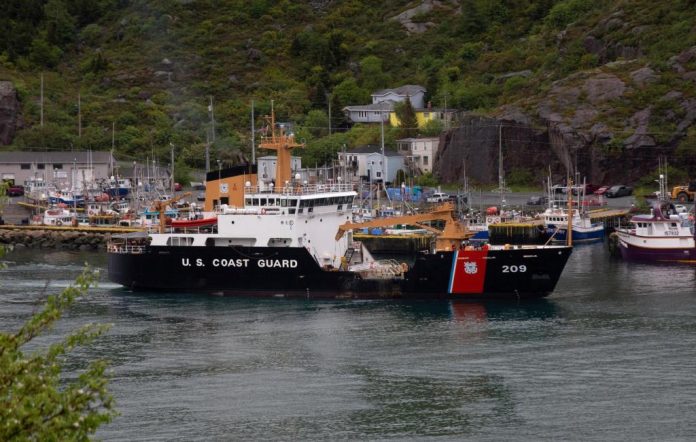
The news came hours after the announcement that debris from the Titan, collected from the seafloor more than 12,000 feet (3,658 meters) below the surface of the North Atlantic, had arrived in St. John’s, Newfoundland. Twisted chunks of the submersible were unloaded at a Canadian Coast Guard pier.

Recovering and scrutinizing the wreckage is a key part of the investigation into why the Titan imploded last week, killing all five people on board. The multiday search and eventual recovery of debris from the 22-foot (6.7-meter) vessel captured the world’s attention.

“There is still a substantial amount of work to be done to understand the factors that led to the catastrophic loss of the Titan and help ensure a similar tragedy does not occur again,” Coast Guard Chief Capt. Jason Neubauer said in a statement released late Wednesday afternoon.

The “presumed human remains” will be brought to the United States, where medical professionals will conduct a formal analysis, Neubauer said. He added that the Coast Guard has convened an investigation of the implosion at the highest level. The Marine Board of Investigation will analyze and test evidence, including pieces of debris, at a port in the U.S. The board will share the evidence at a future public hearing whose date has not been determined, the Coast Guard said.

Neubauer said the evidence will provide “critical insights” into the cause of the implosion.

Debris from the Titan, which is believed to have imploded on June 18 as it made its descent, was located about 12,500 feet (3,810 meters) underwater and roughly 1,600 feet (488 meters) from the Titanic on the ocean floor. The Coast Guard is leading the investigation, in conjunction with several other government agencies in the U.S. and Canada.

Authorities have not disclosed details of the debris recovery, which could have followed several approaches, according to Carl Hartsfield, who directs a lab at the Woods Hole Oceanographic Institution that designs and operates autonomous underwater vehicles and has been serving as a consultant to the Coast Guard.

“If the pieces are small, you can collect them together and put them in a basket or some kind of collection device,” Hartsfield said Monday. Bigger pieces could be retrieved with a remote-operated vehicle, or ROV, such as the one brought to the wreckage site by the Canadian ship Horizon Arctic to search the ocean floor. For extremely big pieces, a heavy lift could be used to pull them up with a tow line, he said.

Representatives for Horizon Arctic did not respond to requests for comment. The ROV’s owner, Pelagic Research Services, a company with offices in Massachusetts and New York, is “still on mission” and cannot comment on the investigation, company spokesperson Jeff Mahoney said Wednesday.

“They have been working around the clock now for 10 days, through the physical and mental challenges of this operation,” Mahoney said.

Analyzing the recovered debris could reveal important clues about what happened to the Titan, and there could be electronic data recorded by the submersible’s instruments, Hartsfield said.

“So the question is, is there any data available? And I really don’t know the answer to that question,” he said Monday.

The Transportation Safety Board of Canada, which is conducting a safety investigation into the Titan’s Canadian-flagged mother ship, the Polar Prince, said Wednesday that it has sent that vessel’s voyage data recorder to a lab for analysis.

Stockton Rush, the Titan’s pilot and CEO of OceanGate Expeditions, the company that owned the submersible, was killed in the implosion along with two members of a prominent Pakistani family, Shahzada Dawood and his son Suleman Dawood; British adventurer Hamish Harding; and Titanic expert Paul-Henri Nargeolet.

OceanGate is based in the U.S. and OceanGate Expeditions, a related company that led the Titan’s dives to the Titanic, is registered in the Bahamas.

The company charged passengers $250,000 each to participate in the voyage. The implosion of the Titan has raised questions about the safety of private undersea exploration operations. The Coast Guard wants to use the investigation to improve the safety of submersibles.

___

This story was first published on June 28, 2023. It was updated on June 29, 2023, to make clear that the company that led the Titan’s dives to the Titanic was registered in the Bahamas, but the Titan itself was not.

___

Associated Press writers Holly Ramer in Concord, New Hampshire, and Michael Casey in Boston contributed to this report.