Home Blog Page 128

Ruminations on America – Daily Press

0

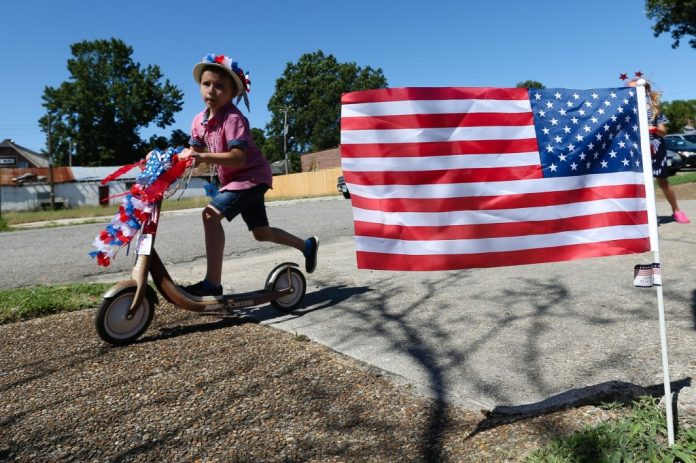
In honor of the nation’s 247th birthday, the editorial board presents a selection of quotations about patriotism and citizenship to consider over the holiday with our wishes for a fun and safe Independence Day celebration.

“Patriotism is easy to understand in America. It means looking out for yourself by looking out for your country. In no other nation on earth does this principle have such complete application. … Patriotism does not mean a regard for some special section or an attachment for some special interest, and a narrow prejudice against other sections and other interests; it means a love of the whole country.” — President Calvin Coolidge, from his “The Destiny Of America” address in Northampton, Massachusetts, on May 30, 1923.

“O beautiful for heroes proved / In liberating strife / Who more than self their country loved / And mercy more than life! / America! America! / May God thy gold refine / Till all success be nobleness / And every gain divine!” — Katherine Lee Bates, from the revised version of “America the Beautiful,” published in 1911. 

“Our democracy must be not only the envy of the world but the engine of our own renewal. There is nothing wrong with America that cannot be cured by what is right with America.” — President Bill Clinton, from his first inaugural address on Jan. 20, 1993. 

“It is entirely possible to live out an entire life without experiencing the civic protections which can become so contingently vital to us at vital moments. Even if we never need the help of the courts, or of the policeman, or of the Bill of Rights, that they are there for us in the event of need distinguishes our society from others. … This enjoyment, this answering of needs, can make us proud of our country — and put us in its debt.” — William F. Buckley, from “Reflections on service and citizenship,” published in 1990. 

“I would not take my patriotism from my neighbor or from Congress. I should teach the children in the schools that there are certain ideals, and one of them is that all men are created free and equal. Another that the proper government is that which exists by the consent of the governed.” — Mark Twain, from his address to the Male Teachers Association of the City of New York on March 16, 1901. 

“The American institutions are democratic, not only in their principle but in all their consequences; and the people elects its representatives directly, and for the most part annually, in order to ensure their dependence. … it is evident that the opinions, the prejudices, the interests, and even the passions of the community are hindered by no durable obstacles from exercising a perpetual influence on society.” — Alexis de Tocqueville, from “Democracy in America,” published in 1835. 

“There are men among us who use ‘patriotism’ as a club for attacking other Americans. What can we say for the self-styled patriot who thinks that a Negro, a Jew, a Catholic, or a Japanese-American is less an American than he? That betrays the deepest article of our faith, the belief in individual liberty and equality which has always been the heart and soul of the American idea.” — Illinois Gov. Adlai Stevenson, from his “The Nature of Patriotism” address to the American Legion Convention in New York on Aug. 27, 1952.

“All great change in America begins at the dinner table. So, tomorrow night in the kitchen I hope the talking begins. And children, if your parents haven’t been teaching you what it means to be an American, let ’em know and nail ’em on it. That would be a very American thing to do.” — President Ronald Reagan, from his “Farewell Address to the Nation” on Jan. 11, 1989.

“Our nation has not always lived up to its ideals — yet those ideals have never ceased to guide us. They expose our flaws, and lead us to mend them. We are the beneficiaries of the work of the generations before us, and it is each generation’s responsibility to continue that work.” — First Lady Laura Bush, from her address to the Republican National Convention in New York on Aug. 31, 2004. 
Tides’ attendance is up 26% from last season – Daily Press

0

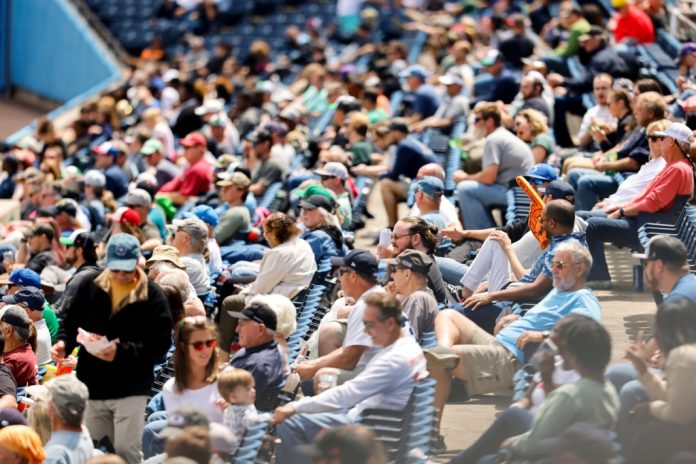
During Wednesday’s “Turn Back the Clock Night” at Harbor Park, fans jammed the concourse so much with crisscrossing concessions lines that it was nearly impossible to walk from one end of the stadium to the other.

An announced crowd of 10,213 — the third-largest of the season so far — watched as the Norfolk Tides scored seven times after the fifth inning in a 12-5 win over Charlotte to open the second half of the International League season.

It was another double victory for the Tides, who once again won both on the field and at the gate.

If Harbor Park has seemed more crowded this season, that’s because it is. Entering the weekend, attendance was up 26% over 2022, a testament to the value of putting a good product on the field, post-COVID consumer confidence and plain old good luck.

The prospect-laden Tides won the first-half league title going away. Fans who might have been reluctant to walk among a crowd as the pandemic waned now appear ready to mingle.

And the Tides have had just four weekend games — key home openings that drive revenue — affected by weather.

“Winning definitely helps,” Tides GM Joe Gregory said. “The more we win, the more media and people are tweeting about us or sharing about us in social media. So I think that exposure definitely helps. Good luck always helps, when we get lucky with the weather and things like that.

“There’s a lot of variables in the equation, but so far, they’re all lining up to a good result.”

Through 38 home games this season, the Tides were drawing an average of 5,791 fans per contest. That’s an increase of roughly 1,200 per game in the same span last season.

Wednesday’s game, admittedly, was a bit of an anomaly. The throwback nights feature 50-cent hot dogs and soft drinks, among other promotions, and they always draw well.

Fans wait in line outside the front gate of Harbor Park for Turn Back the Clock Night on Wednesday. A crowd of 10,213 attended the Tides’ game against Charlotte. Billy Schuerman/Staff

The Tides sold more than 25,000 hot dogs that night as fans watched top pitching prospect Grayson Rodriguez turn in six strong innings in his ongoing quest to return to the parent Baltimore Orioles.

Rodriguez, a 23-year-old right-hander, couldn’t help but notice the extra bustle.

“That’s pretty spectacular for a Wednesday night,” he said. “It’s the summer. I’m glad that a lot of people are coming out and watching the games. Baseball’s a summertime sport, so I’m glad to see that the fans are enjoying it.”

Norfolk manager Buck Britton, a former utilityman who played for the Tides as recently as 2014, has seen his share of slow nights at the vast venue.

Britton said the recent boost in attendance has helped his players.

“This is a pretty big stadium when there’s nobody in it,” he said. “I’ve definitely been hearing comments (from the players), especially on Tuesday nights, Wednesday nights, Thursday day games at noon. They’re bringing in good crowds, and I think the guys notice it. There’s energy in the ballpark, which as the home team wherever it is, when you get the crowd behind you, man, it does give you a little boost.”

The 2020 minor league season was canceled because of COVID. In 2021, teams played with attendance restrictions that allowed for social distancing and proper spacing of seats.

Gregory said the Tides might be benefitting from “a bit of a snowball effect coming out of COVID.”

“I think once everything was perceived as being safe, I think there is a pent-up demand for people wanting to get out,” he said. “And maybe people didn’t feel as safe going to indoor events, but outdoor events maybe are a little bit more palatable to people that still have some lingering effects. So I think having a product on the field in an outdoor environment where people are more comfortable has really contributed to increased attendance.”

Local government is also reaping benefits. A 10% admission tax, which is included in the price of each ticket, goes to the city, as does 100% of parking revenue outside of a couple of lots owned by the Tides.

And then there’s the obvious bump in concessions and merchandise revenue that the Tides have enjoyed this season.

“It’s all correlated,” Gregory said. “The more people in house, the more hats are going to be sold, the more beers are going to be sold. So it’s good across the board as far people coming in here.”

Rodriguez has worked his way up from the bottom rung of the minors to the top since the Orioles drafted him 11th overall in 2018. That means he’s pitched in front of crowds both large and small, the latter of which can be challenging at times.

“Definitely, there’s a little bit less adrenaline. I’m not going to lie,” Rodriguez said. “So the more fans, the better. It’s been a lot of fun having the fans in the stands. It’s made for some pretty fun baseball. We’ve been playing some pretty good baseball, so we’re going to try to keep it rolling. And the fans are a big key to that.”

David Hall, [email protected]. Twitter @DavidHallVP.

By the numbers

The Tides have averaged 5,791 fans through 38 home games this season, which is up about 1,200 from this point last season. But in 12 home games in June, the average was 7,204.

Dodgers pitcher Daniel Hudson returns just over a year after ACL injury – Daily Press

0

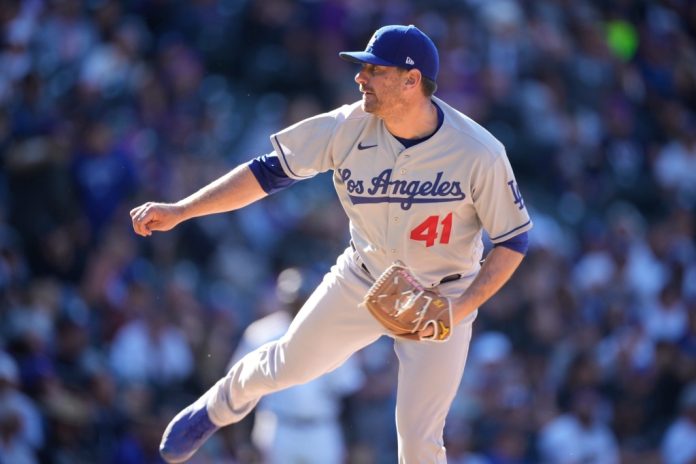
KANSAS CITY, Mo. — Daniel Hudson made his long-awaited return to the big leagues and the Los Angeles Dodgers on Friday night, ending an odyssey for the veteran right-hander that began with torn ligaments in his left knee and included several setbacks in his recovery.

Hudson, a former Princess Anne High and Old Dominion standout, officially rejoined the club about 30 minutes before first pitch in the opener of a three-game series in Kansas City, then allowed one hit and struck out two in a scoreless relief appearance that helped preserve the Dodgers’ 9-3 victory over the Kansas City Royals.

“It just felt good to be back out there with them,” Hudson said. “I felt really good out there.”

The 36-year-old Hudson hurt his ACL just over a year ago in a win over Atlanta. Ronald Acuña Jr. hit his pitch down the third-base line, and Hudson tried to reverse direction after his delivery had carried him toward first base. His knee locked up and he went to the ground in pain.

The Dodgers hoped that Hudson would recover in time for opening day, but lingering pain in the knee combined with tendinitis in his right ankle kept him on the bench. He received a cortisone injection and restarted the build-up near the end of May.

“The timing is perfect,” Dodgers manager Dave Roberts said. “We’ll give him three months to go hard and pick us up.”

The Dodgers, who headed into Saturday two games behind the Arizona Diamondbacks in the NL West, already have a dominant closer in Evan Phillips, who is 1-2 with a 1.97 ERA and 11 saves in 12 chances across 32 innings. So while Hudson did have a 2.22 ERA with five saves in 24 1/3 innings last season, the veteran reliever could be headed for a setup role out of the Los Angeles bullpen.

He also could be headed for a leadership role there. Hudson has made 479 appearances with seven clubs over 13 seasons.

“He’s just another adult in the pen,” Roberts said. “He’s been battle-tested. He has a good heart rate. He gets righties and lefties out. He’s got the respect of everyone in the pen and on the club. He’s certainly a huge addition.”

Meet the man who channels Thomas Jefferson during Colonial Williamsburg’s Declaration of Independence reading – Daily Press

0

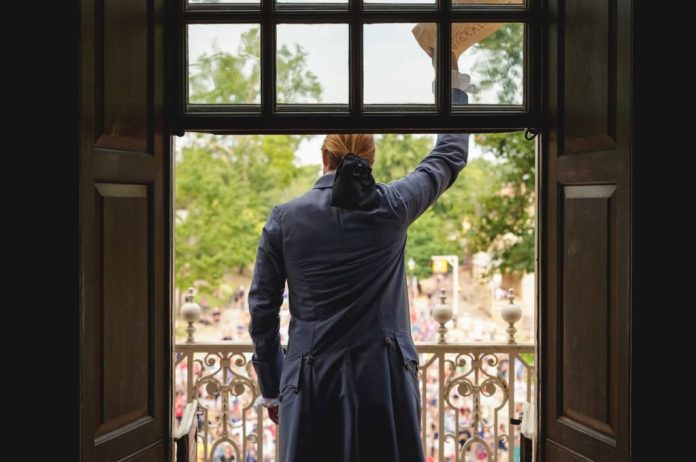
WILLIAMSBURG — When Kurt Smith steps out onto a small second-floor balcony on July Fourth and looks out over a sea of people on Duke of Gloucester Street, he’ll be ready to give a speech he’s given dozens of times before.

For the past nine years, Smith has been portraying Thomas Jefferson at Colonial Williamsburg. Jefferson’s talents lie much more in the written word than in oration, but even as Smith speaks in a clear, booming voice for an audience of potentially thousands, Smith strives to capture Jefferson’s spirit — and a few laughs while he’s at it.

“(Comedian) George Carlin said, ‘I like to make people laugh because when their mouth is open, I can drop something in for them to chew on,’” Smith said. “I think of my treatment of Jefferson in somewhat of a similar way.”

Thomas Jefferson, portrayed by Kurt Smith, begins the day with a reading of the Declaration of Independence from the balcony of the Capitol at 9:30 a.m. (Courtesy of Darnell Vennie/The Colonial Williamsburg Foundation)

People are often excited to hear the declaration, even in 2023, and especially on the Fourth of July, which Smith called “the coolest thing in the world.”

“If I get a few cheers from a rowdy group of people who’ve clearly just come from the tavern, then I will absolutely stop my reading to look at them and say something like, ‘That’s the spirit we need,’” he said.

Smith will be giving two readings of the Declaration of Independence on the same day that the country’s founding document was adopted in 1776. After nearly a decade as Jefferson, he’s given the same reading plenty of times before, but despite its familiarity, there’s always a new layer to be found.

“The cool thing about the Declaration of Independence is that it sort of refreshes itself,” Smith said. “In … the 27 grievances against the king and Parliament and our mother country, depending on the year, some of those grievances slide away into relegation and others, because of what we’re experiencing (currently), … slide right up to the top and you go, ‘Boy howdy, that feels just like today.’”

Williamsburg played a key role in the inception of the declaration, with Virginians originating the idea for a committee that would go on to be known as the Continental Congress.

“We call for that committee, that congress, to be created from the Raleigh Tavern in Williamsburg,” Smith said. “That is a massive undertaking… We wouldn’t have a Continental Congress had men in Williamsburg not met at a tavern to call for one. The most radical document to come out of the Continental Congress was … the Declaration of Independence.”

Seven Virginians, including Jefferson, were among the 56 delegates who signed the declaration, which was ratified on July 4, 1776, in Philadelphia. Jefferson was also among the five authors of the document, which famously states that certain truths are self-evident: “That all men are created equal, that they are endowed by their Creator with certain unalienable Rights, that among these are Life, Liberty and the pursuit of Happiness.”

As Smith pointed out, those promises did not, at least initially, apply to everyone. He referenced an 1852 speech by Frederick Douglass in which Douglass asked, “What, to the American slave, is your Fourth of July? I answer: a day that reveals to him, more than all other days in the year, the gross injustice and cruelly to which he is the constant victim.”

“The declaration holds all of the promises that were delivered immediately. It also holds all the promises that were deferred and denied,” Smith said. To visit that document is to “revisit everything that is good and right and hopeful about this country as equally as it is to revisit everything that we got wrong.

“When you hear the Declaration of Independence in 2023, you are listening to America’s Promise, and if your ears are working, then you are engaging with those promises that were kept and those promises that have yet to be fully delivered on.”

Smith will read the declaration at 9:30 a.m. at Capitol Circle on Duke of Gloucester Street in Colonial Williamsburg and then again as part of the Lights of Freedom program on Palace Green in the evening. There is also a reading at noon at the Courthouse, which is done by another group of actor interpreters.

Fireworks at 9:30 p.m. behind the Governor's Palace conclude the Lights of Freedom program, which begins at 8 p.m. and includes a reading of the Declaration of Independence, American marching music of the Revolution and a patriotic sing-along. Courtesy of Darnell Vennie/The Colonial Williamsburg Foundation
Fireworks at 9:30 p.m. behind the Governor’s Palace will conclude the Lights of Freedom program, which begins at 8 p.m. and includes a reading of the Declaration of Independence. (Courtesy of Darnell Vennie/The Colonial Williamsburg Foundation)

The readings are among the many activities planned for July Fourth in Colonial Williamsburg. A full schedule of the day’s events is available online at www.colonialwilliamsburg.org/explore/special-event/july-4/.

When Smith does the two readings, he will strive to “imbue it with a sense of urgency, of energy, of ‘What the heck are we doing?’

“There’s a bit of terror there, but also a great sense of hope,” he said.

Smith estimated that thousands of people come out every year for the reading, and the hope is that even more will be on hand, thanks to The Colonial Williamsburg Foundation offering free admission to the Historic Area and the Art Museums during the holiday. July Fourth is something of a yearly “Super Bowl” for Colonial Williamsburg, he said, when everyone shows up to see what the foundation has been working on throughout the year.

With his audience on Tuesday, he hopes to inspire people to stay engaged with what’s going on today.

The Declaration of Independence “is just a piece of paper with ink on it if we disbelieve it,” he continued. “So it’s up to us on the other 364 days of the year to engage, to listen, to read and to have these conversations even though they’re difficult.”

Sian Wilkerson, 757-342-6616, [email protected]

New mobile bartending business provides unique cocktails throughout Hampton Roads – Daily Press

0

Summer is in full swing, and people have started cooling off with refreshing beverages at beaches and pools around Hampton Roads. With one new local business, now the drinks can come directly to you.

Alexandra Peck and Nicole Sisson, owners of mobile bartending service Bad N’ Boozy, met while working behind the bar at Hot Tuna in Virginia Beach. The two became close friends, even after leaving the restaurant to work office jobs.

Still, they wanted to figure out a way to get back into bartending without working in the service industry. Then, in October, they started working on their own pop-up business.

Peck and Sisson worked their first event in January and have spent the past six months bartending at weddings, business openings, birthdays and graduations.

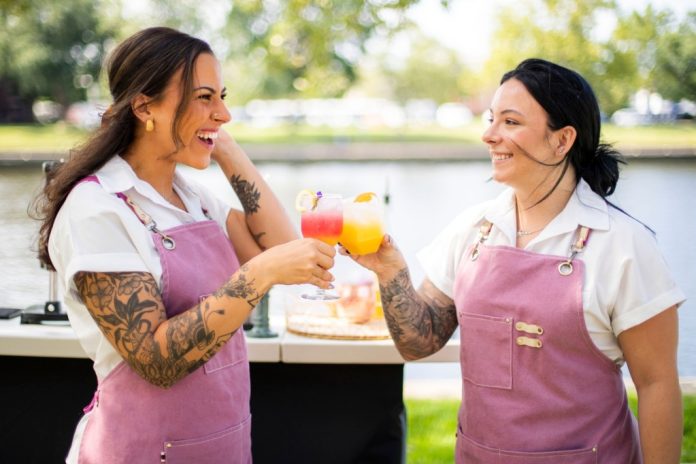
A Moscow mule mocktail made by Bad N’ Boozy sits on their mobile bar cart surrounded by other signature cocktails in Norfolk on Tuesday. (Kendall Warner/The Virginian-Pilot)

Bad N’ Boozy has different packages to choose from, including a traditional beer and wine setup and a simple coffee bar. Sisson said they’ve done everything from Margaritaville-themed bars to full mocktail bars.

Due to Virginia Alcohol Beverage Control regulations, customers must provide the alcohol, and Bad N’ Boozy supplies everything else, including cups and mixers.

Bad N’ Boozy offers services throughout Hampton Roads, with extra fees if an event is farther away. Peck and Sisson said they can also just do bartending for customers and venues that already have a bar. Packages range from $400 to $2,000 depending on the add-ons and drinks selected.

Sisson said customers get access to a private cocktail book they can browse, and during consultation, they can go over any themes or aesthetic preferences. Other bartending services may only offer a predetermined drink menu and no setup or mixers.

“We really try to make it a unique experience for every client, and not so cut-and-paste,” she said.

Collaborating on specialized cocktails and packages with clients has also led to getting to know them better, Sisson said.

“Especially for weddings, they’re always really personal. And, you know, the cocktail bar is usually the central place at a wedding or an event — it’s the place where everyone goes to come together,” she said.

Peck and Sisson prep their materials ahead of each event and fit the mixers, mobile bar, side table and decorations into one, sometimes two, cars.

For those looking for a less expensive drink option, they’ve also started offering portable boozy cart rentals filled with “boozy pouches” and “boozy popsicles” that people can take to the beach. Sisson described the pouches as an “adult Capri Sun” that can be filled with drinks like margaritas, crushes and hurricane rum cocktails.

With the summer heating up, they said it has been an especially busy season for Bad N’ Boozy. Peck and Sisson said if business continues to grow, they want to buy a mobile bar trailer.

Peck and Sisson currently work other full-time jobs, but they hope to focus more on their business.

At each event, they each wear a signature uniform of a pink apron over a white button-up. This, Sisson said, is a nod to their work as a women-owned business.

“The industry is a hard thing to be in and, most often, it’s male-dominated, the service industry,” Sisson said. “And so we think the pink is kind of a play on our femininity … and to show we can be bold and empowering and feminine.”

Gabby Jimenez, [email protected]

Your guide to July 4th on the Outer Banks – Daily Press

0

Five fireworks shows will light up the skies over the Outer Banks this Fourth of July, with plenty of parades and other patriotic fun through the holiday weekend.

Corolla at the Whalehead Club

Photo courtesy Visit Currituck

Revelers await fireworks at the WhaleheadClub in Corolla. This year’s celebration begins at 5 p.m., with fireworks at dusk. (Photo courtesy Visit Currituck)

The 29th annual Corolla Independence Day Celebration starts at 5 p.m. July 4 with live music, entertainment and food. Admission and parking are free with onsite parking available starting at 3 p.m. at Historic Corolla Park until the lots are full. The fireworks display, billed as the biggest on the Outer Banks, will begin at dusk. For more information, see visitcurrituck.com.

___

Duck

The annual Duck Fourth of July parade marches through town starting at 9 a.m. on July 4. The one-mile parade route begins at the crest of the hill on Scarborough Lane, travels east towards the ocean, turns left onto Ocean Way, and then continues onto Christopher Drive to end at Pamela Court.

The annual Duck Fourth of July Parade kicks off at 9 a.m., with a community celebration following at Duck Town Park. (Photo courtesy Town of Duck)

(Photo courtesy Town of Duck)

The annual Duck Fourth of July Parade kicks off at 9 a.m., with a community celebration following at Duck Town Park. (Photo courtesy Town of Duck)

A community celebration will be held immediately following the parade at the Duck Town Park featuring live music, cold refreshments and the awarding of the parade trophies.

See townofduck.com for more information.

___

Kill Devil Hills

The Town of Kill Devil Hills is hosting its annual fireworks show July 4 with assistance from an Outer Banks Visitors Bureau grant.

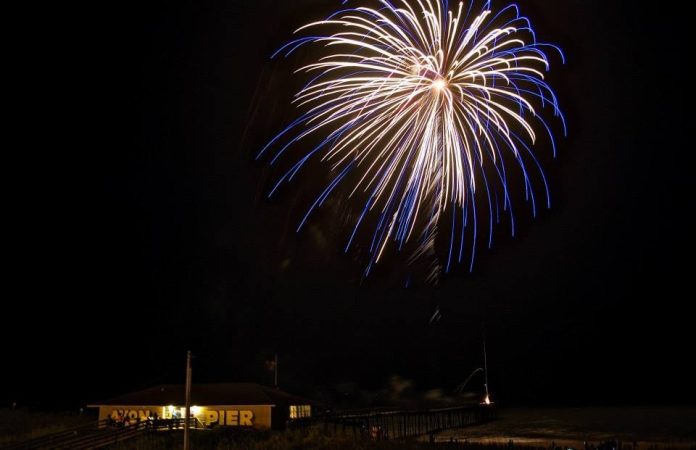
Fireworks begin at 9:15 p.m. at Avalon Pier, 2111 Virginia Dare Trail, at milepost 6. The fireworks will be visible from all areas of the Kill Devil Hills oceanfront. Rain date for the event is July 5.

If you can’t make it to the show in person, the town plans to livestream the fireworks on its YouTube channel and Facebook page.

___

Nags Head

The Town of Nags Head is hosting, in conjunction with the Nags Head Fishing Pier and the Outer Banks Visitors Bureau, the annual Independence Day Fireworks Spectacular on July 4 at 9:25 p.m. on the ocean pier at milepost 11.5. A rain date has been set for July 5. The fireworks display will last approximately 25 minutes.

Parking at and near the fireworks display site will be directed by the Nags Head Police Department. Those attending the show are encouraged to park east of U.S. 158. Those choosing to park west of the bypass should use extreme caution while attempting to cross this heavily-traveled roadway.

The following public beach accesses are recommended for access to the beach for fireworks viewing:

  • South of Nags Head Fishing Pier
  • Curlew Street
  • Hollowell Street
  • Conch Street
  • North of Nags Head Fishing Pier
  • Bladen Street
  • Bittern Street
  • Bonnett Street
  • Barnes Street
  • Blackman Street

Jockey’s Ridge State Park is another great spot for viewing the fireworks. Other local fireworks may be seen, but distantly. The park will be open late July 4 to accommodate visitors. Call the park at 252-441-7132 for more information.

___

Manteo

The Town of Manteo is putting on annual Fourth of July festivities on the waterfront starting at 3 p.m. and running until dark, when the fireworks begin. Events include decorated bikes, apple pie and live music.

For more information, you can visit the Town of Manteo’s website at townofmanteo.com or call Town Hall at 252-473-2133.

___

Hatteras Island

The 10th annual Fourth of July golf cart parade benefitting the Hatteras Island Cancer Foundation motors off at 6 p.m. in Hatteras Village starting at Teach’s Lair Marina. At Village Center, there will be a free community cookout from 5:30-7:30 p.m. serving hamburgers and hot dogs. Parade winners will also be announced.

Later in the evening, fireworks are scheduled at the Avon Fishing Pier starting at 9:15 p.m. The show is sponsored by the Avon Property Owners Association and funded in part by the Outer Banks Visitors Bureau. The event is also supported by donations from the Hatteras Island business community and its residents, property owners and guests.

The fireworks display, permitted by the National Park Service, lasts about 20 minutes. Fireworks are visible all along the Avon beach and parking is limited, so walk, bike or carpool.

___

Ocracoke

Ocracoke Island is celebrating Independence Day over a three-day period, starting Sunday, July 2, with fireworks that can be viewed from Silver Lake Harbor beginning at 9:15 p.m. There will be a pre-fireworks gathering with Ocracoke Island deejay Tommy Hutcherson spinning dance tunes and patriotic songs at the National Park Service docks.

On July 3, the celebration features an old-fashioned square dance in the Berkley Barn from 6:30-8:30 p.m. And on July 4, there will be a sand sculpture contest, rare viewing inside the Ocracoke Lighthouse and the annual Old Time Ocracoke Parade, which kicks off at 4 p.m. The theme of this year’s parade is the 200th anniversary of the Ocracoke Light Station.

From 7-10 p.m., there will be a community beach fire under the stars at the Ocracoke Day Use Area. Bring your own chairs, blankets, marshmallows and roasting sticks.

The village’s Independence Day events are sponsored by the Ocracoke Occupancy Tax Board, Hyde County and the Ocracoke Civic and Business Association.

For more information, see visitocracokenc.com.

___

Outer Banks fireworks etiquette

Officials on the Outer Banks remind anyone attending fireworks this Fourth of July not to use or block driveways. Vehicles blocking driveways or presenting a traffic hazard before, during, or immediately the shows will be towed. In Kill Devil Hills and Nags Head, the towns request those attending to use the public beach accesses as pathways to the oceanfront. Please stay off the environmentally sensitive dunes and do not use the private property of others, such as private gazebos or decks, to view the fireworks without the property owner’s permission.

Volunteer firefighter, 9/11 survivor is hiking Appalachian Trail to raise money for those with mental health illnesses. It’s saved his life along the way. – Daily Press

0

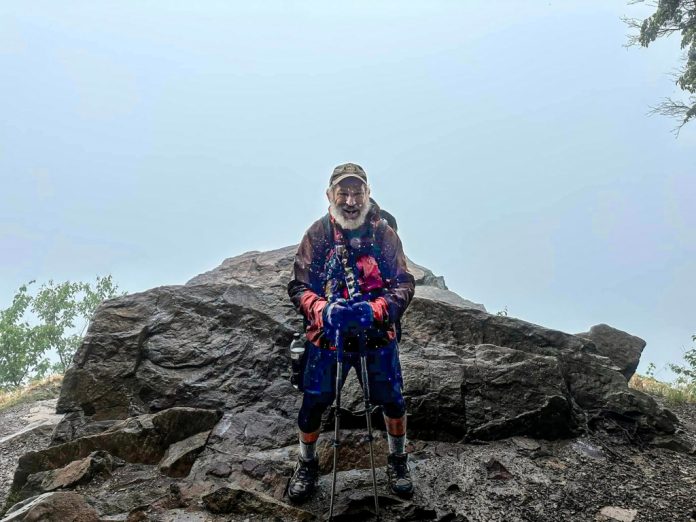
It took Rob Weisberg, also referred to by the trail name of “sleepwalker,” over 20 years to be able to sleep through the night again.

Weisberg, a volunteer firefighter of 29 years and a 9/11 survivor, said he had been sleepwalking through his life after the attacks.

Now, he’s walking the Appalachian Trail.

Having grown up as an Eagle Scout, Weisberg said he always knew about the Appalachian Trail and wanted to walk it.

“The woods were my happy place,” he said.

But after experiencing the 9/11 attacks firsthand and dealing with post-traumatic stress disorder, Weisberg said his desire to walk the trail slowly shifted to a need.

Since March 11, Weisberg has been hiking the Appalachian Trail to raise money and awareness for veterans and first responders dealing with mental health illnesses.

Weisberg started his journey in Georgia and plans to hike the entire 2,190-mile trail up to Maine. His trip took him through the Lehigh Valley this weekend.

The Appalachian Trail is the longest hiking-only footpath in the world, traveling through 14 states. Around 3,000 people attempt to hike the entire trail each year, with only a quarter of those people making it all the way.

For the past three and a half months, Weisberg said, his days have consisted of waking up around 6 a.m., getting on the trails around 7:30 a.m., hiking 15 to 18 miles per day and then finding a place for shelter to do it all over again the next day.

Weisberg said it’s been an amazing experience so far as well as “the most challenging physical and mental” thing he’s ever taken on intentionally.

“Out here I forget about everything,” Weisberg said. “This is what makes me happy.”

Throughout his journey, Weisberg said he’s encountered “trail angels,” who are people who have either hiked the trail in the past or are there to support the hikers.

They perform what Weisberg calls “trail magic,” in that they’ll provide hikers with food like hamburgers, hot dogs, kielbasa, pancakes and egg sandwiches, along with supplies to help hikers get through the day.

“Why did these people do it? Because they want to,” Weisberg said. “They just want to see a smile on your face when you’re leaving and know that you’re in a better place than when you first got there.”

Weisberg said he could be having a miserable day but once he hears there’s trail magic, “it could be pouring but the sun is shining.”

On the trail, Weisberg said he’s met lots of hikers and they all have one thing in common: wanting to succeed in the trail.

“I don’t know that person, but I want them to succeed just like they want me to succeed,” Weisberg said. “Everybody’s out there to help each other. We’re all in this together.”

Weisberg said he’s come across many people that are on the trail for different reasons and part of his reasoning was to “let people know they’re not out there alone” and if they need help, get it.

At the end of every day, Weisberg said he posts on Facebook about what his hike was like for that day and what life has been like living with PTSD.

Weisberg said the suicide rates in the veteran, active duty and first responder communities is high and people don’t talk about it.

There’s a certain stigma, Weisberg said.

It’s one he’s been hiding for 20 years now, but Weisberg said he’s tired of it and he’s not hiding it anymore.

“I just want to be me,” Weisberg said.

All of the donations received will go toward Paws of War, a nonprofit organization that trains dogs to support veterans, active military and first responders.

Weisberg attends the Paws of War support center in Nesconset, New York, and said he’s received lots of support and camaraderie.

“Unless you have it, you’re not going to really fully get it and there, I’m with a ton of other people that have it and get it,” Weisberg said. “They provide me with a safe place where I could just be me. Nobody judges me. Nobody points fingers. I’m just Rob.”

Weisberg said an expression he has with the boys he hikes with is to “embrace the suck.”

“There are gonna be days that just suck, deal with it,” Weisberg said. “You have a choice: You can be cold and wet or you can be cold, wet and miserable. The choice is yours.”

Having hiked the trail for over three months now, Weisberg said he’s already recognizing the results when it comes to the change in his mindset.

“I was thinking about killing myself,” Weisberg said. “I went from thinking about killing myself to now be concerned about my safety.”

Weisberg said his biggest takeaway thus far has been “don’t quit.”

“I’m not talking about the trail. I think it’s more just life,” he said. “There are gonna be times it’s gonna suck but get help, because when you think it’s something that can be dealt with or managed or fixed or addressed, it can be. Don’t quit, because if you make that decision, you can’t turn it around.”

Building a bigger table for relationship building – Daily Press

0

“The truth sets you free. The lie keeps you in bondage.”

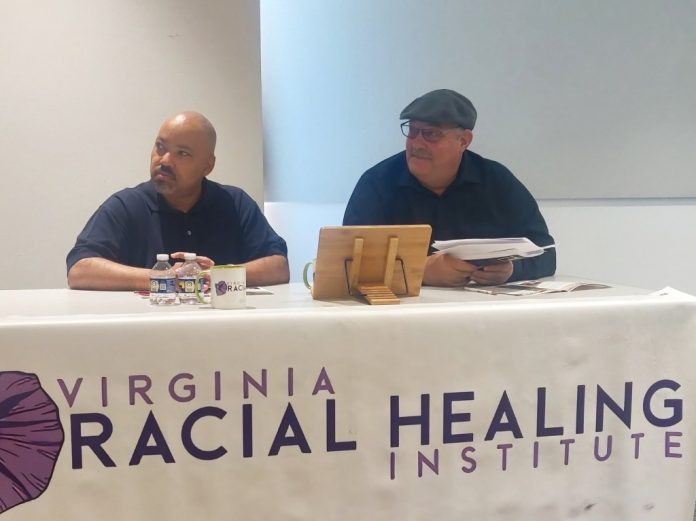
Decades ago, I heard a minister utter these words. I pondered them in my heart as I listened to Darrell and Will Hairston, who visited Williamsburg last Saturday to share truths about their family history.

In case you missed the second annual Journey to Racial Healing ceremony held at the Stryker Center last week, imagine this: You are at work and pick up your company directory. As you skim the listings, you come across a co-worker with the same last name as yours. You decide to give him a call and invite him to lunch. So begins a brotherhood that is still going strong nearly 30 years later.

That’s the short version of Darrell and Will Hairston’s story. The long version includes their discovery that they are linked descendants — connected to one another through American slavery.

The Hairston family is considered the largest family in America. It encompasses thousands of people throughout the U.S., both Black and white, who descend from one of the South’s wealthiest slave-owning families. During the 19th century their 40 plantations spread from Virginia to Mississippi, where more than 10,000 people, including Darrell’s ancestors, were enslaved.

Darrell grew up in Martinsville, a small industrial community that is home to NASCAR’s Martinsville Speedway. During his childhood, the Hairston name was very common.

“I remembered the telephone book containing 2 1⁄2 pages of Hairstons,” Darrell said. “I knew white Hairstons existed, but they had moved away to distance themselves. I never met any white Hairstons,” he added.

At least, not until that momentous day in 1994.

After graduating from Radford University where he earned a bachelor’s degree in psychology with minors in sociology and mathematics, Darrell accepted a position in the Multicultural Affairs Office at Eastern Mennonite University in Harrisonburg.

Will’s first encounter with the Black side of the Hairston family had come more than a decade earlier, when he was 18 years old. His father was invited to speak at the Black Hairston clan family reunion in Washington, D.C. “I was uncomfortable about being the only whites in a room of 800 Black people who descended from people my ancestors enslaved,” Will admitted. “Although they called everyone ‘cuz’ and tried to make us feel welcome, I felt angst and guilt.”

Sitting with that discomfort inspired Will to embrace opportunities to form meaningful relationships with Black people. As a college student he took advantage of an opportunity to visit Kenya. After graduating from Virginia Tech with bachelor degrees in agricultural economics and horticulture, he went to work at EMU.

When the phone rang and Will invited him to lunch, Darrell hesitated to accept the offer. “Meeting with Will required me to look at the past and the pain,” he said. Growing up, Darrell had watched Alex Haley’s Emmy award-winning mini-series “Roots.” The horrific living conditions, and lack of respect and freedoms, caused Darrell to ponder what his great-great grandparents had endured.

Nevertheless, he accepted the offer and the meetings continued. Darrell began to gain a level of comfort with Will and their relationship blossomed. “I was taken aback by his heart for healing and consistency.” Darrell said, as they began to have in depth conversations about their shared history. This eventually led to sharing their story during a chapel service at EMU.

Darrell would go on to earn his master’s and educational specialist degrees in counseling from James Madison University. He currently works at North Carolina A&T State University as the academic program coordinator in the Honors College, where he advises and teaches freshmen studies courses, recruits and prepares students for graduate and professional school.

In 2006, Will co-founded Coming to the Table, a national racial reconciliation organization with more than 50 chapters nationwide. I am honored to lead the Historic Triangle chapter.

Darrell and Will’s relationship shows that racial healing and reconciliation are possible when we prioritize truth telling over feeling uncomfortable learning painful truths about our family history. I am thankful that they sought racial healing and that their journey brought them to Williamsburg.

When we come together to build a more truthful and welcoming community, we all win!

Laura D. Hill is the founder and director of Coming to the Table-Historic Triangle, a program of the Virginia Racial Healing Institute. Learn more about her work at Comingtothetable-historictriangle.org.

The pros and cons of AI – Daily Press

0

President Franklin D. Roosevelt said at the beginning of World War II, “The only thing we have to fear is fear itself.” Well, he wasn’t facing the arrival of artificial intelligence.

So, should we fear artificial intelligence, or is it just something we need to understand and use effectively to improve the quality of our life? Or will it overwhelm our ability to control and manage our career direction or jobs in general? It depends upon who you listen to or believe, and your ability to adapt to the new technology.

One definition of artificial intelligence is the ability of a computer program to learn, think and act.

Here are some of the positives for artificial intelligence:

• Increased productivity, especially with repetitive tasks like sorting, cataloging, inventorying, tracking, computing, controlling, monitoring, documenting and recording.
• Reduces errors since it doesn’t get tired, takes no coffee breaks, works 24/7 without complaint and is designed to do one or multiple tasks well, with precision.
• Is risk-free when the task is dangerous, like finding and destroying a bomb, containing hazardous situations with chemicals or fire or exploring a cave or space.
• Can interface with humans with simple problem-solving duties such as customer service issues, banking questions, information retrieval or directing an inquiry.
• Makes decisions faster when given the correct information, or produces alternatives, pros and cons, and implications to different decisions and show potential downsides.
• Can create reports, scripts, documents or analytical statements more quickly and accurately than one with a human intervention.

Here are some of the negatives for artificial intelligence:

• The cost of creating and maintaining upgrades and updates. Errors may be infrequent, but when they occur, the cost of fixing and repairing the damage is high.
• Outside-the-box thinking is diminished as AI doesn’t create innovation. A computer program repeats what it’s been taught but doesn’t create unique or original material.
• It has the potential to make humans either lazy or lack the incentive to work. Example? Students today are unable to do simple math without a calculator.
• With artificial intelligence replacing humans in everyday jobs, unemployment may become a major issue. Over 50% of jobs are projected to be affected by AI.
• Computers do not have compassion, feelings, emotions nor the ability to make human judgements. They don’t make human attachments nor create teamwork.
• Computers do not have a code of ethics, a sense of humor or morality. In a state of war, human life has no value.

Any new invention or technology can be used for good or evil, from the splitting of the atom (think atomic bomb to nuclear energy) to the rise of the internet (from helpful information and interaction to social media bullying). We need to monitor and control artificial intelligence so the good outpaces and overwhelms the bad. History has not shown us to have a good track record.

For a free critique of your resume, send to: [email protected]

Man dies in shooting on Dunedin Road in Portsmouth – Daily Press

0

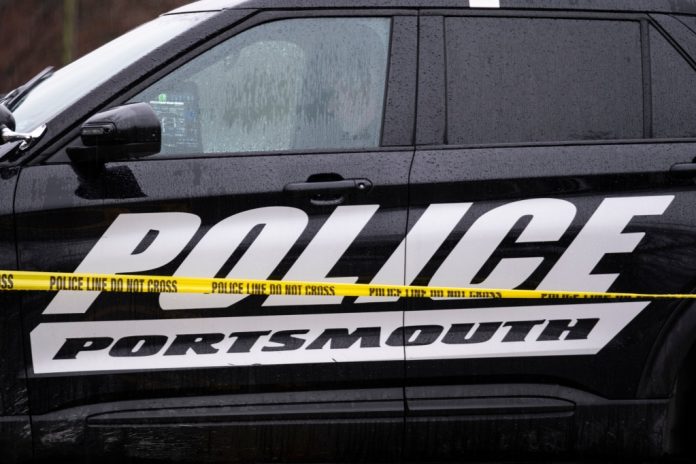
A 41-year-old man was killed in a shooting in Portsmouth on Thursday.

Police responded to the 600 block of Dunedin Road following a report of a person being shot at 10:43 a.m. Officers found James Rockett III with a fatal gunshot wound.

No further information has been made available.

Gavin Stone, 757-712-4806, [email protected]