Home Blog Page 100

General Daily Insight for July 16, 2023 – Daily Press

0

General Daily Insight for July 16, 2023

We’re ready to conquer anything at this time! The sensitive Moon trines dedicated Saturn at 2:06 am EDT, providing us with calm outlooks, clear minds, and a sense of perseverance — all of which should serve us well in making long-term decisions. After her collaboration with Saturn, Luna blends smoothly with expansive Jupiter, offering us time with the people we love to have fun and expand our awareness in any way we can. Opportunities that arrive won’t last forever, so let’s seize the day!

Aries

March 21 – April 19

Family might set you on top of the world! Adventures that you didn’t predict and conversations that you weren’t expecting can both come out of nowhere, most likely with your family or the people that you live with. You may feel shocked by the optimism or enthusiasm that they’re showing — fortunately, it should be contagious! They’re probably encouraging you to see the glass as half full, so let their curiosity and excitement be the spark that feeds your inner flame.

Taurus

April 20 – May 20

Your friends can bring you out of the darkness right now. When you feel trapped in a heavy situation, seek out a buddy that can dissolve this negative mindset and lift a weight off your shoulders. This may mean that your insecurity was preventing you from leaning on the people who want to support and love you — their willingness to soothe you can reinvigorate your heart. Your friends can fill your cup, and then you can do the same for them.

Gemini

May 21 – June 20

You may see improvements to your reputation that have a domino effect. Career opportunities could open up after sharing your experiences and goals for the future, and positive partnerships are ready to start or grow in beneficial directions, thanks to accolades that you’re receiving. Untapped areas of support might manifest, showing you that your dreams can come true in meaningful ways. You may see your fears melt away as guessing what could go wrong transforms into wondering what could go right.

Cancer

June 21 – July 22

You’re getting a chance to be a visionary. You can create a vision board that materializes the places that you want to go in life, or you could be explaining your ideas to someone who is able to help you make them real. This vision potentially centers around you and your life without including others, so it’s likely to be a home or room where you spend a lot of time or a career where you’ll thrive, or even internal improvements. The sky’s the limit.

Leo

July 23 – August 22

Your intuition is heightened. The cosmos is guiding you toward people and places that you may not have expected to see today, boosting your subconscious to recognize positive opportunities that you couldn’t have picked out otherwise. These people or situations might need someone to offer a helping hand with something that you’re uniquely skilled at or show you advice that you can’t pass up when it comes to a predicament you’re having in another area of your life. Trust where your gut leads you.

Virgo

August 23 – September 22

Your heart is being filled with community blessings. You’ll possibly spend the day with people that you love and admire, having fun and talking about what you’d do if anything was possible. Dreams and hopes that may feel far out of reach are a center for you — plus, you could discover that your goals are in alignment with those of the people around you. Be ready for potential collaborations that can make progress toward everyone’s ideals, and don’t fear creating a group vision.

Libra

September 23 – October 22

Your hard work and perseverance are potentially paying off today. Your work that’s gone into a project or career might be recognized for the lovely contribution that it was, and your dedication to pulling it off could have impressed people who you weren’t aware were paying attention. Qualities that you may or may not see in yourself are likely to be pointed out to you, and you’re meant to receive them with grace, rather than shunning praise you believe you don’t deserve. Accept the attention!

Scorpio

October 23 – November 21

It’s okay to breathe, Scorpio. Recent life may have had you running all over trying to make sure all your ducks were in a row, but finally, it’s time to take a step back from analyzing every detail and simply relax. There may be opportunities to spend time with friends and family if that’s what you want to do, but there are also windows of time to spend alone and enjoy nature, giving you options for how you want to revitalize yourself. Take your pick!

Sagittarius

November 22 – December 21

Heavy emotional decisions are able to be made with confidence. Perhaps you’ve recently been concerned about a decision that must be made, but once the course of action has been set, you’ll be ready to set down any burdens of spiraling issues all stemming from the original choice. Life should feel a lot more free on the other side of this decision, even if it was a painful one to make, and you’re able to reflect on it with inner peace. Rest easy.

Capricorn

December 22 – January 19

The people who love you most can presently calm you down. You could be feeling a little stressed over situations outside of your control and need someone to remind you that you are only one person. While you might feel like this situation requires your input and action to come to a positive conclusion, the truth is that it’s probably more up to chance or other people’s discretion. Let your friends remind you of this — and don’t hesitate to take the pressure off.

Aquarius

January 20 – February 18

Positive habits that you’ve been working on may pay off at any moment. Up until now, you might have not seen any results from your attempts to improve your life through better daily routines, but at long last, some good results are ready to shine through. You might not be seeing the full picture of what you’ll be experiencing once you’ve been consistent for longer, but you can indulge in this exciting sneak preview! Stick with it and who knows what you can accomplish.

Pisces

February 19 – March 20

An entertaining day is in store! You might feel bored by what’s been on offer to you recently, but an entertaining concert, show, or creative activity can rocket your enthusiasm back up to great heights. You’re able to be more free in your self-expression when the people around you are encouraging and participating, helping you avoid feeling alone. Instead of worries pushing you to be serious or quiet, let yourself laugh, cry, cheer, and boo whenever you feel like it.


Walt Handelsman: He Melted

0

Cartoon by Walt Handelsman for July 16, 2023.

Former Virginia Tech golfer takes lead at Barbasol Championship – Daily Press

0

GOLF

PGA Tour rookie Trevor Cone, a former Virginia Tech star, shot a 9-under 63 on Saturday at rainy Keene Trace to take the third-round lead in the Barbasol Championship in Nicholasville, Kentucky.

Cone had a 17-under 199 total for a one-stroke advantage over Lucas Glover and Vincent Norrman in the event co-sanctioned by the European Tour.

Cone has played in 20 tour events this season, making the cut in nine of them. His best finish is a tie for 23rd at the AT&T Byron Nelson on May 14. He had a bogey-free round Saturday, with the tee times moved up because of rain.

“We thought the greens might be a tad softer, but early on it wasn’t really raining hard enough for anything to change,” Cone said. “We got to probably 15 and it kind of started deluging, so the greens got a little softer.”

The 30-year-old was 5 under after eight holes.

“Just got rolling,” Cone said. “Just played smart, fairways, greens, not get too aggressive. Just hoped the putter came alive and today it did. Hopefully, it continues (Sunday).”

LOCAL BASEBALL

Ereu, Dunaway lift Pilots in rout

Brian Ereu tossed seven scoreless innings and Mason Dunaway (James Madison) went 2 for 3 with three RBIs as the Peninsula Pilots cruised past the Wilson Tobs 9-2 on Friday night in Hampton.

Ereu, who attends the University of Science and Arts of Oklahoma, allowed four hits with nine strikeouts and two walks. Reliever Olvis Genao (Southeastern University, Florida) pitched the final two innings, giving up both runs.

The Pilots (14-17) scored five runs in the first inning. Justin Starke (VMI) hit a two-run single to spark the outburst.

Peninsula added three more runs in the sixth and another in the seventh. Christopher Martinez (Monroe College) added two hits, including a solo homer.

The Pilots visited Tri-City on Saturday night and will host the Chili Peppers at 7 p.m. today.

Briefly

  • Virginia Wesleyan’s volleyball team has earned the USMC/AVCA Team Academic Award. It is the eighth time the Marlins have picked up the honor.
  • Virginia Wesleyan placed 161 student-athletes on the ODAC All-Academic Team. The Marlins’ women’s soccer team led the school’s programs with 25 student-athletes on the list.
  • Christopher Newport placed 222 student-athletes on the Coast-To-Coast Athletic Conference All-Academic Team. That represented nearly 53% of all of the school’s student-athletes.

Report sets out blueprint for Virginia to adequately fund K-12 education – Daily Press

0

A study of public education spending by the Joint Legislative Audit and Review Commission released this week concludes that Virginia lags behind a number of benchmarks, including national and regional averages, and recommends changes to the formula used to calculate funding for public schools.

Though the report generated predictable partisan soundbites from state officials, JLARC has given lawmakers a perfect opportunity to set aside their differences and work together to address this crisis — either through this year’s state budget or when the General Assembly convenes again in January.

Though Virginia began a new fiscal year on July 1, uncertainty swirls around the state budget. Lawmakers adjourned the General Assembly without making adjustments to the two-year spending plan adopted in 2021, and subsequent negotiations collapsed last month without a deal.

The primary issue dividing the two chambers is how best to use Virginia’s budget surplus, with Republicans and Gov. Glenn Youngkin pushing for $1 billion in tax cuts while Democrats advocate investing that windfall in public schools, mental health and other priorities.

This week’s JLARC report will shape that debate, now and in the years to come. The audit arm of the legislature does not serve partisan interests, making its deep dive into public education spending long on facts and short on campaign-style rhetoric. And its conclusions are damning.

According to the study, Virginia spends 14% less per pupil — about $1,900 — than the national average and 4% less than other states in the South Atlantic region. Virginia spends less per student than neighboring West Virginia, Maryland and Kentucky.

The shortcoming appears to originate with the state’s Standards of Quality funding formula, which appropriates money to schools based on estimates of staff size within each school division. JLARC found the formula significantly and consistently underestimates staffing needs, meaning most school divisions spend more than what the SOQ formula predicts.

All told, the report concludes that Virginia should overhaul its SOQ formula to tie funding to student enrollment rather than staffing estimates; change other measures affecting K-12 funding, including an adjustment that dates to the Great Recession a decade ago; and boost the total state expenditure for public education.

Total cost: $3.5 billion.

Obviously that’s not a figure the commonwealth can absorb all at once. But it also cannot afford to keep waiting to make the sort of investment in public education for which administrators, teachers and, yes, parents have been advocating. The JLARC report puts a finer point on arguments that many school districts, particularly in Virginia’s rural corners, have made for years.

But it’s also a report that comes at an ideal time. Virginia’s budget negotiations are stalled, the governor campaigned on a platform focused on public education, the state is sitting on an enormous budget surplus, and lawmakers now have ample data that the formula used to pay for K-12 education — arguably the most important purpose of state and local government — is deeply flawed.

This is the time to make the big investment, to help make rural districts whole and to give a needed boost to urban districts. This is the time to level the playing field with neighboring states and aspire to exceed the national average. Virginia may never again have the revenue to make a generational difference in the trajectory of public schools.

What’s more, this is the time to do this vital work together. Come back to Richmond and do what’s needed: Overhaul the SOQ formula to ensure accuracy and sustainability, and start to pay into public education the money denied public schools for a decade.

Virginia comes to this in a position of strength. The commonwealth already boasts a well respected and accomplished public education system, good enough. CNBC this week ranked Virginia as the second-best place in the U.S. for business, with the quality of education here weighing heavily on those results.

But we know we can do better, especially for rural school districts struggling to keep pace. JLARC has handed lawmakers the blueprint. They need to set aside their partisan differences and follow it.

Fresh smiles for free medical care at pop-up clinic

0

NEWPORT NEWS — Despite a sleepless night in their car, Vickie and Vanessa Pratt wore bright smiles along with their perfectly manicured nails at 6:30 a.m. The 64-year-old identical twins arrived at 11 p.m. Friday to wait for a free healthcare clinic provided by Remote Area Medical.

The medical nonprofit holds about 60 clinics a year around the country, but only goes where it’s invited, organizers said. For this event, it was hosted by the Tidewater Adventist Community, which provided all the medical personnel and volunteers, at the Peninsula Seventh Day Adventist Spanish Church.

By 6 a.m., when registration began, 14 cars had arrived, and dozens more showed up as intake, triage and exams churned into gear. Organizers expected to provide dental, vision and medical care for hundreds at the free clinic, which requires no insurance or identification, on Saturday and Sunday.

The Pratts’ arrival from Hampton put them first in line for much required dental care. Vanessa had a sore tooth in need of pulling for months. Vickie’s case was simpler, yet has dragged on much longer; she’s been trying to get a cleaning for more than six years.

“I’ve called every dentist in town,” she said. “They say they have no openings.”

The problem was insurance. Vickie — who worked as a pipe cutter at Newport News Shipyard before a full shoulder replacement and four shoulder surgeries put her out of work — needed to find a way to get free care or a plan that would let her manage to pay out of pocket.

She also takes care of her sister, who is disabled; they’ve never married or even lived apart. Vanessa is eight minutes older, and Vickie has been the family caregiver all her life, and she now takes care of them both.

Dental services typically make up 60% of the care provided by Remote Area Medical clinics, according to Chris Cannon, media relations coordinator for the nonprofit. The most common needs are cleanings, fillings and extractions of damaged teeth.

“The goal is not only to alleviate pain but to provide for follow-up care,” said Dr. Elias Llerandi, a dentist, co-chair of the Tidewater Adventist Community and a driving force behind the clinic.

He was particularly excited about the presence of a periodontist and an oral surgeon, rare at free clinics, and about bone graft and membrane material donated by ZimVie, a surgical manufacturing company. The material makes it much easier to fit a prosthetic tooth, but it’s very unusual to be available at a pop-up, he said.

Llerandi was everywhere Saturday: running across the parking lot with a wheelchair after a woman had a seizure and fell, cutting her head; charming a volunteer at a resource table even as he had to kick her outside to make room for COVID vaccines; and explaining to Braylen and Judah Hill, ages 5 and 3, how to use the light-up toothbrushes he was handing out.

Judah Hill, 3, receives a free light-up toothbrush from Doctor Eli Llerandi at the Nonprofit Remote Area Medical free clinic at the Peninsula Seventh Day Adventist Spanish Church in Newport News, Va. on Saturday, July 15, 2023. The clinic offers free dental, vision and medical care on Saturday from roughly 6 a.m. to 6 p.m. and on Sunday from 6 a.m. to 12 p.m. (Tess Crowley / The Virginian-Pilot)

The Hill brothers were there with their mother, Nayelis Hill. As a young, single mom, she ensures they get their primary medical care, but never goes to the doctor herself  —  expense and transportation difficulties make anything more than basic care difficult.

The boys had never been to a dentist. The three arrived at 3 a.m., thanks to a favor from a friend.

“Growing up, we didn’t really go to the doctor,” said Hill, 21. After working at a daycare center, Hill is now unemployed due to a lack of transportation, which also makes it difficult to seek preventive medicine.

When she heard about the clinic, it sounded like a way to start to break the pattern and reinforce to her sons the importance of health care.

By 9:30, Jesus DeLeon, who arrived with daughter Juana Ramos at 2 a.m., was waiting for his primary care checkup with a bit of gauze poking out the left side of his mouth.

He grinned widely and gave a thumbs up; he’d already been through the dental line to have a tooth pulled. The construction worker, who’s lived in the Hampton area for over 20 years, has been putting it off for years due to the cost: $300.

Seeing patients smile like that — even after sometimes painful procedures that people normally dread — is what lets Dr. Brad Sands, the clinical coordinator, know he’s in the right place.

After more than 10 years in emergency medicine, Sands was getting a little jaded by frustrations such as barriers to care. He’s now been with the medical nonprofit for about a year.

“Being able to see patients come in, you can see they’re in pain,” he said.

But like DeLeon, by the time they leave, they’re glowing.

The clinic at Peninsula Seventh Day Adventist Spanish Church will remain open Saturday until at least 6 p.m., or as long as providers are available. It will open again at 6 a.m. Sunday and run until about noon. Services available at the free clinic include dental cleanings, dental fillings, dental extractions, dental X-rays, eye exams, eye health exams, eyeglass prescriptions, eyeglasses made on-site, women’s health exams and general medical exams. Spanish language available. No ID is required. 

For more information, to donate or to volunteer, visit www.ramusa.org or call 865-579-1530. Patients may also visit the Facebook event for this clinic at https://fb.me/e/Fiqpd2T6.

Katrina Dix, 757-222-5155, [email protected]

Why Norfolk’s federal court oversees Titanic cases — and how one attorney saw the wreckage for himself – Daily Press

0

NORFOLK — For the past three decades, judges in U.S. District Court in Norfolk have had a lot to say about what happens with the most famous shipwreck of all time while maintaining exclusive control over the Titanic wreck site.

Among the matters they’ve been asked to decide is whether artifacts from the luxury passenger liner’s final resting place in the North Atlantic could be salvaged, who would be allowed to collect them and what the salvagers could do with the items once recovered.

The local judge currently assigned to the case — U.S. District Court Judge Rebecca Beach Smith — continues to receive regular updates about activity at the site, including an advance letter about plans for the fateful expedition last month by a group traveling in a submersible called the Titan that ended with the vessel imploding, killing all five men on board.

Earlier this month, a document detailing what happened to the submersible owned by OceanGate Inc., and the investigation now being conducted by the U.S. Coast Guard and the National Transportation Safety Board, was filed with the court. Included with the filing was a map of sonar images showing where the Titan’s debris was found in relation to the Titanic’s remains.

Some matters the inquiry will seek to determine is whether any criminal or civil penalties are warranted, as well as if any new laws or regulations should be enacted as a result of the incident, according to the six-page document filed by Virginia Beach attorney Brian Wainger. He represents RMS Titanic, Inc., the company that has long had exclusive salvage rights to the ship.

So, how did a federal courthouse in Norfolk end up with control of the famous wreck site in international waters about 400 miles south of Newfoundland, Canada?

It all started with another famous shipwreck: the SS Central America, a side-wheel steamer that sank during a September 1857 hurricane off the coast of the Carolinas, according to former Norfolk attorney and retired federal magistrate judge Brad Stillman. He specialized in admiralty law and previously represented RMS Titanic, Inc. He also traveled to the wreckage in 1993 on a French submersible called the Nautile.

Former Norfolk attorney and retired U.S. Magistrate Judge Brad Stillman, left, poses with French attorney Alain de Foucault in June 1993 as the two wait to dive to the Titanic wreck site in a French submersible called the Nautile. Stillman represented the company with exclusive salvage rights to the site and was invited to go on one of its dives. (Couresty of Brad Stillman)

The Central America was hauling passengers and gold mined during the California gold rush when it sank — 425 passengers and crew, and more than 30,000 pounds of gold, went down with it. The wreckage and much of its treasure was finally discovered off the coast of South Carolina by the Columbus-American Discovery Group of Ohio, led by Tommy Thompson.

He and his group went to U.S. District Court in Norfolk to ask a judge to grant it salvage rights to the Central America. They were soon challenged by 39 insurance companies that had paid claims on the lost gold back when it sank and believed they should get control of the treasure.

“They (Thompson’s group) brought the gold back to Norfolk because it was a jurisdiction that had a history with admiralty law,” Stillman said. “Salvage law is part of admiralty law, which is a specialty assigned to the federal courts under the Constitution. The Norfolk court had judges with substantial experience in admiralty law.”

Thompson’ group eventually prevailed, and as a result, the Norfolk court became known as the place to go for shipwreck salvage cases. So in the early 1990s, when a battle for rights to the Titanic site began to brew, the case was filed there.

The Titanic wreckage was discovered in 1985, more than seven decades after it sank during its April 1912 maiden voyage from Southampton, England, to New York City. The wreckage was discovered by a French-American expedition group led by oceanographer and retired naval officer Robert Ballard. Ballard and his team, however, never sought salvage rights, and instead believed the site should be left untouched.

The French submersible Nautile has made numerous dives to the Titanic wreck site since the 1980s. The vessel can accommodate three crew members and has been used to film the Titanic wreckage and recover artifacts from the ocean floor using robotic arms. (Courtesy of Brad Stillman)

RMS Titanic, Inc. made its first expedition to the wreckage in 1987. Over the course of 32 dives in a yellow French submersible called the Nautile, it recovered about 1,800 artifacts using the vessel’s robotic arms.

In 1992, a rival salvage group led by Texas wildcatter Jack Grimm petitioned the Norfolk court for exclusive rights to the Titanic. The group, Marex-Titanic of Memphis, Tennessee, argued RMST had given up its claim by not returning to the site for five years.

Stillman and his former colleague, Mark S. Davis, now the Chief Judge of the Eastern District of Virginia, led the legal team for RMST. They eventually persuaded the judge overseeing the case to award it exclusive salvage rights, which it still maintains. In return, the company assured the court it would never sell the items, and instead would preserve and display them at exhibitions.

RMST returned to the wreckage site in 1993, when Stillman was among the crew members invited to participate. In a June 1993 story in The Virginian-Pilot, the attorney said he accepted the invitation “almost without thinking.” He was given a safety briefing before he went down, and watched a dive the day before.

“I understood the risks,” he said. “I wasn’t apprehensive. I was thrilled at the opportunity.”

The Nautile was 8 meters long and could accommodate three crew members. Each had their own porthole to look out. In addition to the robotic arms, the battery-powered vessel was equipped with floodlights and video and still cameras.

“It was a very intense environment,” Stillman said. “It was cold and dank. We were in complete darkness going down and coming back up … When we landed at the bottom they turned on the lights and the first thing I saw was serenity.”

Among the artifacts Stillman remembers seeing were china plates still stacked in rows, an inkwell and a wrench. By far the item that stuck out in his mind most was a black, brown and white gingham dress with glass buttons trailing from an open-top bag made of stiff leather. A crystal decanter with a symbol of White Star Line, the owner of the Titanic, engraved on it was among the items recovered and used to win the salvage rights.

“All these things were perfectly preserved because of the lack of oxygen and the temperature,” Stillman said. “It was very sobering seeing that dress, that bag, that inkwell. They were all possessions of someone who may have or may not have survived the wreck.”

former Norfolk attorney and retired federal magistrate judge Brad Stillman. Stillman specialized in admiralty law and previously represented RMS Titanic, Inc. He also traveled to the wreckage in 1993 on a French submersible called the Nautile. (Virginian-Pilot archives)
Former Norfolk attorney and retired federal magistrate judge Brad Stillman. Stillman specialized in admiralty law and previously represented RMS Titanic, Inc. He also traveled to the wreckage in 1993 on a French submersible called the Nautile. (Virginian-Pilot archives)

RMST conducted about a half-dozen more salvage expeditions at the site — the last in 2010. In all, it has collected more than 5,500 artifacts, including a large piece of the ship’s hull recovered during a 1998 dive. The pieces have been displayed at touring exhibitions around the world, as well as permanent displays in Las Vegas and Orlando, Florida.

Stillman’s involvement in the case ended when he was appointed a federal magistrate judge in Norfolk. During his time working for RMST, he got to know Paul-Henri “PH” Nargeolet, a French deep sea diver, Titanic expert and RMST employee who was among those killed in the Titan accident. Nargolet was there when Stillman made his dive in 1993, overseeing the expedition from a ship at the ocean’s surface.

“He was a good man,” Stillman said. “A very precise and capable person.”

The Norfolk court continues to oversee the wreck site, reviewing updates and requests sent by RMST and other companies like OceanGate that want to visit the site, said Wainger, currently the lead attorney on the case. If any litigation comes out of the Titan tragedy, it could potentially end up in Norfolk, he said.

In an April 20 letter to Smith, the judge overseeing the case, OceanGate legal advisor David Concannon wrote that the company planned to deploy the Titan in the summer to conduct a “series of photographic and scientific survey expeditions.” He assured the judge they would not disturb the site.

At the end of his letter, Concannon invited Smith to be a guest on one of the dives. The judge responded a few weeks later, writing she couldn’t at that time, but might be interested later.

“After almost thirty (30) years of being involved in this case, that opportunity would be quite informative and present a first ‘eyes on’ view of the wreck site by the Court,” Smith wrote. “Your expeditions create an even greater understanding and appreciation of the efforts made by so many to preserve the respect for the R.M.S. Titanic, and for those who lost their lives to this historic ‘graveyard of the sea.’”

In a periodic report filed just five days before the Titan’s implosion, Wainger told the judge the company would like to return to the wreckage in May 2024 to collect data, monitor the impact other expeditions may have had on the site, and recover some artifacts. Smith has not yet ruled on whether she will permit it, Wainger said.

Jane Harper, [email protected]

Newport News Free Medical Clinic

0

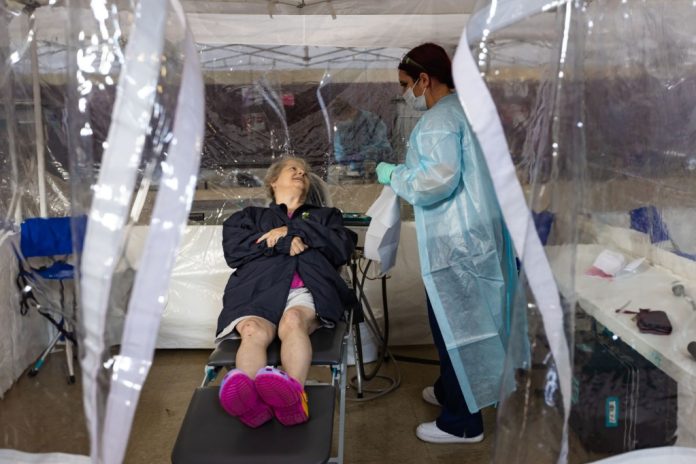
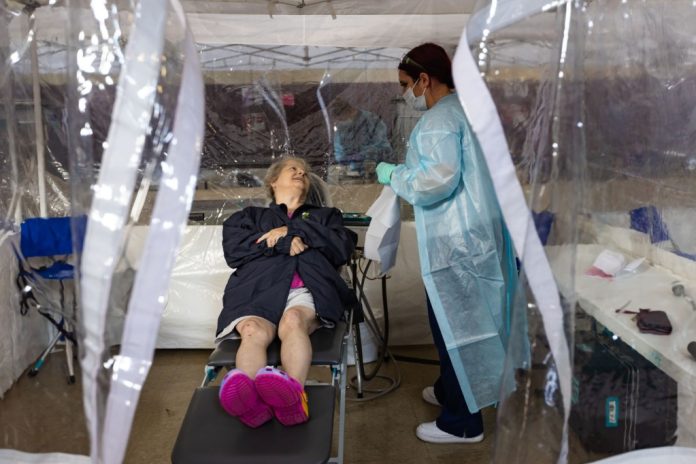
The Nonprofit Remote Area Medical offers a free clinic at the Peninsula Seventh Day Adventist Spanish Church in Newport News, Va. on Saturday, July 15, 2023. The clinic offers free dental, vision and medical care on Saturday from roughly 6 a.m. to 6 p.m. and on Sunday from 6 a.m. to 12 p.m.

A glimpse into lives of 18th-century sailors at Great Bridge Battlefield – Daily Press

0

Visitors to the Great Bridge Battlefield and Historic Waterways Museum are often offered a realistic glimpse of the lives of 18th century sailors, pirates and privateers, courtesy of the Brethren of the Coast, a living history organization based in Hampton Roads.

Historically speaking, the Brethren of the Coast was a “loose coalition” of pirates, brigands, and buccaneers who prowled the waters of the Atlantic Ocean, Caribbean Sea, and Gulf of Mexico during the 17th and 18th centuries.

“Brethren of the Coast is a historical re-enactment group that focuses on maritime history and the watermen who worked on the waterways,” said Elizabeth Goodwin, museum director. “A lot of times, they’ll focus on colonial privateers. Today, they’re doing a cooking demonstration on what sailors would have cooked aboard ship.

“They fit in with our mission because we are the Great Bridge Battlefield and Waterways Museum. We talk about the sailors on the waterways. Most people don’t realize that events on the waterways were part of the Revolutionary War.”

Mike Johnson, a Chesapeake resident, founded the living history unit to explore the lives of privateers during and immediately after the American Revolution. Generically, the brethren of the coast included any buccaneer, freebooter, pirate, or privateer, according to Johnson.

“They basically did what they wanted. If they decided to take a ship, they took the ship and everything on it,” he said. “They would crew the ship and take it back to their home base. They’d sell everything on it. They would keep the ship and make it part of their fleet.”

Privateers were armed merchant ships that were granted a letter of marque from a government official with written permission to attack the shipping of an enemy country during wartime. The French, English and Spanish sanctioned privateers. America had privateers during the Revolutionary War that harassed British shipping. Privateers strengthened the navies. Merchant ships armed with guns worked as agents for governments.

If captured, pirates were hanged while privateers were generally treated as prisoners of war. Whether sailors were considered to be pirates or privateers had significant, often terminal, consequences. It was an important legal distinction.

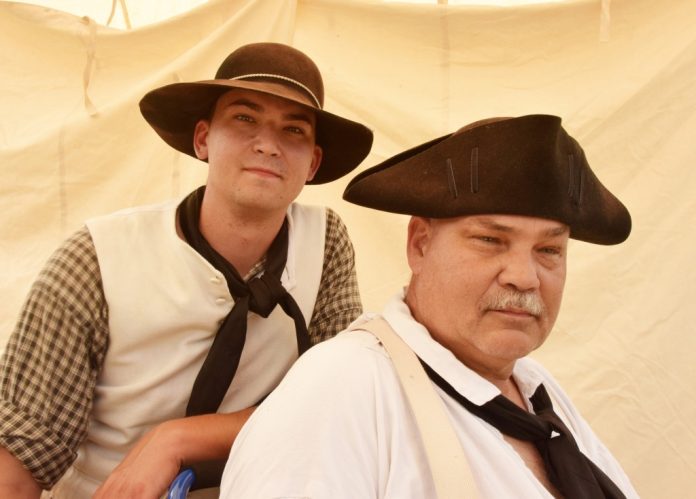
Living historians Mike Johnson and Eric Jeanneret enjoy offering the public a look at the life of an 18th century sailor. “We agreed – Connor, Eric, and myself – that we would portray privateers,” said Mike Johnson. “It was an impression that few groups were doing.” Bob Ruegsegger/freelance

“They had letters of agreement for distributing shares. Everybody got some type of share of everything that was taken and cashed in,” said Johnson. “Sometimes their shares would include physical items that they seized. Basically, the government got 50 percent. The other half of the take went to the captain and crew of the privateer.”

Johnson and his associates Eric and Connor Jeanneret agreed upon depicting privateers because few other groups were portraying privateers.

“We have no military regimen so to speak. We can wear mustaches and beards if we want to. We don’t have to be politically correct,” said Johnson. “We come from the merchant world. We’re just merchant seaman who are armed and work for the government.”

Johnson does what he calls a “sea chest presentation.” He pulls artifacts out of his sea chest relating to medicine and navigation and shares “tidbits of information” relating to seamanship with inquiring visitors. He hopes that his guests leave understanding a little bit about the life of a sailor in the late 18th and early 19th centuries.

Among the artifacts in Johnson’s chest are a pair of whale’s teeth engraved with scrimshaw featuring whaling scenes. Scrimshaw was a form of folk art produced by whaling men on bone and ivory. During long voyages, whalers often took up carving to pass the time. Scrimshaw comes from the term “scrimshanker” which means “one who wastes time.”

“These were given to me as whale’s teeth. I think they’re beautiful,” said Johnson. “All I know is that they spark interest. With that interest, I can tell a story. They represent the artwork of a sailor on a whaling vessel.”

Artistically inclined sailors would engrave images into whale bone. These whaling scenes depicted sailors from the Bark Veronica in their quest for whale oil. Bob Ruegsegger/freelance

Eric Jeanneret, a retired U.S. Navy veteran, enjoys portraying the cook aboard a privateering vessel in the age of sail. The crew appreciates his cooking, especially his savory bean soup.

According to Jeanneret, the ship’s cook was respected by the crew. Normally, the cook was a disabled man or an older sailor with years of seagoing experience. He was particularly valued for his maritime knowledge. Having an additional veteran sailor as part of the crew was considered a plus.

“He would usually have had to learn how to cook. He was respected for his prior knowledge,” said Jeanneret. “Even in today’s Navy, the one person that you don’t want to upset is the cook. You don’t want to upset the cook, the guy who pays you, the disbursing clerk, or the barber. Those three people could make your life miserable.”

The food aboard 18th century sailing ships was bland. Sailors usually ate beef, pork, or fish and rice, beans, or peas. Sailors were generally well fed. They received three hot meals a day whereas laborers ashore may have had only one meal and that may not have even been warm.

“They were getting about 4,000 calories per day. We were eating fairly well,” said Jeanneret. “They were definitely working it off. They were getting pretty decent food.”

Sea biscuit was an unsavory staple of the 18th century sailor’s diet. It was a mixture of salt, flour, and water that was double baked. There was really not much of a taste to it.

“It was designed as something that could fill you up, and something that could be preserved for a long time,” said Jeanneret. “You had to break it up, soak it. You could suck on the crumbs for a while to get some nutrition and some carbs.”

Food preservation techniques at the time were limited. Nearly everything was salted. All the meats were salted. When the cook was getting ready to prepare a meal, say pork, normally the cook would have to soak that piece of pork in water three separate times, just trying to get the salt out of it.

“There are diary accounts of a cook taking that piece of meat and dragging it behind the ship in the salt water just trying to get the salt out,” said Jeanneret. “It was just so salty.”

Grog was a mixture of rum, lemon juice, and water. Sailors were issued a daily grog ration, usually about a half pint. The lemon juice contained vitamin C and helped sailors avoid scurvy and kept spirits high too.

Especially in the 1700s, there were a lot of hogs and chickens roaming around the North Carolina-Virginia border. They survived shipwrecks and washed ashore. Livestock escaped from ships that came ashore and ran wild. Sailors were a superstitious lot. Chickens and pigs on sailors’ tattoos served as marks for identification and “insurance” against drowning. Sailors frequently tattooed a chicken on one leg and a pig on the other as protection.

“Sailors thought that they wouldn’t drown because so many chickens and pigs washed safely ashore. So they had the tattoos as protection,” said Jeanneret. “You see that even today. That’s an old sailor’s superstition.”

Connor Jeanneret, Eric’s son, is the youngest member of Brethren of the Coast. He also has years of experience in the maritime living history field.

“We used to belong to another unit called the Tidewater Maritime Living History Association,” said Connor Jeanneret. “We are still part of that unit, but we wanted to break off and do an earlier time period. We do mainly colonial history now but we will do War of 1812 when the need arises.”

Jeanneret finds the colonial period interesting, especially depicting the first privateers connected with the first (American) navy.

“Privateer comes from private-man-of-war. We were a seagoing militia,” he said. “They ended up combining the private-man-of-war idea with buccaneers, and they became privateers. That’s where that came from.”

Bean soup is Connor Jeanneret’s favorite shipboard fare. It’s simple and easy to prepare. Cooked properly, bean soup is delicious. It is basically a savory blend of navy beans and ham hocks with a few “secret” ingredients.

Staples in an 18th century sailor's diet included plenty of salt pork and sea biscuit. Daily grog rations were also a part of a sailor's fare. The lemon in the grog prevented scurvy. The alcohol kept the crew happy. Bob Ruegsegger/freelance
Staples in an 18th century sailor’s diet included plenty of salt pork and sea biscuit. Daily grog rations were also a part of a sailor’s fare. The lemon in the grog prevented scurvy. The alcohol kept the crew happy. Bob Ruegsegger/freelance

“We get our ham hocks from Piggly Wiggly. It’s just ham hocks and beans. We throw honey in there. We add some beef bouillon and some salt and pepper,” said Jeanneret. “That’s it. It’s a real simple one-pot meal. You let it boil for a couple hours. It just gets so good. It makes sea biscuit softer.”

Connor Jeanneret hopes that visitors to his camp leave with an appreciation and understanding for the difficult lives that 18th century sailors lived.

“A sailor’s life was the worst and best of both worlds. Being a sailor during this time period, an enlisted sailor, you were asking for one of the hardest lives you could get. It was extremely dangerous. You basically became an able seaman by surviving for a year, give or take. Being a sailor on watch was so dangerous. There were no safety harnesses for climbing. There was no GPS. There was no radar. Everything was kind of a ‘guesstimation’ about where you were using celestial navigation and the tools of time.”

While a sailor’s work was demanding and the work environment was dangerous, sailors’ pay was comparatively good. An 18th century sailor could easily survive on the compensation he earned.

“A young single sailor wouldn’t necessarily struggle. You were making enough money. You didn’t have to pay bills. You didn’t have to pay for a place to sleep,” said Jeanneret. “You didn’t even really have to worry about clothing or food. Your room and board was taken care of. It was a way to make a decent living and even save up if you were smart.”

Crews are working in the creek along Pleasure House Road. What’s going on? – Daily Press

0

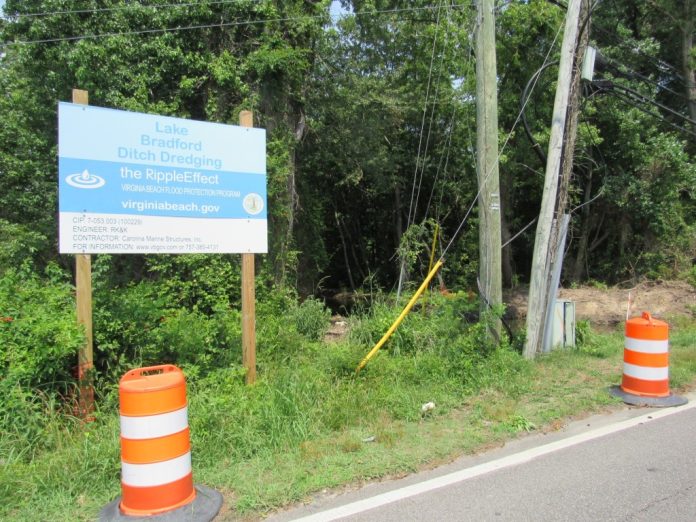
Public Works projects are underway to address flooding in several neighborhoods in the northwestern part of the city.

Some of those neighborhoods that have seen a history of flooding include Chesapeake Beach, Lake Shores, Church Point, and along portions of Northhampton Boulevard and Shore Drive. Stormwater from these areas drain into Lake Bradford and Chubb Lake.

The projects contain a number of infrastructure improvements, including dredging of ditches draining to the lakes and installation of new storm drain piping.

Eric Hodies, [email protected]

A 19-foot Burmese python is the longest ever to be wrangled in Florida – Daily Press

0

Jake Waleri couldn’t come to the phone Thursday night. Just days after he caught the longest Burmese python ever recorded in Florida, measuring 19-feet long, he was out for another late night of hunting.

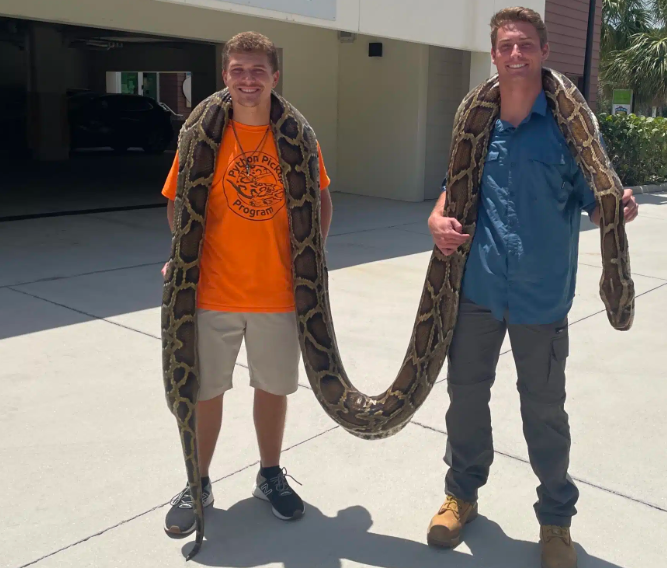
Waleri, 22, of Naples, and a group of fellow python hunters captured the 125-pound invasive behemoth, a female, in the Big Cypress National Preserve early Monday morning and brought it to the Conservancy of Southwest Florida in Naples to be measured, the nonprofit said in a news release.

Before Monday, the previous record-holding snake, captured in October 2020, measured 18-feet, 9-inches. Another female, it was captured not far west of Miami in Everglades National Park.

The python was slithering on the grassy side of a road in the nature preserve when Waleri went behind it and pulled its body toward him, a video he posted on his Instagram shows, the snake’s head facing him. The snake lunged toward Waleri, and within a split second, he grabbed its neck with his right hand.

With both hands wrapped around the python’s neck, Waleri wrestled on top of it, the snake’s mouth wide open, staring Waleri in the face at one point while he laid on top of it. With the help of his group, Waleri stood up while still holding the snake’s head with two hands.

Waleri’s Instagram shows python hunting is a regular occurrence for him. He posed with a 17-feet, 10-inch python around his shoulders in the nature preserve last August.

There’s no shortage of them in Florida. The invasive, nonvenomous constrictors can be killed humanely, without a permit or hunting license.

State officials each year offer thousands of dollars in cash prizes to winners of the Florida Python Challenge, which will run from Aug. 4 to the 13th.

The nonnative species has established a breeding population in South Florida, according to the Florida Fish and Wildlife Conservation Commission. The population was initially centered in the Everglades in Miami-Dade County but are now considered established from slightly south of Lake Okeechobee to Key Largo and across the state from western Broward County to Collier County.

One of the largest snakes in the world, Burmese pythons have few natural predators in Florida’s wildlife and can decimate local populations of native or endangered species. They’ve been documented eating alligators.

The U.S. Geological Survey says the “severe” decline of mammals in the Everglades have been tied to Burmese pythons.

“The mammals that have declined most significantly have been regularly found in the stomachs of Burmese Pythons removed from Everglades National Park and elsewhere in Florida,” the survey’s research found. “Raccoons and opossums often forage for food near the water’s edge, which is a habitat frequented by pythons in search of prey.”

Female Burmese pythons can be exceptionally detrimental to the ecosystem. They can lay between 50 and 100 eggs at a time, according to the FWC.

A 16-foot female python captured in the Everglades recently had over 60 eggs inside, according to media reports.

Researchers with the Conservancy of Southwest Florida nonprofit hold a record, too, having caught the heaviest Burmese python on record in June 2022, a female that weighed 215 pounds, their news release said.

“We had a feeling that these snakes get this big and now we have clear evidence,” Ian Easterling, a biologist with the nonprofit, said in the news release.