By the numbers, Norfolk lags behind peer cities in public park land acreage and per capita investment. In the latest rankings of 100 largest U.S. cities by Trust for Public Lands, Norfolk landed at 52 behind Arlington (5), Richmond (39) and Virginia Beach (49). Rankings are based on five park categories: equity, access, investment, amenities and acreage.
Furthermore, the Norfolk Department of Parks and Recreation Master Plan Assessment 2022 benchmark analysis revealed trail miles, program participation, operating expense/revenue per capita, indoor recreation and marketing fell below national averages.
The assessment included a citizen survey which found 1) walking/biking trails, 2) beaches, 3) fitness/exercise facilities, 4) indoor pools/aquatics facilities, and 5) neighborhood parks are the highest priority for parks and recreation investment.
With these findings in hand, the Mermaid City appears poised to boost rankings and meet citizen desires. Three recently completed or in-progress initiatives will significantly contribute to this effort.
The 20-acre Resilience Park on the Elizabeth River, connecting the Grandy Village and Chesterfield Heights neighborhoods, includes a restored tidal creek and wetlands, a flood berm and other environmental features as well as walking trails and aquatic river recreation. Capital funding was provided under a $112 million U.S. Department of Housing and Urban Development (HUD) grant.
The St. Paul’s Blue/Greenway, just east of downtown, transforms approximately 26 acres of obsolete/flood prone public housing into an aesthetic open space designed to treat and store stormwater runoff and mitigate tidal flooding as well as support recreational activities. Capital funding was provided by a $30 million HUD grant.
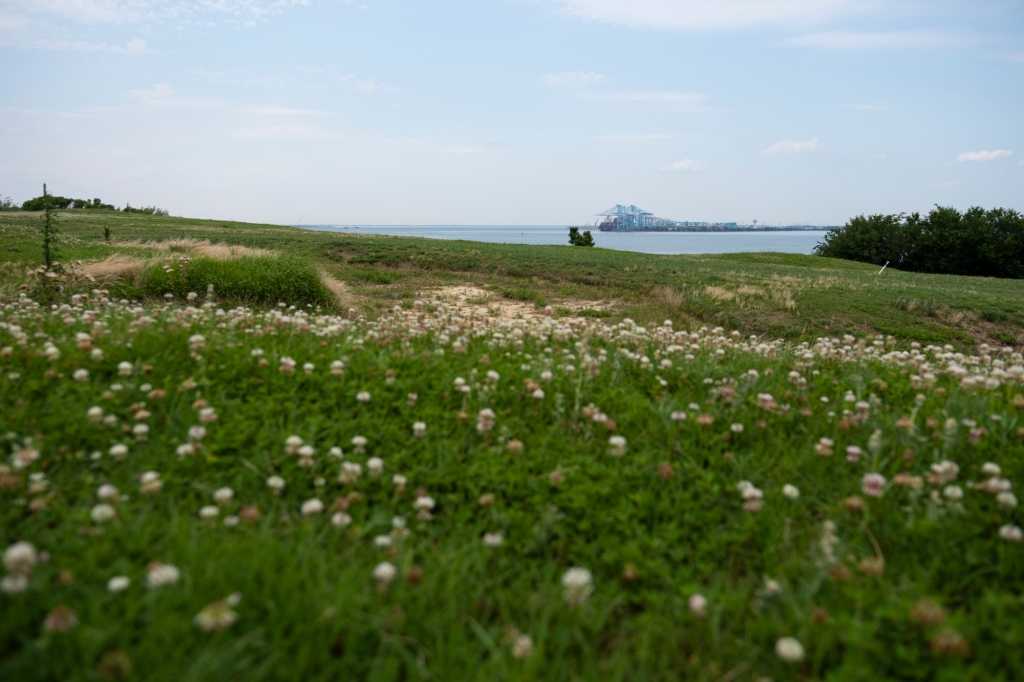
Approximately 15 acres of the former Lamberts Point Golf Course, overlooking the Elizabeth River and adjacent to Old Dominion University, remains in city control and presents a once-in-a-lifetime community opportunity to enhance and preserve one of the last remaining waterfront parcels of this size in Norfolk.
Advocacy by a grassroots coalition, the Lamberts Point City Park Steering Committee, has secured more than 3,000 petition signatures to turn the site into a new community park. As the Steering Committee points out, infrastructure remnants from the golf course, including a clubhouse, parking, paved walkways and landscaping, could be repurposed in a new park.
These existing improvements provide critical integration with and extension of Elizabeth River Trail along spectacular coastline vistas and unmatched views of maritime commerce. What a backdrop this could create for an intimate concert amphitheater, raised-bed gardening and recreational pursuits.
As a former landfill, the parcel’s sloping riverbanks provide native plant habitat, nooks in which fish rest and spawn, and migratory pathways for birds. They also buffer storms, slow down and filter stormwater, and reduce erosion. In upland sections, adding green infrastructure such as rain gardens, bioswales and tree canopies can capture rainwater where it falls, reducing runoff and recharging groundwater acquirers. These features also cool temperatures and improve air quality.
Indeed, a park at Lamberts Point could serve to showcase the neighboring Hampton Roads Sanitation District SWIFT project as well as the city of Norfolk/U.S. Corps of Engineers $2.6 billion Coastal Risk Management Project. SWIFT technology upgrades wastewater to drinking water standards and reinjects into the thirsty Potomac Aquifer, the primary groundwater source for Eastern Virginia.
A 2023 Urban Land Institute study, “Parks that Protect: Leveraging Waterfronts for Resilient Communities,” cites the transformation of an 86-acre municipal landfill in Camden, New Jersey, into Cramer Hill Waterfront Park as a national model of reclaiming riverfront for recreation, education and enjoyment of nature.
By the numbers and anyway you add it up, implementation of these initiatives, and studying Camden’s success, will advance Norfolk’s regional and national standing as a city of high-quality parks and a coastal resilience leader.
A public forum on “Future of Lamberts Point Golf Course” will be held 6-8 p.m. on July 19 at the Lamberts Point Golf Course, 4301 Powhatan Ave.
Brian N. Friedman, Mary Beth Horton and Liz Paiste are members of the Lamberts Point City Park Steering Committee in Norfolk.