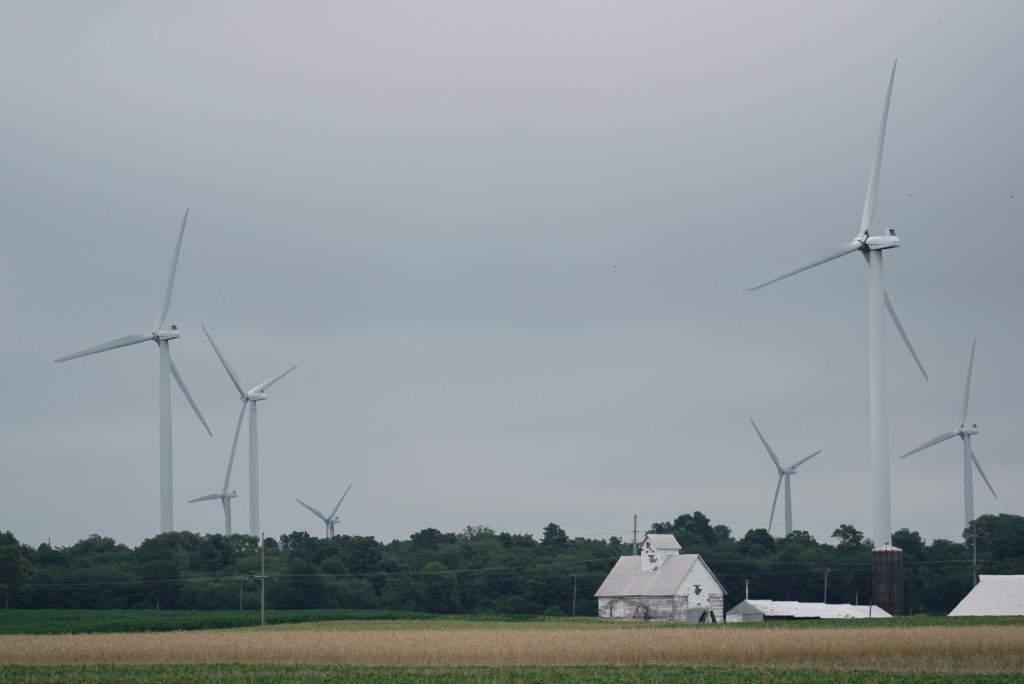
While the national transition away from fossil fuels and toward an electric grid powered by clean energy continues at an impressive pace, the United States cannot meet its obligations under the Paris climate accord without significantly changing long-standing policies that impede progress.
Last week, the Federal Energy Regulatory Commission, which regulates energy transmission, made one such change, approved a new rule intended to expedite connection of green-energy projects to the grid.
While that alone won’t solve the problem, it’s an important step in building out the nation’s solar, wind and battery storage capacity to meet the demand for power and help keep the country oriented toward its goal of dramatically reducing carbon emissions in the pivotal years to come.
After years of inaction or piecemeal efforts to reduce Americans’ dependence on fossil fuels, the transition to renewable energy sources has finally gathered momentum.
Wind and solar projects are being built from the West Coast to right here in Virginia, which has a tremendous opportunity to be a hub for green-energy jobs. Battery manufacturing for power storage and use in electric vehicles has grown dramatically nationwide. The commonwealth is among states exploring nuclear energy options.
The 2022 Inflation Reduction Act has supercharged those efforts, expanding programs, funding and tax incentives for businesses and organizations that manufacture clean-energy systems or transition toward the use of renewables. Energy Innovation, a nonprofit policy and analysis organization, reports that tax credits under the law have already generated nearly $250 billion in project announcements that could create more than 140,000 new jobs.
“These investments and their impacts are projected to increase Virginia’s GDP by $1.1 billion in 2030,” the group reported in May.
That’s the good news. The bad news is that many of these new renewable transmission projects languish for years in a protracted permitting process before they can be connected to the larger grid. The average wait time for completing this process has grown from two years in 2008 to more than five years now.
As a result, the United States has more than 2,000 gigawatts of proposed solar, wind and battery storage projects in the interconnection process, but some of those won’t be incorporated into the electric grid until 2028 or later. That means more time relying on fossil fuels instead of renewables, and could slow the development of additional projects needed to reach the nation’s emissions targets.
Enter FERC. As the agency charged with regulating energy transmission, the organization has the authority to adjust the rules governing the interconnection process to reduce wait times. And last week, that’s just what FERC did.
According to E&E News, a publication focused on energy reporting, the new FERC rule will evaluate projects in groups rather than one at a time and requires grid operators and electric utilities to change how they conduct studies. There will be tighter deadlines and financial penalties for missteps, and projects nearest to completion will be prioritized.
These are common-sense changes that will modernize an outdated approach to incorporating new generation sources into the grid. The result should be more renewable energy projects helping satiate the nation’s appetite for fuel at a quicker pace, and a speedier transition away from carbon-producing fossil fuel sources.
The nation must address a host of other problems with the electric grid. There is demand for additional transmission capacity, and the grid is terribly inefficient and very wasteful due to a lack of investment for modernization. It is also vulnerable to physical and cyber attacks, which should necessitate substantial investment in security and resilience.
But expediting the process to bring green-energy generation projects online was an straightforward solution to a problem in need of resolution. Virginians can join the rest of the nation in cheering FERC’s decision, which will ensure the green-energy boom continues unabated.