For 20 Virginia Beach teenagers aboard an education boat on the Lynnhaven River, the big moment arrived when they hauled in the trawl net. Lined along the boat’s gunnel, the Ocean Lakes High School students pulled on the lines together.
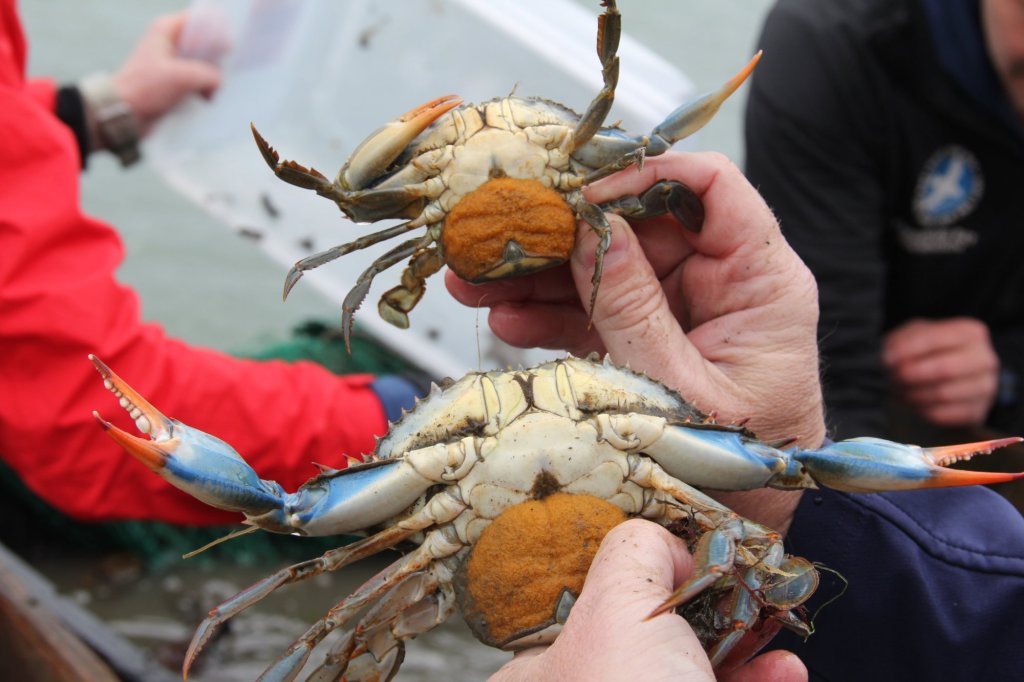
Shouts of excitement rang out when the net came aboard and creatures emerged from beneath the river’s surface — female blue crabs laden with orange eggs, a windowpane flounder speckled with spots, white shrimp as big as your hand, sea robins that glide with winglike fins, and a tiny writhing sea slug.
The experience last April brought to life what the students had been taught in the classroom. It also came at a pivotal time.
Hands-on learning is needed now more than ever. Students today must sort through the overload of information readily available through technology, learning how to make the most of the digital age’s abundance of content.
We’ve seen plenty of change since the Chesapeake Bay Foundation started its environmental education program 50 years ago. In the 1970s, there was skepticism from teachers and administrators who believed learning should take place only in the classroom, not on the water. But these same educators often became believers after a boatload of students returned to school with rekindled enthusiasm.
Now there’s a growing recognition that learning through experience prepares students for success in the information age. Memorizing facts has less value when you can look up anything online. Critical thinking, collaboration, communication and creativity are widely touted as the skills needed for the 21st century. Studies show that these abilities flourish when students perform hands-on activities outside.
Back on the Lynnhaven, after unloading the net high schoolers huddled around containers full of river water, flashy scales and flapping fins.
As a small squid jetted about in circles, student Liliann Bond reached out. The squid’s suction cups gently latched onto her finger. “It was definitely slimy and weird. But it was also really cool,” she said.
Earlier that day, students split into groups to test indicators of the health of the river. They measured water temperature, tested for dissolved oxygen levels and nutrient pollution, and assessed water clarity in this stretch of the river.
After reporting their findings, each student created a hypothesis as to how many different species of plants and animals the trawl net would capture. A greater diversity of life suggests a healthier river. Altogether, they recorded 18 different species — a promising sign for the Lynnhaven.
There is no substitute for learning through experience. Nothing fosters critical thinking like interpreting water quality data in the field. Nothing builds collaboration like hauling in a trawl together net with your classmates. And nothing sparks creativity and curiosity quite like the slimy tug of a squid.
Since starting our education program in 1973, about 1.5 million people have learned outside with the Chesapeake Bay Foundation. We’ve seen a promising growth of environmental education efforts in many Hampton Roads schools, as well as organizations across the region.
Strong collaborations with school districts ensure these experiences complement what’s taught in the classroom. That includes efforts to work with Virginia Beach and Newport News schools on climate change education. The newly established Southeastern Virginia Environmental Education Consortium aims to promote systemic and sustained environmental literacy efforts in Hampton Roads.
Currently, about 10,000 Virginia students join us on environmental education experiences annually. Teachers take our professional development summer courses. High schoolers go on week-long overnight student leadership expeditions down Virginia’s rivers and to the Bay’s islands. New student leaders, parents and teachers can always register for an environmental education experience.
As we look to the next 50 years, we must ensure all students have access to high-quality environmental education. But Virginia’s investment in environmental education still falls short of what is needed. Increasing state support is an important next step.
Learning outside is much more than a breath of fresh air in an era of screen time stagnation. It’s what the next generation needs to tackle local issues and complex global challenges like climate change.
Tom Ackerman is the Chesapeake Bay Foundation’s vice president for education. Email him at [email protected].