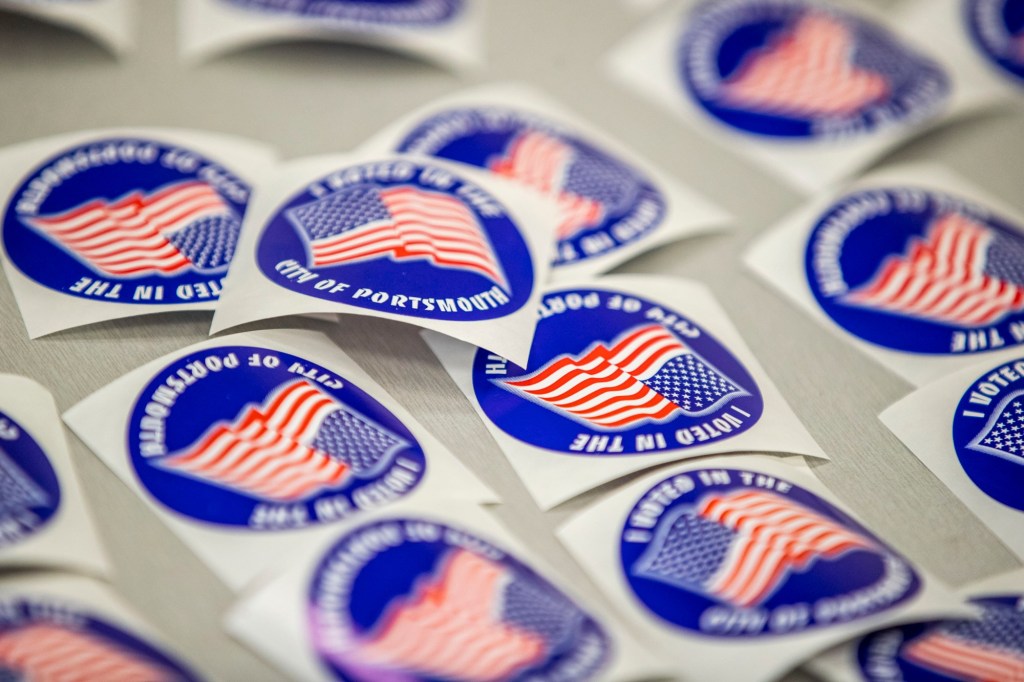
While most of the country is gearing up for the 2024 national elections, Virginia is focused on the upcoming 2023 elections. The entire Virginia General Assembly — the state Senate and the House of Delegates — will be elected in November.
This timing always sets up an interesting conversation between national and state/local politics. Virginia’s governor, lieutenant governor and attorney general stand for election in the year after national elections. In 2017, Virginia elected Democrats to all three of these positions; this result, one year after Donald Trump’s electoral victory in 2016, was widely seen as a referendum on the 2016 result. In the midterm Congressional elections in 2018, the Virginia delegation to Congress switched its partisan balance; before this election, the balance was seven Republicans to four Democrats. When this election was over, the partisan balance was seven Democrats to four Republicans.
The results in Virginia’s House of Delegates election in 2019 (the year before the 2020 national elections) completed the Democrats’ governing trifecta; the Democrats continued to hold the governor’s position (this office was not contested until 2021) and won the state Senate and the House. These statewide legislative elections were widely seen as a predictor of the 2020 election result in Virginia. As predicted, Virginia’s 2020 electoral votes went to Democrat Joe Biden.
The 2021 statewide elections in Virginia reflected some discontent with Biden’s 2020 victory, as Republicans won all three statewide positions in 2021. In addition, the House of Delegates swung to Republican control in that year. The state Senate, which was not up for reelection, remained in the control of the Democratic Party.
In the 2022 national midterm elections, the results in Virginia trended in favor of the Republicans — six Democrats and five Republicans won. This rolled back but not did not reverse the 2018 Democratic 7-4 majority among Virginia’s 11 members of Congress.
The statewide executive offices are not on the ballot this year. However, some political-watchers believe that Gov. Glenn Youngkin is contemplating a run for president in 2024. Because Virginia governors are limited to one term in office, he is almost certainly looking around to identify his electoral options after 2025. Depending on what happens in the next six months in the Republican party’s efforts to identify its 2024 presidential candidate, Youngkin could decide to declare his candidacy.
All of this leads us to this November. Throughout the state, candidates for local government positions will be on the ballot along with all 40 Senate seats and 100 seats in the House of Delegates. New legislative districts in Virginia have created more uncertainty than usual. The number of retirements after the last legislative session was greater than normal, as incumbents found themselves in new districts that either pitted them against another incumbent or included communities that might be less supportive of their reelection.
No matter who wins these contests, the General Assembly will have more newcomers than in previous years. Because these statewide elections occur one year before the 2024 national elections, many observers will be watching for indicators of voter preferences as the nation enters the 2024 election cycle.
Voters in Virginia need to be aware that things have changed for this election. The legislative districts have been redrawn and renumbered. Voting precinct boundaries have also been redrawn. Voters may find that they can no longer vote for the candidates they supported in the past or at the locations they are accustomed to.
Voters need to keep a few dates in mind as the election season begins. These are from the Virginia Department of Elections website, elections.virginia.gov.
Sept. 22: First day of in-person early voting at your local registrar’s office. In James City County, this is at 4095 Ironbound Road. In Williamsburg, it’s at 401 Lafayette St. In York County, it’s at 5322 George Washington Memorial Highway or at 6614 Mooretown Road, Suite A. Early voting continues Monday-Friday, 8 a.m.-5 p.m., through Nov. 3.
Oct. 16: Deadline to register to vote or update an existing registration. (Voters may also register on Election Day and vote using a provisional ballot.)
Oct. 17: Deadline to apply for a mail ballot. Your request must be received by your local voter registration office by 5 p.m.
Oct. 28: Voter registration offices open for early voting, 8 a.m.-5 p.m.
Nov. 4: The last day of in-person early voting at your local voter registration office, 8 a.m.-5 p.m.
Nov. 7: Election Day. Vote at your local precinct, 6 a.m.–7 p.m.
Here are a few things you should do before the fall.
- Register to vote if you have not done so already.
- If you are already registered, check your voter registration in plenty of time to fix any problems before the registration deadline expires. Sometimes, voter lists are purged (for a variety of reasons) and your name may have been accidentally deleted.
- Figure out your new district and identify where you should go to vote.
- Find out what candidates are on your ballot, and research who they are and what they stand for.
- If you are so inclined, contact local candidates and offer to help their campaigns.
- Make a plan to vote — either early or on Election Day.
Karen McPherson is a retired teacher, volunteer at Literacy for Life and instructor at the Osher Lifelong Learning Institute at William & Mary. She can be reached at [email protected].