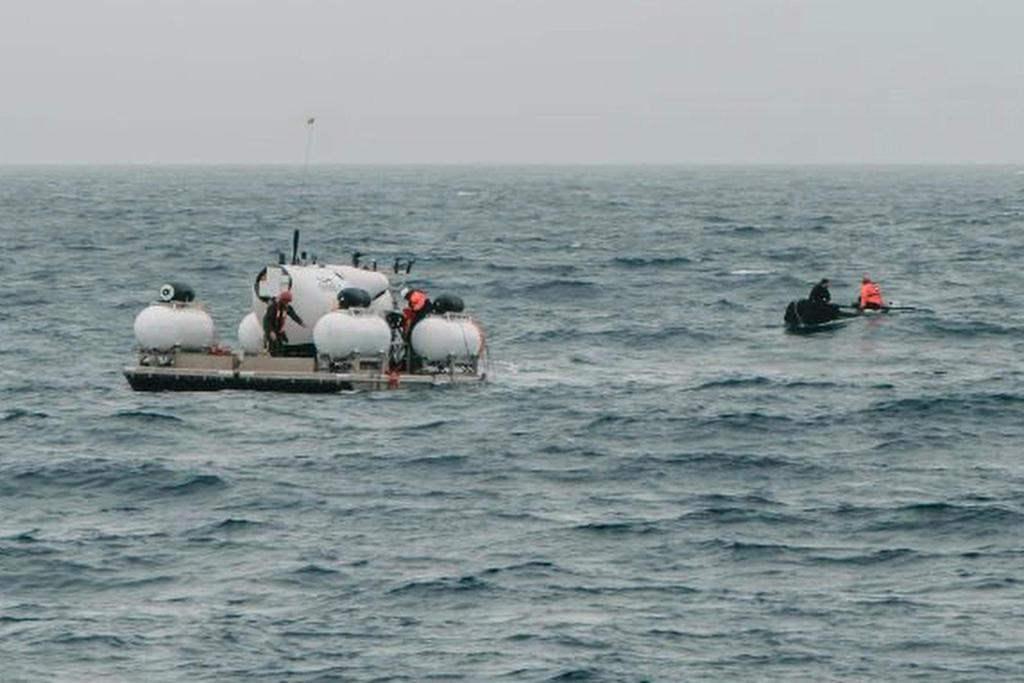
A crew from Coast Guard Air Station Elizabeth City are racing against time in the search of the missing submersible Titan.
According to U.S. Coast Guard Northeast, a C-130 fixed wing search and rescue crew from the air station conducted two flights Monday and two flights Wednesday, scanning the ocean 900 miles off the coast of Cape Cod, Massachusetts. The Elizabeth City crew were called upon after the 21-foot submersible lost contact with its mother ship on Sunday as it descended to the wreck of the Titanic with five people aboard.
“This is an incredibly complex search operation, requiring both surface and subsurface elements,” said Capt. Jamie Frederick, First District Response Coordinator, during a press conference Wednesday.
The aerial surface search, Frederick said, is of an area approximately twice the size of Connecticut. The subsurface search is 2 1/2 miles deep.
“We also have to factor in the ever-changing weather conditions, currents and sea states that expand the search area every hour,” Frederick said.
The Northeastern Coast Guard command, which is leading the efforts, reported Wednesday morning that winds were 23 miles per hour, with gusts up to 30 miles per hour and 6-7-foot swells.
“All of our efforts are on finding the [submersible]. All I can tell you is that we have our nation’s best experts in the unified command and if we can get to [finding them], those experts would be looking at what the next course of action is,” Capt. Frederick said.
But time is running out. The Titan is expected to run out of oxygen around 6 a.m. Thursday.
“All of our efforts are on finding the [submersible]. All I can tell you is that we have our nation’s best experts in the unified command and if we can get to [finding them], those experts would be looking at what the next course of action is,” Frederick said.
Also participating in the search, is an international fleet of vessels and aircraft that includes crews from the U.S. Coast Guard First District, the Canadian Coast Guard, the Canadian Royal Navy, commercial ships and Canadian and Bahamian research teams.
When the search will conclude is uncertain.
“Sometimes you’re in a position where you have to make a tough decision,” Frederick said. “We’re not there yet.”
Caitlyn Burchett, [email protected]