Mark Galeotti would answer yes. His new book, Putin’s Wars: From Chechnya to Ukraine, relies on accepting that Russia’s military can be both good and bad at the same time. Galeotti portrays the Russian military, and particularly its army, as a dynamic organization wrestling with instituting generational change. Gutted by the fall of the Soviet Union and embarrassed at Grozny, the Russian military required a shock to the system, something akin to strategic, and surprisingly, bureaucratic electro-shock therapy. It had to change, not only to meet the times and the changing character of war, but also to preserve a Russian state reeling through strategic, imperial, and cultural collapse.
In the truest Russian sense, the required dynamism arrived with a strong-willed political leader who provided a top-down-driven clarion call to make the force relevant for the wars, and the Russia, of the future. Galeotti describes the synergistic relationship between Vladimir Putin and the Russian military and how Putin viewed his military as the heart of a new and more powerful Russia. Through the careful selection of a series of defense ministers, Putin began to break the back of a sclerotic and top-heavy officer corps and drove through professionalization and modernization programs intended to make the Russian military, and in particular the army, more lethal and agile. Galeotti shows how the development of new, exquisite, and made-in-Russia combat platforms, manned by a growing class of professional soldiers (Kontraktniki) came to symbolize this new strength. At the same time, Putin’s image became linked inextricably with the military, his and their public displays of strength serving as a sort of cultural and ideological feedback loop.[1]
Galeotti also outlines the selective and narrow nature of this modernization and professionalization across the forces. Unable to modernize a twentieth-century conscript army overnight, Putin and his defense ministers focused on segments of the force, building small islands of ready and highly capable formations amidst a sea of slower-to-improve conscript and reservist forces. At the operational level, this change became exemplified in the Battalion Tactical Group (BTG), a task-organized combat team built upon a foundation of new and old-but-modernized equipment, trained and proficient kontraktniki, and enablers intended to defeat adversary formations with a range of kinetic and non-kinetic effects. On paper, and to an extent in eastern Ukraine in 2014, the Battalion Tactical Group seemed a harrowing portent of what was to come.
What Galeotti expertly draws out, which I would argue few others have explained as convincingly, is how the Battalion Tactical Group concept, and the selective modernization and professionalization that undergirded it, reflected the Russian leadership’s contemporary vision of future war. Starting with the Second Chechen War, Putin and his coterie of advisors envisioned Russia fighting local wars, wars characterized as counter-insurgencies (Chechnya), border disputes against smaller powers (Georgia), proxy wars (Donbas), and selective power projection and anti-terrorism campaigns (Syria). Battalion Tactical Groups and selective modernization allowed the Russian military to rely on a small number of ready and capable forces to manage these conflicts, buying time for wider-ranging reforms to take place.[2]
Putin and his advisors began to view future war differently after witnessing NATO and the West’s first steps towards unifying against Russian assertiveness following its seizure of Crimea and interference in eastern Ukraine. The next several decades would be defined by the risk of regional wars, they argued, larger conflicts against states with near-peer capabilities in Russia’s near-abroad. These regional wars would always exist under the shadow of Western interference, they believed, requiring a level of joint and regional integration that had not existed since the Soviet era. By 2016, as Galeotti points out, the Russian military began the process of retooling for regional war, changing the command architecture to increase efficiency and jointness, at least on paper.[3] It also began to conceptualize the division as the primary unit of action in the ground domain, exploring ways to scale up Battalion Tactical Group structure to enable operational maneuver.[4] Reformers recognized the complexities this created, particularly in terms of logistics, power projection, command and control, and the integration of reservists. Given a decade or two, Russian military leaders believed they could create a new army, capable of ensuring Russia’s sphere of influence in the states of the former Soviet Union.[5]
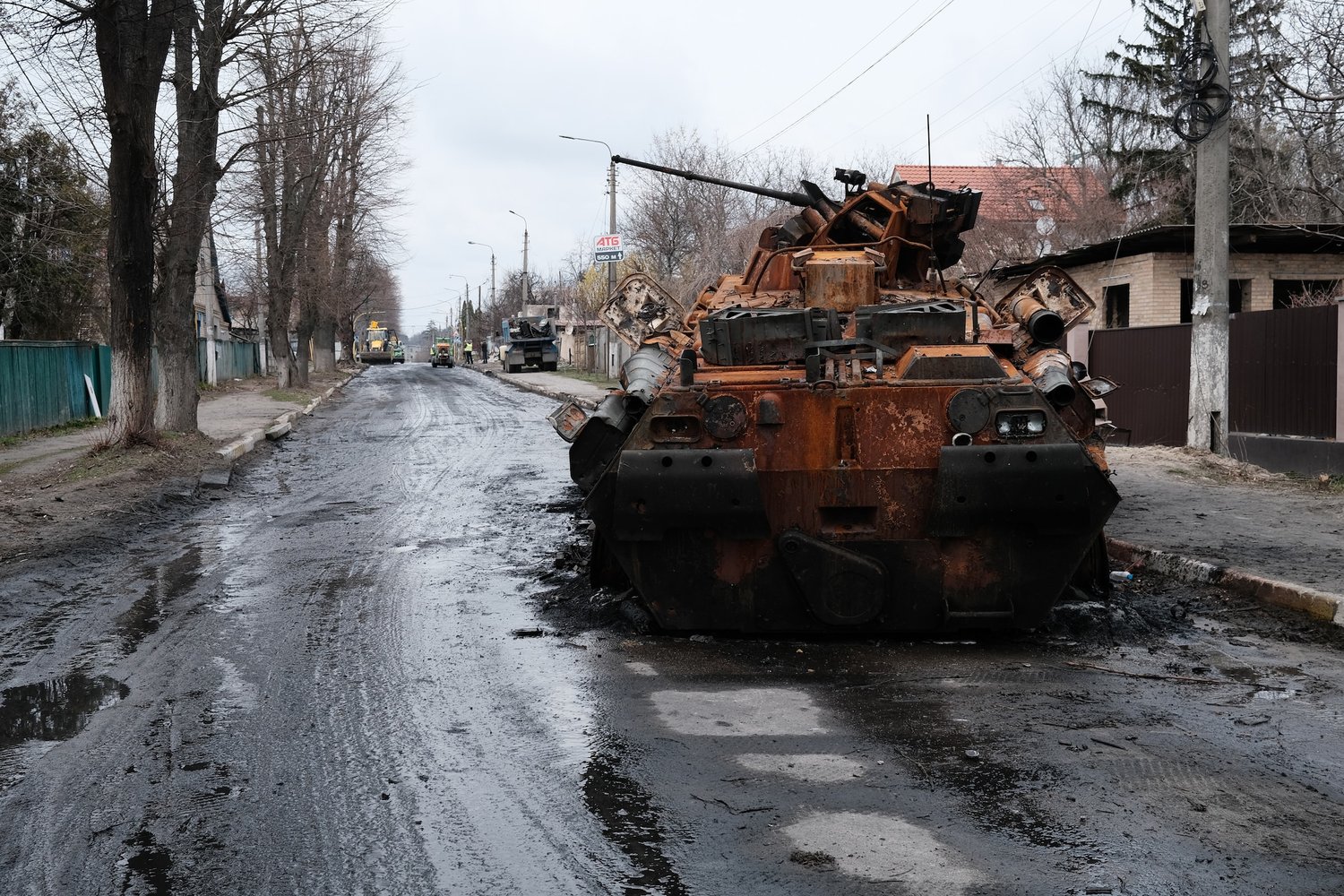
In some ways, Russian military leaders simply ran out of time. As Galeotti sees it, the Russian military that invaded Ukraine was in flux. The invasion caught it in stride, moving towards a new organization, focus, and culture. In some ways, two Russian armies invaded Ukraine: one a small, professionalized, and modernized force with experience in smaller, lower-intensity conflicts; the other, a larger, primarily conscript force with little operational experience. The defining characteristic of Russia’s first year of war in Ukraine was the destruction of that first army outside of Kyiv and in the vicinity of Kharkiv and Kherson. The future of the second army remains in question.