Scholars and practitioners have been examining the art of command since organized warfare began and have identified two models: centralized and decentralized.[1] Commanders should rely on capable, well-trained, well indoctrinated subordinates’ talents, judgments, and initiative to gain victory. War is a human endeavor and technology alone does not win wars. Because people fight wars, finding the best ways to exploit their talents is central to attaining victory. Therefore, a commander’s greatest attribute is an ability to place the right people in the right jobs and his effect on morale. Leadership is an intangible, composed of personality and vision and its practice an art. Good leaders stress clarity of intent—state the goal but never tell people how to do things. This fosters a collaborative organizational culture that avoids blame by encouraging learning from mistakes to take bold but calculated risks. A good commander is accessible and promotes subordinates sharing their stories as a way to learn and communicate, creating an adaptable, innovative, and flexible organization based on mutual trust and confidence. Those in formal leadership positions must be cognizant of the welfare of those they lead: their well-being must be encouraged as this is one way a leader ensures organizational effectiveness. All leaders must also set aside time for self-reflection to remind themselves all success includes other people.
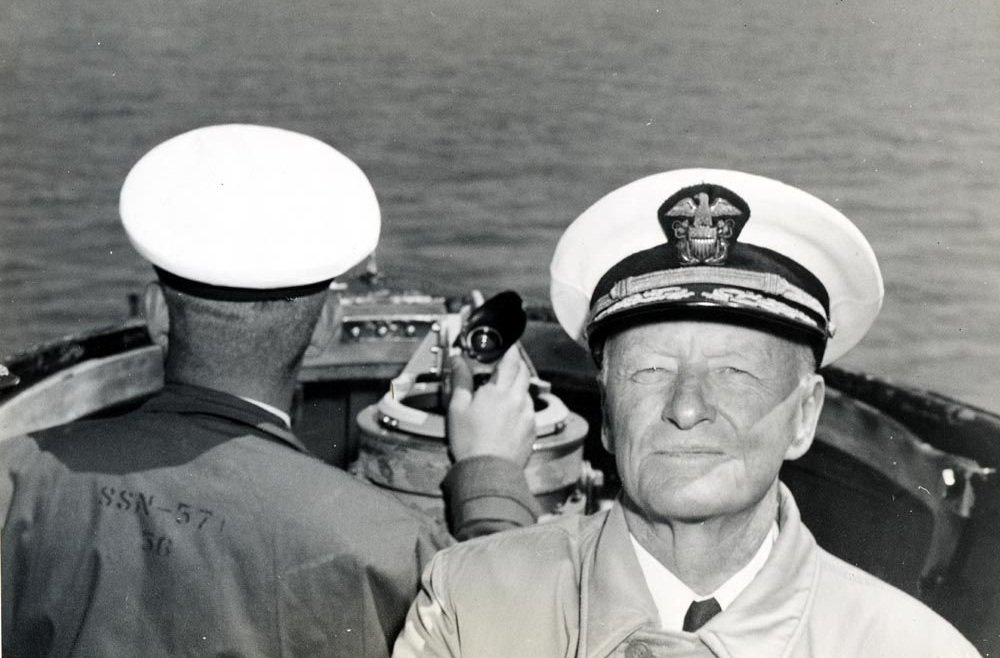
Trent Hone presents a study showing how Admiral Chester W. Nimitz initially organized and then modified his staff organization to meet a changing military environment.
Following these general ideas, Trent Hone presents a study showing how Admiral Chester W. Nimitz initially organized and then modified his staff organization to meet a changing military environment. To aid those unfamiliar with the course of events, Hone includes lists of operational code names, abbreviations, maps, figures, and tables as well as an extensive bibliography to enlighten readers. The tables, in particular, show how Nimitz and his staff were able to adjust their plans to reflect changed circumstances. He uses the way General MacArthur organized his theater-level staff to examine the efficacy of these two models (Army and Navy) through the lens of organizational behavior theory. Further, he shows how Nimitz created opportunities for offensive action by asking his staff to consider various strategic options as situations in the theater of war evolved.
Many narrative histories of the Pacific War present events as occurring in a set pattern with little chance for variation, eliminating much human agency. The area of conflict was vast and consisted of oceans dotted with islands which were home to various ethnic groups. The United States divided this theater of war into several sub-theaters: the North Pacific, the Central Pacific, the South Pacific, and the Southwest Pacific. The latter was divided between two commanders-in-chief—Admiral Chester Nimitz, Commander in Chief Pacific Fleet (CINCPAC) and Commander in Chief Pacific Ocean Area (CINCPOA) and General Douglas MacArthur, Commander in Chief Southwest Pacific.
The most important lessons drawn from any war are usually found in the events preceding hostilities and at its beginning when there are no abundant resources. In the first campaigns nations fight for survival with inadequate resources, and often with unsuitable commanders—handicaps of fighting on terms dictated by the enemy. As a war continues and a nation fully mobilizes its resources, it can choose options and, as final victory appears certain, debate how to secure it quickly and cheaply. Admiral Nimitz and his staff experienced all these phases.
Important decisions are made before the first shots are fired, when the nature of the war to be fought is determined. When fighting in a coalition engaged in a global war, conferences decided strategy based on plans and statistics concerning matériel, shipping, and personnel. The main subjects of a conference were high level strategy and policy, encompassing war aims, choosing allies and operational theaters, as well as creating organizations to distribute men and matériel. Hone’s book deals with the ways theater-level activities are decided and the way these commanders use their staffs. They discussed, among other topics, theater-level strategy and personnel matters. These meetings allowed them to work through their disagreements. While Nimitz did not participate in inter-allied conferences and decision making, he met regularly with Admiral Ernest J. King, who did participate in these meetings as a member of the American Joint Chiefs of Staff and the Anglo-American Combined Chiefs of Staff.
In terms of structure, Hone divides his work of ten chapters into three parts. The first three chapters concern the initial phase of the Pacific War, from December 1941 through June 1942. Hone describes this as a period of disequilibrium, of material disadvantage and defense. The next three chapters cover a phase of equilibrium, from July 1942 through October 1943, as the United States transformed its economic power into military power. The final four chapters cover a period of advantage from November 1943 through August 1945, when American forces took the offensive in the Central and South Pacific bringing their overwhelming matériel superiority to bear against Japan.
Hone begins with Nimitz assuming command of the Pacific Fleet on Christmas Day 1941, finding it stunned by the Japanese attack and doubting its own expertise. At that time, the Japanese Navy that carried out the Pearl Harbor raid was the only force capable of assembling and operating a fleet of six aircraft carriers. Nimitz had three initial tasks: (1) assemble a staff, (2) restore the staff’s and the fleet’s self-confidence following the sneak attack, and (3) deal with serial crises in the first months of the war. He earned the confidence of his superiors and subordinates by not replacing the staff and having the fleet demonstrate it could strike the Japanese in battle through a series of raids and to defeat them at the Battles of the Coral Sea and Midway. He listened to his advisors but over-ruled their defensive preferences, opting for taking the offensive. Throughout this initial period, Nimitz emphasized that plans and operations would be governed by the principle of calculated risk. We see this principle in operation in planning the initial carrier raids (betting the Japanese were more interested in Malaya, the Philippines and the Netherlands East Indies), and in the instructions given to the admirals in tactical command at Coral Sea and Midway. At the same time, he was able to replace certain commanders by placing them in jobs more suited to their talents.
The second phase, a period of equilibrium, deals with Nimitz’s role in the campaigns in the Southwest Pacific. His meetings with Admiral King and General MacArthur’s surrogates governed an American opportunistic strategy, a reaction to Japanese moves in the Solomons and New Guinea. Nimitz’s two main tasks were to find commanders who could cooperate fully with General MacArthur’s staff, exercise initiative on their own behalf, and prepare the Navy for the battle of attrition that was the Guadalcanal campaign.
During this period, he also changed the staff structure and, despite Army objections, retained both fleet and area command. The victory at Guadalcanal allowed the US to seize the initiative in the Pacific War. While Admiral Halsey and Admiral Kincaid undertook opportunistic offensives (in the Southwest Pacific to support MacArthur and in the North Pacific to seize Attu and Kiska, respectively), Nimitz’s staff prepared to use the fleet to take the offensive in the Central Pacific. Through 1943, Nimitz, his staff, and their subordinates improved tactics, doctrine, and force structure by incorporating lessons learned since December 1941. Logistics, an on-going issue, was solved by fully integrating the Army into Nimitz’s joint staff planning and operations sections, which resulted in increased attention to a logistical organization and planning capability that could concentrate power at the right time and the right place. This happened only when Nimitz abandoned prewar assumptions concerning ways to organize a Pacific campaign.
The third phase began with the amphibious assault on Tarawa Atoll in the Gilbert Islands and ended with Japan’s formal surrender in September 1945. At the beginning of this phase the Allies could choose options and engage in a debate on ways to achieve final victory at the cheapest cost in the shortest time. After Tarawa, Nimitz again decided to strike directly at Kwajalein against the staff’s advice; taking a calculated risk that the Japanese were too weak after the actions in the Southwest Pacific to mount a coordinated defense of the Marshall Islands. The successful invasion of Kwajalein and Eniwetok threw the Japanese off balance and advanced the projected timetable for invading the Marianas by six months. All through 1944, the campaigns in the Central and the South Pacific worked in tandem, each reinforcing the other.