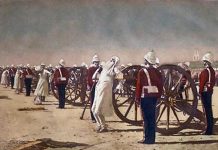
American news outlets announced that the Taliban would take months to roll back the Afghan government following coalition departure in 2021, and it took days. The Russians intended to take Kyiv in days, and Ukrainians continue to fight and win a year later. Both instances highlight the difficulty in predicting outcomes. History is littered with these strategic blunders where states misjudged the future. States may struggle to envision future warfare because they draw too much from history. This is not an anti-history article. History feeds theory. Theory, when tested, drives doctrine. Yet states, specifically the planners and decision-makers within those states, must learn to take historical knowledge a step further.
The art of trying to envision the future is not a cure-all; foresight-driven warfare is what we seek. The goal of any nation should be to prepare for various plausible futures or outcomes, which drives down strategic risk, enables a state to become operationally flexible, and positions a state with the means necessary to fight the next fight. Achieving foresight driven national strategy, defense policy, and modernization begins with finding an effective model for planners, which might include Scenario Planning. Scenario Planning methodologies provide prognosticators a way to envision multiple plausible futures versus a singular outcome for a complex, adaptive global system.
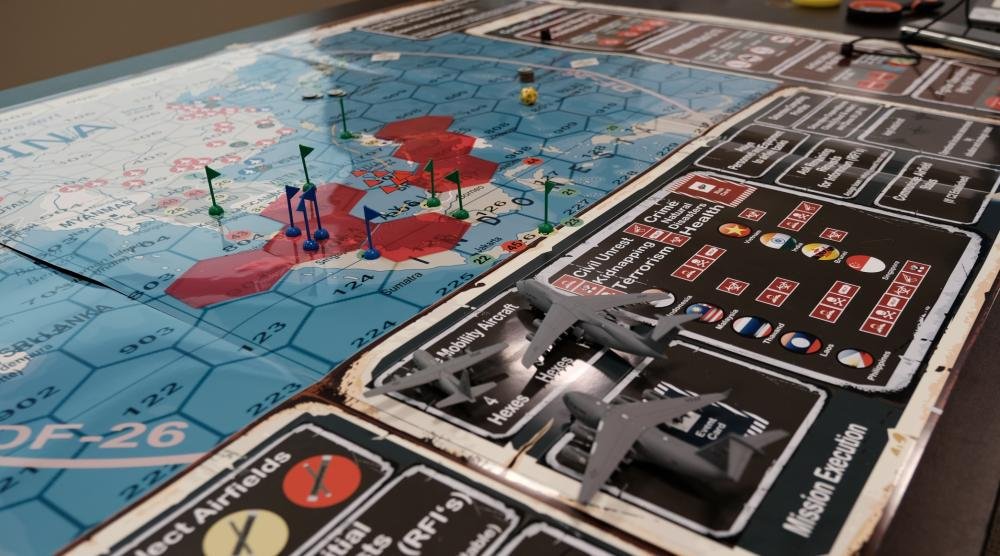
Scenario planning is an art. When done correctly, the process opens minds, enhancing strategic thought and exploration of the future.[1] As a result, planners can prepare for a wider range of futures by testing current plans against the unveiled futures. In today’s complex environment, the process is invaluable. During this process, planners must seek to anticipate the future, not attempt to predict it. According to Conway, strategy’s importance lies in positioning correctly for the future, but historical information and the present operating environment drive strategic decision-making.[2]
Achieving foresight driven national strategy, defense policy, and modernization begins with finding an effective model for planners, which might include Scenario Planning. Scenario Planning methodologies provide prognosticators a way to envision multiple plausible futures versus a singular outcome for a complex, adaptive global system.
The Pitfalls of Utilizing History to Prepare for the Future
Two fundamental problems occur when examining history. First, the lessons learned are generally stale, and only portions of the lessons learned apply to the next conflict. The lessons learned are also generally written without utilizing the full context. Strategists must understand the why behind a successful campaign, maneuver, etc., and be able to apply that to a future scenario.
Planners can appear to move at cumbersome speeds. History informs plans, but the intelligence that drives this information is stale even before the plan is generally finalized. Planners may struggle to think about what the enemy could do long term and iterate on this process. A plan may appear to be completed after just a few explorations of the future, and lack branch or sequel plans to accompany them.
Themes in Current Planning
Through strategic lenses, states have envisioned future warfare. In American military schools, there is an apparent shift from insurgency or guerrilla fighting back to a large-scale combat operations (LSCO) mindset. LSCO preparation has advantages. The military can demonstrate a need for modernized weapons to fight peer adversaries or to gain an asymmetric advantage against a more significant force, reflecting changes in service and joint doctrine. The current doctrinal trends also reflect the emergence of service and joint views on an extended battlefield, information’s importance, space dominance, and offensive and defensive cyber. The next war will be truly global, with forces able to disrupt each other’s homelands.
Moreover, the shift has reflected changes in the recently published 2023 National Defense Authorization Act, focused on the People’s Republic of China as a pacing threat. With a new Cold War appearing to erupt, the emphasis remains on building competitive edges in all domains against adversaries. In some areas, the Western world is trying to catch up. Elsewhere, it fights to maintain its advantage.
A common discussion in a counter-PRC fight remains the defense of Taiwan; yet, this is only one future scenario. For America’s more immediate threat, Russia, Ukrainian forces continue to maim the Russian military. If we are not careful, this might accidentally cause a myopic approach in preparing for future military operations. The question to be asked, though, is this: What other scenarios create threats to the U.S. that are not given enough consideration and how does it prepare for them?