I am honored to support the bipartisan legislation introduced by the Maryland and Virginia congressional delegations to authorize the Chesapeake National Recreation Area (CNRA). I also support the legislation’s proposal that Fort Monroe National Monument become a key site for interpretation and visitor services. If passed into law, the CNRA would be a land-based park experience, uniting new and existing National Park Service sites and trails, as well as partner parks, to increase access to the Chesapeake Bay and create a national park-style visitor experience for all people.
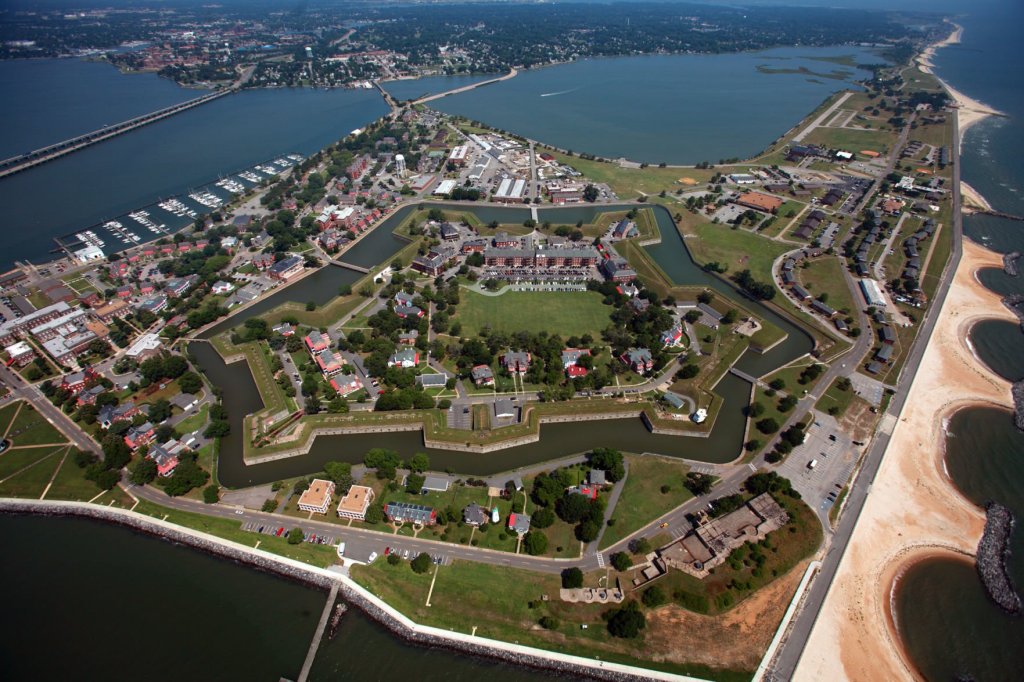
In Hampton Roads specifically, the CNRA will raise awareness about the Chesapeake Bay’s importance as a natural, cultural, recreational and economic resource. At Fort Monroe, increased interpretation and new visitor services focused on the bay will support several of the specific reasons President Barack Obama established Fort Monroe National Monument in 2011: preservation of historic, natural and recreational resources and to provide land and water-based recreational opportunities.
The Chesapeake Bay is as spectacular as any national park. Establishing the CNRA makes it clear that the United States cherishes the bay and recognizes its role in American history. Due to the fort’s historic, cultural and natural connections to the bay, the site is perfectly suited to be the CNRA’s southern anchor site.
The Fort Monroe Arc of Freedom, specific events unique to the fort’s history that shaped the American definition of freedom, all have close ties to the bay. Within the fort’s eight miles of waterfront, of which 3.2 miles face the Chesapeake Bay, indigenous people thrived for thousands of years before the arrival of Europeans. In 1607, English colonists landed on their way to Jamestown. In 1619, the first Africans were forcibly brought to English North America and traded as property at Point Comfort. In 1861, Maj. Gen. Benjamin Butler’s “contraband decision” began to unravel the institution of slavery as Frank Baker, James Townsend and Shepard Mallory became the first contrabands. This earned Fort Monroe the nickname “Freedom’s Fortress.” And more recently, the importance of the fort’s role in protecting the Chesapeake Bay during both world wars. All these key historical points occurred at the site of Fort Monroe because of its strategic location along the bay.
In addition to the fort’s historic connections to the bay, the site is already serving the public by offering recreational opportunities and public engagement with the environment. It is hoped that the CNRA would encourage even greater accessibility to the Chesapeake Bay, such as a public boat ramp and kayak launch at Old Point Comfort Marina and handicap-accessible beaches. It is important that all visitors to Fort Monroe can experience the bay.
The National Park Service, Fort Monroe Authority and partner organizations such as the Fort Monroe Historical Society are interpreting the fort’s history and could offer expertise to support CNRA visitor services. Youth Sailing Virginia, a non-profit also based at the fort, is inspiring the next generation to appreciate the Chesapeake Bay by teaching students how to sail through safe, fun, and educational water-based programs. These are just two examples of the fort’s infrastructure of public-private partnerships which make the site ideal for the CNRA.
The creation of the CNRA with Fort Monroe as a key site will help future generations experience the history, culture and natural resources of the Chesapeake Bay. Perhaps most important, this legislation will build awareness about the need to protect the bay. It will also inspire the creation of sustainable jobs and increased private investment in the region. The CNRA, with engaging and meaningful visitor services at Fort Monroe, will have positive impacts on the fort’s visitation, its environmental stewardship initiatives and the Hampton Roads tourism economy.
W. Robert Kelly, Jr. is the director of the Gloucester Museum of History, president of the Fort Monroe Historical Society, president of the Peninsula Museums Forum, vice president of the American Friends of Lafayette, former Casemate Museum historian, and a Fort Monroe resident.