A partnership between Christopher Newport University’s Luter School of Business and the Virginia Peninsula Chamber of Commerce aims to get regional cities working together on growing the economy.
Regional collaboration has been talked about for decades, but a lack of cooperation continues to be the area’s Achilles’ heel.
“It was brought up 30 years ago. We say we need to work together to optimize our assets because it’s best for the whole area. But it doesn’t happen,” said Dr. William “Willy” Donaldson, founder and president of Strategic Venture Planning and associate professor of management at CNU.
So, Donaldson and Peninsula Chamber President and CEO Bob McKenna joined forces to bring together city and business leaders for regional growth. The July 18 kickoff event, Rising Tide, brought together over 170 business owners, industry professionals, academics and community leaders to solve problems and identify opportunities.
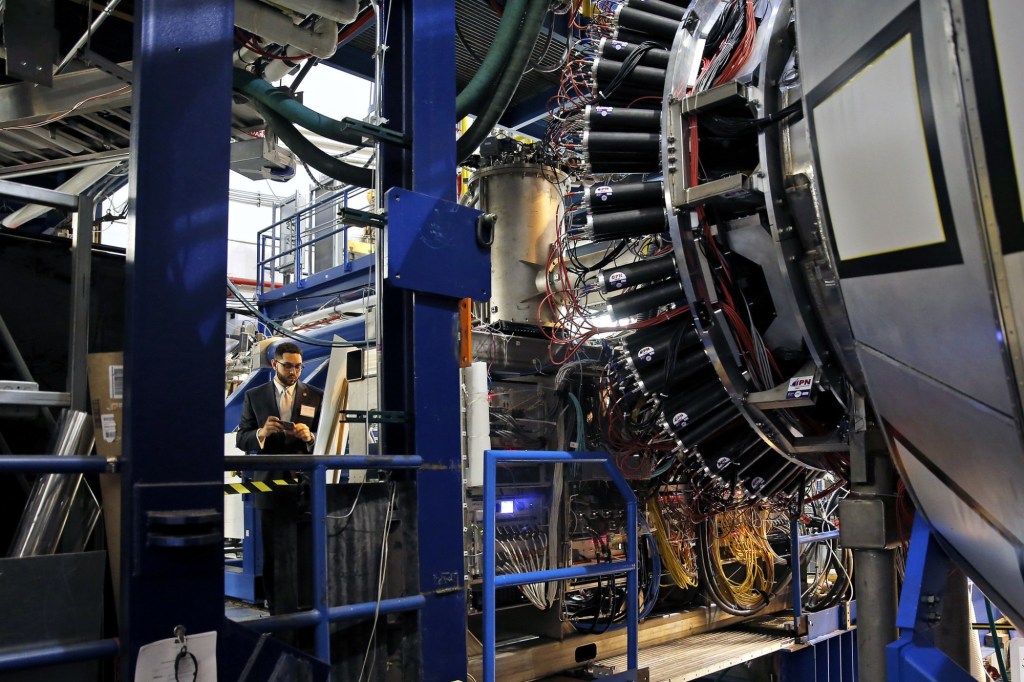
Future plans are to meet about twice a month to discuss business, public transportation, public safety and education. An ongoing topic will be leveraging the region’s unique assets in technology, including NASA Langley Research Center in Hampton and Jefferson Lab in Newport News, McKenna said.
Another major Hampton Roads technology asset is the educated workforce, Donaldson said. The area has one of the highest per capita densities of scientists, engineers and technicians in the country. That needs to be leveraged, Donaldson said.
“When it comes to technology, Hampton Roads should be a leader,” he said.
The group has begun several initiatives, starting with optimizing Jefferson Lab for commercial uses in manufacturing. Jeff Lab technology can also be used for water purification, flue gas remediation and more, Donaldson said.
A Hampton Roads regional aviation, aerospace and unmanned systems assessment is another initiative. It will involve a consortium of regional leaders from airports, NASA, the Department of Defense, academia and industry that will attempt to solve aviation problems. It will address pilot shortages, fuel costs, carbon footprint and fuel conversion issues. Plans are to develop and assist in the scale-up of drones and autonomous unmanned aerial vehicles, Donaldson said.
Other opportunities exist with helping the port with research needed to lessen the carbon footprint or helping the Department of Energy with emerging alternative nuclear power development. Donaldson said that at the Chesapeake location of IBC Renewables, a consortium will work to convert waste into clean, sustainable products.
For entrepreneurs and current companies who want to grow, the chamber will host successful local founders to tell their stories. There are several local organizations such as Campus 757, SCORE and 757 Collab that help entrepreneurs in the area. McKenna said a “meet the resources” event is on the horizon to allow entrepreneurs to figure out who can help their business.
On a wider regional scale, the Mid-Atlantic Hydrogen Hub will be consortium of about 50 cross-sector leaders from Washington, D.C., Maryland and Virginia. The group hopes to develop a regional hydrogen hub and ecosystem tied to the emerging offshore wind industry. Hydrogen can be used in shipping, ports aviation and trucking, Donaldson said.
The initiatives are needed because Hampton Roads is not doing as well economically compared with other regions because various city leaders do not cooperate, he said. He points to evidence on how much the region is suffering because of it, including lagging gross domestic product.
“We lag in job creation, and wages are declining. Yet the cost of living goes up,” he said.
In regards to low wages, Donaldson said that in 2021, the region had a per capita personal income of $56,716, ranking the area 149th out 421 regions in the United States. The national per capita income is $64,143. And housing costs are higher than in comparable regions. In Charleston, South Carolina, the average portion of household income for housing is about 30%. For Hampton Roads, the average is 35% of household income.
Virginia ranks in the bottom half for venture capital investment as well, Donaldson said.
He said the heavy reliance on the Department of Defense and the federal government in the regional economy has been a “double-edged sword.”
Donaldson said when defense budgets get cut, the region suffers.
“When D.C. sneezes, Hampton Roads gets a cold,” he said.