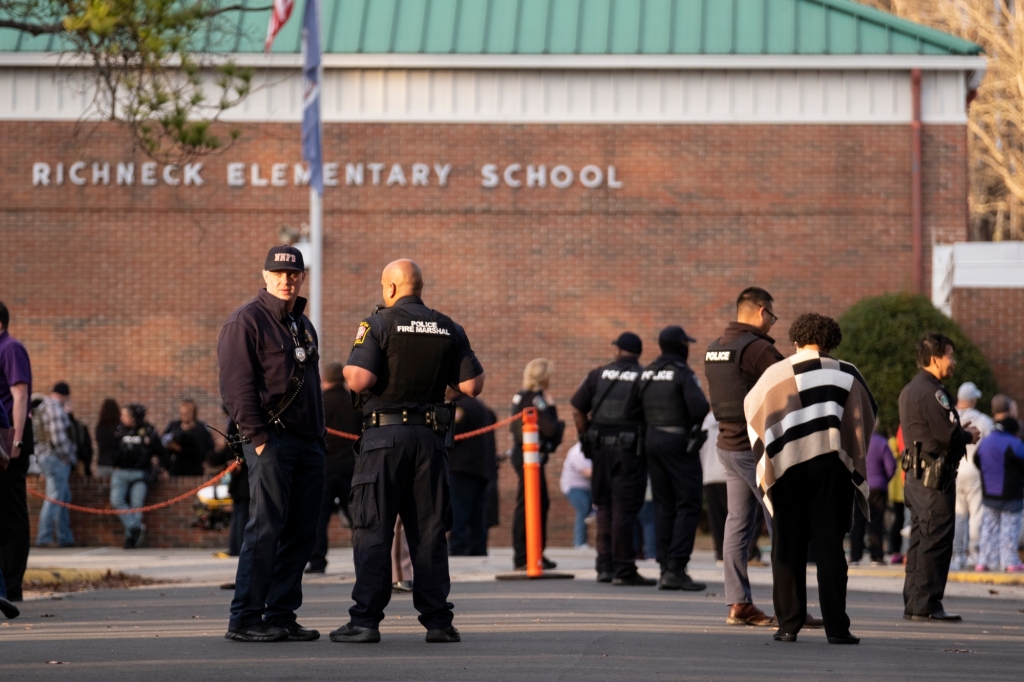
Getting shot as a teacher should never be considered a “workplace injury.” When the news reported that our homeowner’s association’s law firm of Pender & Coward made that assertion about the Richneck Elementary school shooting regarding a lawsuit filed by the teacher who was shot, I knew something was very wrong. As a former fighter pilot, 27-year airline captain and safety expert, I can say definitively that the risk of death on the job is universally considered unacceptable. Even in high-risk environments, the greatest efforts are taken to mitigate tragedy, and first grade is no carrier flight deck.
As president of my HOA, I also knew that community trust and safety go hand in hand. Mailbox upkeep and moldy sidings can be a concern but having someone’s daughter shot as a schoolteacher makes everything else irrelevant.
We know how to manage risk. We have nuclear power plants, open heart surgeries and millions fly every day without anyone thinking twice. None of these activities are without danger, but we live comfortably in our 21st century because there is a great effort to continuously make, monitor and keep the public safe. To say there is a trove of documentation, regulation and studies in this field would be a gross understatement.
The one lesson written in blood is that you can’t sit on your hands and wait for bad things to happen. You must work hard at being proactive, gathering data and working on effective communications. I’ll bet you didn’t know that twice a year all the airlines in the United States have a private four-day conference to share each other’s safety data and accident lessons. The FAA states that they are responsible for providing you (the passenger) the highest level of safety above mere compliance. If they aren’t worried about tomorrow, they aren’t doing their jobs.
Our school rooms should be as safe as our airplanes. If you know a kid has problems, at the very least you should ask their parent if they keep guns at home and, if so, how they are secured. This is risk identification at its most basic. If there is any indication a student might have a gun, as apparently was the case, reporting and action should be swift and decisive. Guns, fuel leaks, radiation — risk is risk. They should all be treated the same and the responsibility for doing so rests entirely with management.
So how should someone legally defend the school in this case? NASA studies have shown that people are bad at dealing with things that happen very infrequently. We have cognitive biases, gaps in perception, and judgment can be clouded by conflicting priorities. There were plenty of clues that the Space Shuttle Challenger was going to explode, but even NASA became blind to them all.
Modern safety science accounts for this and I have no doubt our culture of guns, state educational guidance and legal pressures put the Richneck School behind the power curve. A competent legal defense could highlight systemic failures and in the end point to better mitigations. I can point to at least three safety systems in my own cockpit that were the result of lawsuits that did exactly that.
If we are going to work for a better tomorrow, we need to start holding more people accountable, and that includes lawyers. When the legal profession breaks our trust by appearing to carelessly ignore what makes us safe, we need to send them a strong message, just as our HOA board members did.
We don’t have to live like this — not the teachers, not the schools.
John Gadzinski is president of the Christopher Farms Homeowners Association in Virginia Beach. He is a senior airline captain, former Navy fighter pilot, safety expert and fellow in the Royal Aeronautical Society.