Following the Second World War, I served for almost a decade as a foreign correspondent based in Prague for Hungarian newspapers. In that capacity I walked the corridors of power in the Communist world of Eastern Europe.
I had an opportunity to observe how the system worked and what motivated the Communist leadership. Under Soviet domination, Eastern Europe was a mirror image of the Soviet regime. It didn’t take me long to notice the historical similarities between the Nazi regime in Germany and the Soviet regime in Russia.
The Soviet Union doesn’t exist anymore, but the mentality of the regime has re-emerged under Vladimir Putin’s 23-year rule.
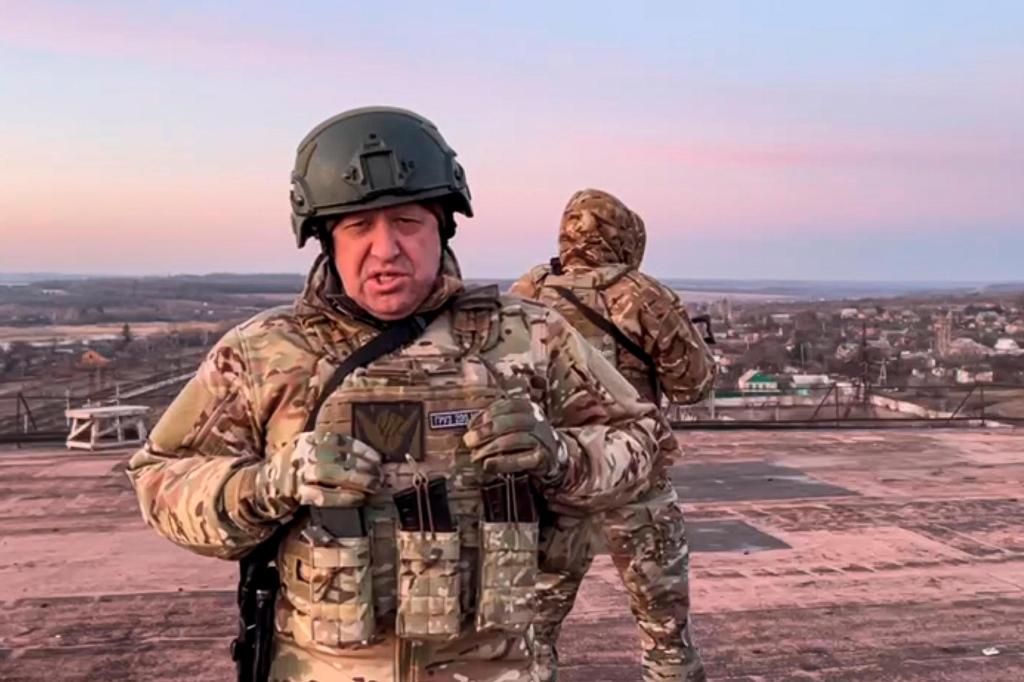
While searching for logical and rational explanation for Yevgeny Prigozhin’s ill-fated uprising in Russia — the march of the Wagner force on Moscow — it would be useful to make some historical comparison.
Under Hitler, it was the SA, also known as the Storm Troopers or Brownshirts, the Nazi party’s private militia, that had a leading role in terrorizing the opposition and helping Hitler to gain power. Subsequently, the SA become too powerful and independent and posed a threat to Hitler’s hegemony over the Nazi party.
The SA opposed Hitler’s accommodation with the German army’s leadership and demanded a “second revolution” beyond the one that brought the Nazi party to power. That is when Hitler sided with the SS, another paramilitary group under the command of Himmler, known for its exclusive loyalty to Hitler. The SA leadership was slaughtered by the SS and the SA group was sidelined.
According to news reports, the cooperation between Putin and Prigozhin began in St. Petersburg, where Putin, a former colonel in the Soviet secret service, was a minor city official and Prigozhin was selling hot dogs. Putin’s rise in power was followed by Prigozhin getting rich. He became known as Putin’s “chef” because he had obtained lucrative state contract for his catering service, supplying food to Russian military bases and school systems.
Although private militias are forbidden by law in Russia, Prigozhin, supported by Putin, was permitted to organize and finance the Wagner group, an armed militia of mercenaries. First, to advance Moscow’s aims, they were deployed in the Middle East and Africa.
Once the Russian invasion of Ukraine began last year and the Russian Army bogged down, Prigozhin engaged his Wagner militia in the fighting. To replenish the rank of his fighters, Prigozhin was permitted to recruit volunteers from Russia’s large prison system. Those who signed up were promised amnesty.
According to news reports, more than 20,000 Wagner fighters have died on the frontlines in Ukraine.
Just as the conflicts between Hitler’s SA and SS were based on personal rivalries between leaders, so was Prigozhin’s conflict with Russian Defense Minister Sergei Shoigu and Gen. Valery Gerasimov, the top Russian military commander in Ukraine.
Prigozhin accused them of incompetence and starving his militia of ammunition, weapons and supplies. At one point, he accused them of ordering an air strike against his troops, killing 30 of his fighters. That was when Prigozhin ordered his troops to march on Moscow.
Prigozhin’s Warner group sized a major Russian military hub, Rostov-on-Don, and from there marched on Moscow. His troops were 120 miles from Moscow when Prigozhin ordered them to turn around.
This decision was made after the intervention of President Aleksander Lukashenko of Belarus, an ally of Putin. Prigozhin and his militia members were offered amnesty and exile in Belarus.
Putin sided publicly with Prigozhin’s adversaries, the Russian military establishment, just as Hitler did with the SS in Germany. In Russia, the Prigozhin mutiny was short-lived. But according to students of Russian history, it will have ominous political consequences for Putin’s leadership. It presages instability for his regime, and just like it is impossible to become pregnant just a little bit, so will Putin’s hold on power become hard to sustain.
It is often said, “It couldn’t happen.” Until it happens.
Frank Shatz is a Williamsburg resident. He is the author of “Reports from a Distant Place,” the compilation of his selected columns. The book is available at the Bruton Parish Shop and Amazon.com.