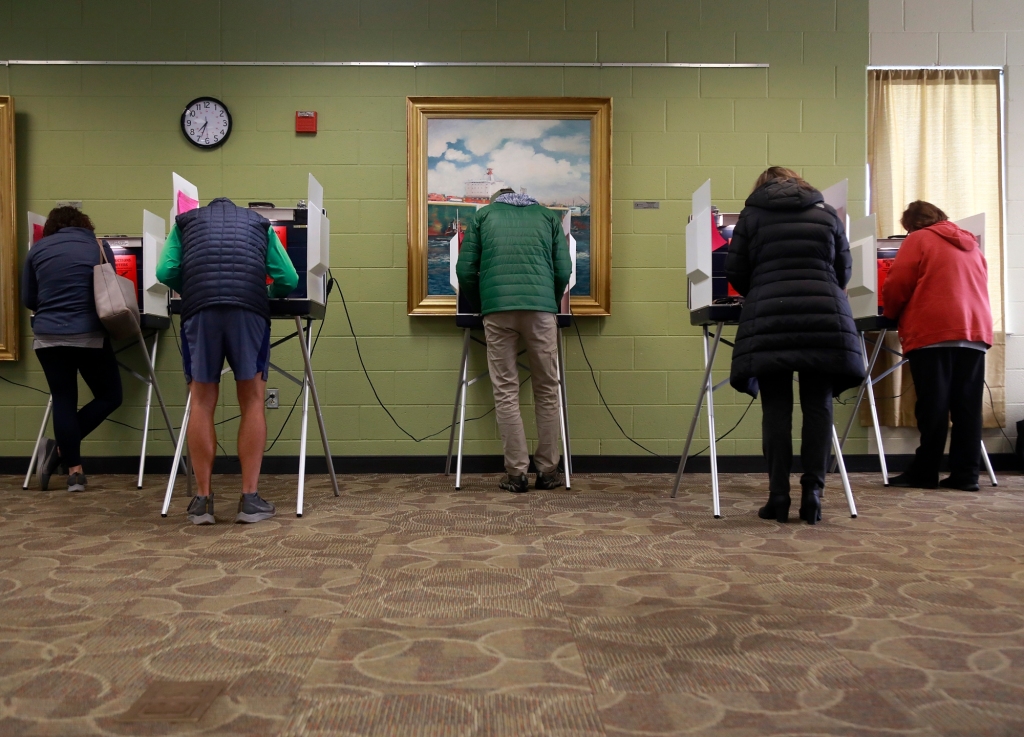
The legislative elections to take place in November will be a massive moment for Virginia and the future of the commonwealth. All 140 seats in the General Assembly are up for grabs and the effect of redistricting in 2021 has dramatically changed the landscape. Anything can happen.
Before voters can get there, however, they must finalize the slate of competitors for that November contest. Tuesday’s primary election will do just that, and it’s important that eligible voters who live in contested districts take part in helping chart a responsible course for Virginia.
Pundits love to call each election the most important in our lifetime, pumping up interest and viewership for their outlets. Nothing could be more consequential, they say. These races will decide everything.
While we strive to be less hyperbolic here, there is no question that the 2023 legislative elections are unlike any in recent memory, given the confluence of forces all converging on Nov. 7.
First, it is the only time in a four-year cycle that voters will decide every seat in the General Assembly. Delegates serve two years and senators four, so the outcomes of this year’s races will reset both chambers for the next two years. The stakes are enormous.
Second, the 2021 redistricting process — the first conducted under an independent commission approved by popular referendum — was akin to shaking an Etch-a-Sketch and starting anew. When commissioners were unable to reach agreement, the state Supreme Court tapped a special mapmaker to draw maps without favor to incumbents or party — a first for the commonwealth.
The result is that many lawmakers found themselves facing their colleagues in primary and general election contests. Eighteen senate districts included two incumbents and two districts included three sitting senators. On the House side, 42 of 100 districts had at least two incumbents.
That prompted a lot of soul searching and negotiations, and led to a wave of retirements as some long-serving leaders chose to bow out rather than to campaign against a colleague. The next legislature would look far different and will have far fewer years of combined experience — something to watch when the assembly convenes in January.
Third, is that Virginia seems to have reached a crossroads about its future direction. Voters elected Republican Gov. Glenn Youngkin in 2021 following eight years of Democratic leadership. They also handed control of the House to the GOP while the Democrats retained a slim majority in the Senate.
November’s election will help decide whether Youngkin will have a General Assembly welcoming of his policy initiatives come January or one hostile to his vision for the commonwealth. That’s no small thing given that a governor only has a single four-year term in office.
Before that, however, voters will need to settle the contested primary contests in today’s election. There are a couple of bruising battles in Hampton Roads: the Democratic contest in the 18th Senate District between Louise Lucas and Lionell Spruill, and the Republican contest in the 17th Senate District between Del. Emily Brewer and Hermie Sadler are particularly heated.
There’s also a chance of chicanery as Republicans in Northern Virginia and elsewhere have urged their voters to take advantage of the commonwealth’s open primaries to cast ballots in Democratic races.
There’s nothing illegal about that of course. Both sides have played that game and surely will again. But voters should be reminded that very rarely does such meddling deliver the hoped for outcomes. It’s more likely those schemes backfire. Be warned.
Primary election turnout is usually a trickle compared to the flood of a general election, but we salute all those who have taken the time to cast a ballot already or who will do so on Tuesday. Likewise to the poll workers and election officials who ensure things run smoothly.
This will be an enormous year for Virginia, and all eyes will be on the commonwealth come November. Today will set the table for the feast to come, so be sure to play your part.