When Linda Holmes was pregnant in 1976, she knew from her time as a Black student activist that she would have to fight to make choices about how she gave birth, from limiting medical intervention to negotiating her partner’s presence in the room.
But she didn’t expect the experience to shape the rest of her career.
“The anger that I felt at the time of birth fueled the work that I’m doing 50 years later,” said Holmes, who now lives in Hampton.
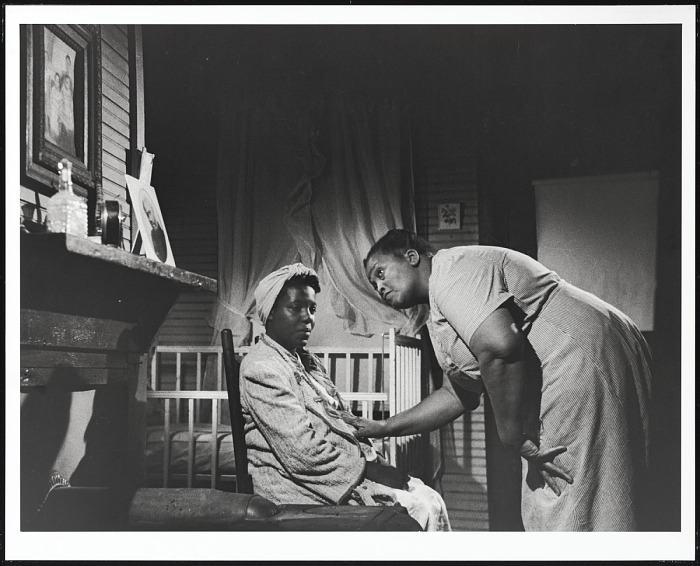
Holmes’ second book, “Safe in a Midwife’s Hands,” shares her research into Black midwifery traditions from the American South to the African continent. It officially launches Saturday with an event at 1865 Brewing Co. in Phoebus.
Named a “Most Anticipated Feminist Book of 2023” by Ms. Magazine, it spans Holmes’ first research project in Alabama in 1981; her 18 years with the Office of Minority and Multicultural Health in New Jersey, where she eventually served as director; a 2019 trip to Ghana, Ethiopia and Kenya to interview midwives; and research around Virginia, where she found some of the earliest plantation records on Black midwife practices. The final chapter, “Hampton to Charlottesville,” shares interviews with midwife descendants and other research.
Midwifery has a complicated history in the United States. Midwives were typically women without formal medical education but with hands-on training and experience who cared for other women during pregnancy and childbirth, usually at home.
It was the only option for medical care in childbirth until late in the 1700s and remained the primary option until around 1900. But as doctors, who were mostly male, became involved in the fledgling fields of obstetrics and gynecology in the 19th century, tension grew between midwives and the medical establishment. By the 1930s, most births took place in a hospital, and by the 1970s, when Holmes was pregnant, midwifery was outlawed in many states where it was seen as backward, unhygienic and unsafe.
“At the time, a Black infant in Newark was more likely to die during birth than anyplace else in the country,” Homes wrote in the book’s introduction. The state had decimated Black neighborhoods to build a medical school 10 years before, she wrote, now recognized as one of the underlying causes of the 1967 Newark Rebellion. Nearly 30 people were killed and more than 700 injured in one of the most violent of more than 150 riots sparked by racial injustice around the country that summer.
Courtesy of The Ohio State University Press
Front cover of “Safe in a Midwife’s Hands: Birthing Traditions from Africa to the American South,” by Linda Janet Holmes. Birth traditions that are now recognized as best practices survived in Black communities even as they were otherwise lost around the country.
The reality that their homes were sacrificed for medical advances that didn’t benefit them is an illustration of the way medicine has often left behind or harmed Black communities. James Marion Sims, still lauded as the “father of modern gynecology” for his research in the mid-to-late 1800s, performed experiments on enslaved women, Holmes wrote; a statue in his honor survives in front of the Capitol building in Montgomery, Alabama.
And yet, those harms may also have let Black midwives preserve centuries-old traditions as home births became less common in the 20th century. Because Black communities often had less access to medical care, even when they trusted it, birth traditions that are now recognized as best practices survived even as they were lost around the country.
Mainstream medicine now recognizes that unnecessary drugs and surgeries, for example, can lead to infection or injury to death for mother or infant. But when Holmes was pregnant, opposition to traditional birth practices was near its peak.
When she gave birth to her only child, doctors administered Pitocin, a drug used to induce childbirth, against her wishes and ordered an epidural, which she refused to allow unless she could have her partner in the delivery room. Nurses later told her she was the first person to demand “rooming-in,” or having her child stay in her room for easy breastfeeding — now an increasingly common practice.
“There was this idea that the problem of infant mortality would be solved in terms of outcomes if everyone could have their baby in the hospital with a doctor,” Holmes said. “Now it’s very clear that that’s not true.”
That experience contributed to her decision to pursue a National Endowment for the Humanities grant that allowed her to move to Alabama in 1981 and interview at least 50 midwives shortly after the state outlawed their practice.
The medical community labeled many of their practices as superstitions, Holmes said, and the midwives often couldn’t explain exactly why they engaged in certain traditions. They said it was just something their grandmothers did, Holmes recalled.
But as she later described one of these practices to a nurse midwife who had traveled to Ghana, Holmes said, the midwife recognized the ritual as a naming ceremony. In Alabama, midwives called it “taking the mother up,” a ritual performed about a week after birth that could involve a prayer, a small amount of water poured on the child, a walk around the house, or other elements that they couldn’t explain beyond tradition. In Ghana, these activities occur when the infant is presented to the community for the first time and given their name.
“That was the first time that I began to understand that many of the things that were being labeled as superstition, or backwards or not having any meaning or not making any sense, were a way that these women had to preserve very strong cultural birthing traditions,” Holmes said.

Courtesy of Linda Holmes
Linda Janet Holmes
The relationship between a birthing mother and a midwife, and the community aspect of birth, also stood out to her as recognized best practices, Holmes said. Midwives were often known in the community, rather than being someone a pregnant woman met just as she was about to deliver, as is frequently the case in hospitals. And the presence of multiple women from the community during the birthing process acted almost like a built-in review board, protecting both the mother and the midwife.
Work to collect the oral histories of midwife descendants, people who heard their grandmothers’ or other relatives’ stories, is of vital importance now, Holmes believes. Even in writing this book, her own notes from 1981, which are some of the only records made of the last surviving midwives, were instrumental, she said.
“We don’t know yet all that we can learn from the practices of midwives, traditional historic Black midwives, until we collect the stories,” she said. “Within these stories are ways or practices that would contribute to increasing positive birthing outcomes, not only in Black communities but in all communities.”
Katrina Dix, 757-222-5155, [email protected]
___
If you go
When: 12 p.m. June 15Where: 1865 Brewing Co., 9 S. Mallory St., HamptonCost: FreeDetails: lindajholmes.net