Thomas Hunter understands the need to improve energy use and reduce pollution in disadvantaged communities, so he developed a way to help.
He founded Edenic Energy, based in Portsmouth, as an “an urban visualization tool for energy efficient projects.” The software analyzes the energy use of a commercial building and its effect on the environment and overall health of the building’s daily operations.
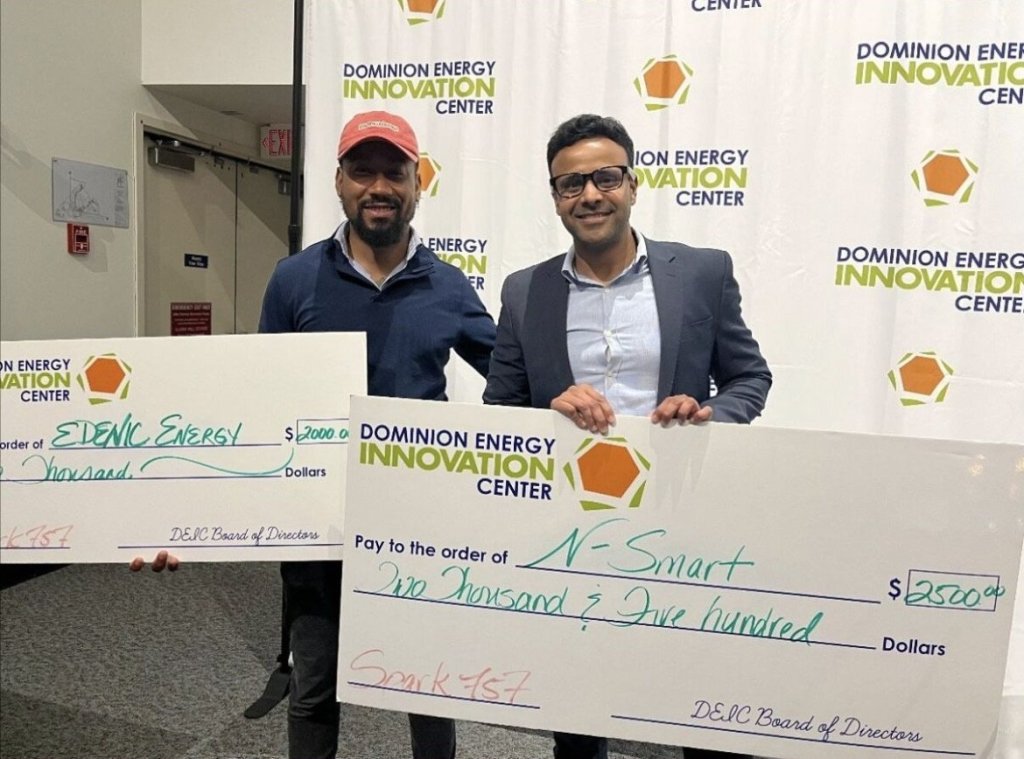
Hunter won $2,000 in seed money from the Spark 757 entrepreneur competition at Jefferson Lab in Newport News on May 16. The Dominion Energy Innovation Center, NASA Langley Research Center and Tech Center Research Park partnered in the contest aimed at attracting clean energy entrepreneurs.
“Operating a building is like running a business; this is what building owners care about,” he said. “Yes, energy efficiency is great but staying in business and helping their tenants is top of mind, so we combine the business side of operating commercial buildings to the energy and operational efficiency of the physical asset to identify, design and manage improvements.”
“It’s like building data modeling — making sense of all the building information collected from A to Z,” Hunter added. “This could be from an energy perspective or daily operation perspective.”
The firm starts by researching both private and public data sets, including building codes, current blueprints, weather, lighting, heating, cooling and ventilation. Data is collected and entered into the software. All the combined information provides the building’s story. The project’s process is recorded digitally.
“It’s like creating Google Nest for a commercial building,” Hunter said.
Using artificial intelligence, the software tool can show common patterns and organize data to make it understandable.
Once a system is in place, operations and maintenance will be handled digitally through the smart building automated system. It uses sensors to track energy savings, check all the mechanical environmental control systems, sell energy back to the grid and predict malfunctions. Through the Internet of Things, the building is connected to its surroundings and the city. Monitoring traffic, occupancy, weather, air pollution, security and safety are a few ways a building is connected to the city.
“This is a way to create smart and sustainable cities,” he said.
Hunter decided to work with underserved communities because while growing up in Baltimore, he saw pollution along with poorly constructed and energy inefficient buildings. Those buildings negatively affect people’s health.
Hunter said he is answering the Department of Energy’s call for cleaner, more environmentally efficient buildings. The department launched a Justice40 initiative that includes investments in disadvantaged communities across one or more of the following seven areas: climate change, clean and efficient energy, clean transit, affordable and sustainable housing, training and workforce development, remediation and reduction of legacy pollution and the development of critical clean water and wastewater infrastructure.
“If we have healthy building, then we have a thriving economy,” he said.
N-Smart, another digital solutions and insights platform provider of Sterling took home the top prize of $2,500 from Spark 757. Other winners included Ellexco of Springfield, Scale Materials of Waynesboro, Helix Hydrogen of Harrisonburg, Tamer Space of Richmond, NearStar Fusion of Chantilly and Mehrdel LLC of Brambleton.